











-

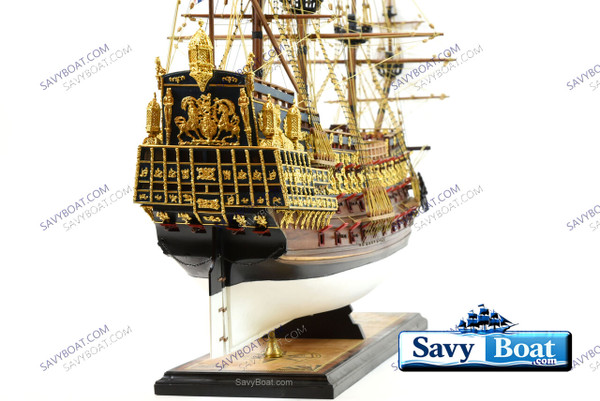
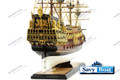
HMS SOVEREIGN OF THE SEAS MUSEUM W/24CT GOLD FITTINGS
SAVY DIRECT PRICE $2,699.96MSRP: $2,899.99HMS SOVEREIGN OF THE SEAS MUSEUM W/24CT GOLD FITTINGS ABSOLUTELY BEAUTIFUL, FULLY BUILT AND READY TO DISPLAY, MUSEUM QUALITY SHIP OF THE LINE MODEL 24CT GOLD PLATED FITTINGS AND -
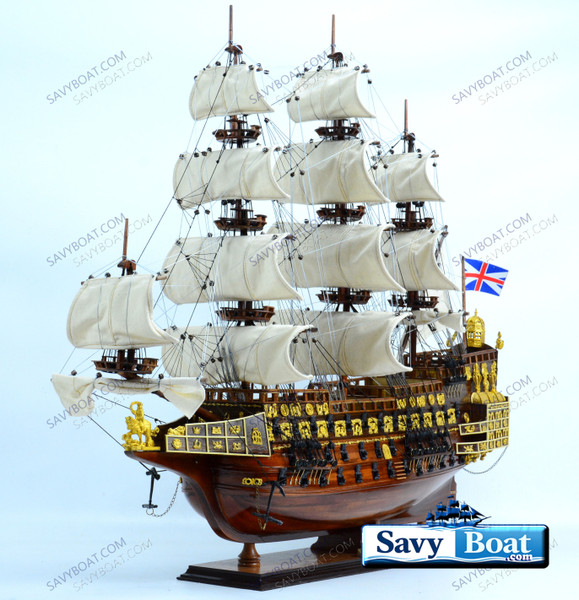

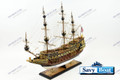
HMS SOVEREIGN OF THE SEAS 32" W/ SAILS
SAVY DIRECT PRICE $699.96MSRP: $749.99HMS SOVEREIGN OF THE SEAS TALL SHIP WITH SAILS ABSOLUTELY BEAUTIFUL, FULLY BUILT AND READY TO DISPLAY, MUSEUM QUALITY SHIP OF THE LINE MODEL Dimension approx.: 32″ L -
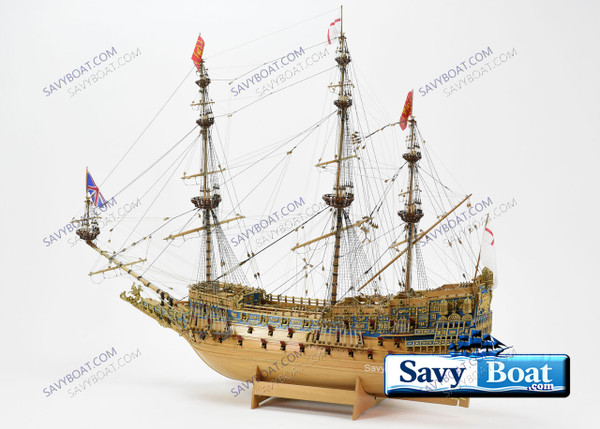

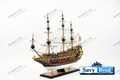
HMS SOVEREIGN OF THE SEAS MUSEUM
SAVY DIRECT PRICE $4,799.96MSRP: $4,999.99HMS SOVEREIGN OF THE SEAS TALL SHIP ABSOLUTELY BEAUTIFUL, FULLY BUILT AND READY TO DISPLAY, MUSEUM QUALITY SHIP OF THE LINE MODEL Dimension approx.: 42″ L x 14″
Description

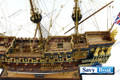
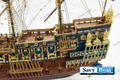
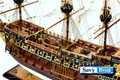
HMS SOVEREIGN OF THE SEAS TALL SHIP WITH GOLD PLATED FITTINGS AND WITH SAILS
ABSOLUTELY BEAUTIFUL, FULLY BUILT AND READY TO DISPLAY, MUSEUM QUALITY SHIP OF THE LINE MODEL
- 24CT GOLD PLATED FITTINGS AND CANNONS
- Dimension approx.: 42″ L x 14″ W x 36″ H.
- This beautiful model is already built, NOT a kit.
- Natural Wood Hull (not painted white)
- Museum quality with wood inlay marquetry base
In the turbulent 1630s, when England sought to assert its naval power against the Dutch and Spanish, King Charles I envisioned a ship unlike any other afloat — a vessel that would proclaim England’s maritime ambition in gilded splendor. That ship was Sovereign of the Seas, ordered on 7 May 1635 and designed by the master shipwright Phineas Pett, later completed by his son Peter Pett at Woolwich Dockyard.
Her keel was laid on 21 December 1635, and from the start she was intended as a statement. Charles I demanded a ship of unprecedented size, firepower, and ornamentation. When she was launched on 13 October 1637, after an initial failed attempt, she stunned Europe. Her towering stern, covered in elaborate gold leaf carvings, earned her the Dutch nickname “The Golden Devil.” She carried 102 bronze guns — more than originally planned — because the king insisted on a display of overwhelming might.
Sovereign of the Seas was the first true three‑decked first‑rate ship of the line, a precursor to the great flagships that would dominate naval warfare for the next two centuries. She embodied the shift toward heavily armed broadside tactics, her long gun decks bristling with firepower.
Her early service coincided with the political upheavals of the English Civil War. Under the Commonwealth, her royalist name was shortened to Sovereign, but her prestige remained. When the monarchy was restored in 1660, she was renamed HMS Royal Sovereign in honor of Charles II.
Throughout her long career, she underwent multiple rebuilds. The first, in 1659–60, standardized her armament at around 100 guns. A second, more extensive rebuild between 1680 and 1685, lengthened her hull to 167 feet on the gundeck and modernized her structure, ensuring she remained competitive in the evolving line‑of‑battle tactics of the late 17th century.
As a flagship, she fought in several major engagements of the Anglo‑Dutch and Nine Years’ Wars. She saw action at the Battle of Kentish Knock, the St. James’s Day Battle, and the twin battles of Beachy Head and La Hogue in 1692, where the Royal Navy secured decisive victories over the French. Her size, firepower, and symbolic importance made her a centerpiece of the fleet for nearly sixty years.
But even the greatest ships meet an unceremonious end. In 1697, while laid up at Chatham Dockyard, Royal Sovereign caught fire — likely from an accident among the dockyard workers. The blaze consumed her down to the waterline. After decades of service, she was gone in a single night.
HMS Sovereign of the Seas was more than a warship. She was a political statement, a technological milestone, and a symbol of England’s rising naval power. Her lavish decoration reflected the grandeur Charles I wished to project, while her three‑decked design shaped the future of naval warfare.
Through civil war, republic, and restoration, she remained a constant presence — a golden, gun‑laden embodiment of 17th‑century maritime ambition.