






-
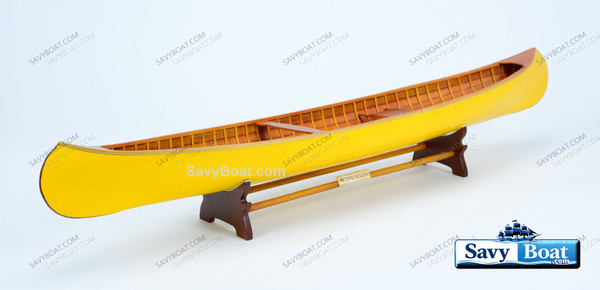

PETERBOROUGH CANOE (YELLOW)
SAVY DIRECT PRICE $299.96MSRP: $349.99PETERBOROUGH CANOE (YELLOW) FULLY BUILT AND READY TO DISPLAY, HIGH QUALITY MODEL Dimension Approx.: 31.5″ (long) x 7″ (wide) x 5″ (high) The model is already built, NOT a model shi -
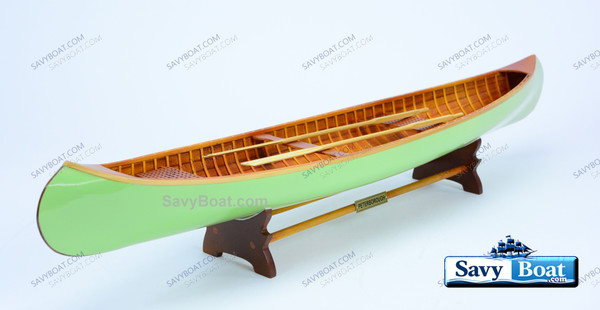

PETERBOROUGH CANOE (GREEN)
SAVY DIRECT PRICE $299.96MSRP: $349.99PETERBOROUGH CANOE (GREEN) FULLY BUILT AND READY TO DISPLAY, HIGH QUALITY MODEL Dimension Approx.: 31.5″ (long) x 7″ (wide) x 5″ (high) The model is already built, NOT a model ship -


PETERBOROUGH CANOE (RED)
SAVY DIRECT PRICE $299.96MSRP: $349.99PETERBOROUGH CANOE (RED) FULLY BUILT AND READY TO DISPLAY, HIGH QUALITY MODEL Dimension Approx.: 31.5″ (long) x 7″ (wide) x 5″ (high) The model is already built, NOT a model ship k
Description

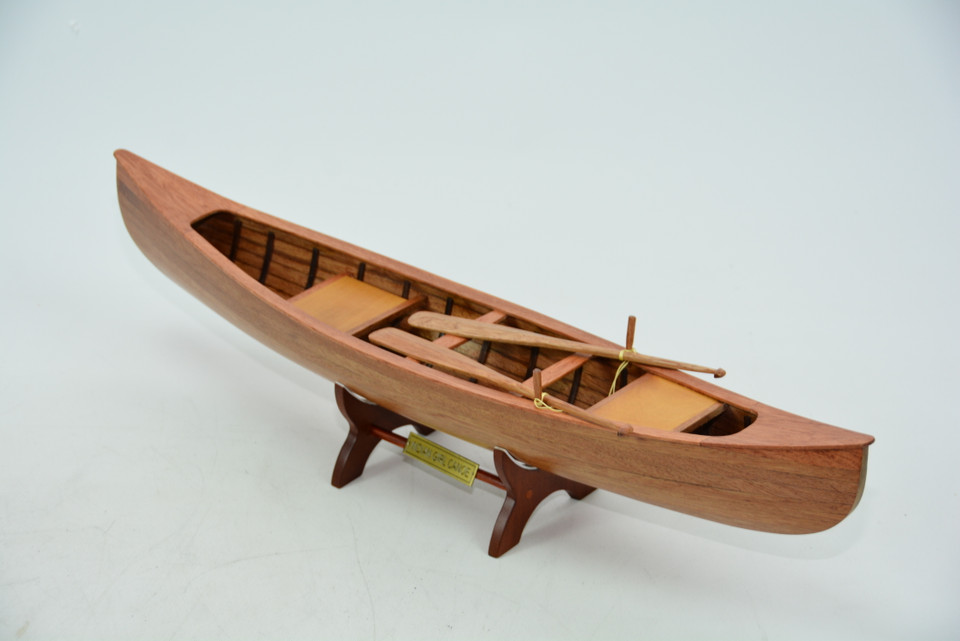
INDIAN GIRL CANOE
FULLY BUILT AND READY TO DISPLAY, QUALITY SHIP MODEL
- Dimension approx.: 24″ (long) x 5″ (wide) x 3.5″ (high)
- The model is already built. THIS IS NOT A MODEL SHIP KIT
At the dawn of the 20th century, when canoeing was becoming both a sport and a cultural pastime in North America, J. H. Rushton of Canton, New York — already one of the most respected canoe builders of his era — introduced a new design that would become one of his greatest successes. In 1902, the Indian Girl arrived: a sleek, 16‑foot wooden‑canvas canoe that blended speed, strength, and elegance in a way few boats of the time could match.
Rushton, known for his Rob Roy decked canoes and pioneering double‑paddle designs, wanted a boat that could appeal to the growing market of recreational paddlers while still performing in rougher waters. To achieve this, he hired Melvin Roundy, a master builder from the B.N. Morris Canoe Company in Veazie, Maine. Roundy brought with him the refined craftsmanship of the Morris tradition, and the Indian Girl’s lines — its sheer, its ribs, its canvas‑covered hull — clearly reflected that influence.
Marketed as “strong, light, safe though speedy, graceful yet seaworthy,” the Indian Girl quickly became one of Rushton’s most popular models. It was offered in both all‑wood and canvas‑covered versions, the latter introduced in 1901 and soon becoming the standard. Early production was handled by Roundy himself, but as demand grew, Rushton contracted Frank Fox, who by the 1910s and 1920s was producing roughly 200 canoes a year.
By the time Rushton’s factory closed in 1917, an estimated 5,500 canvas‑covered Indian Girls had been built — a remarkable number for a hand‑crafted canoe of the era. The design lived on even after Rushton’s death: Joseph Leyere of Ogdensburg, New York, acquired the molds and rights, producing the canoe under the “Whistle Wing” trademark into the late 1920s.
The Indian Girl had distinctive features that make surviving examples easy to identify today: a sheer plank flush with the rib tops, a bow seat mounted on a cleat, and a trapezoidal stern seat. These details, along with its graceful hull shape, helped cement its reputation as one of the finest wood‑and‑canvas canoes ever built.
By the 1910s and 1920s, the Indian Girl had become a favorite among guides, sportsmen, and recreational paddlers. Its blend of durability and performance made it ideal for lakes, rivers, and wilderness travel. Today, original Indian Girls are prized by collectors, and modern reproductions — along with detailed 1:16 scale model kits — keep the design alive for new generations.
More than just a canoe, the Indian Girl represents a moment in American craftsmanship when builders like Rushton and Morris shaped the future of paddling. It stands as a symbol of the artistry, innovation, and cultural exchange that defined the golden age of wooden canoes — a legacy still admired more than a century later.