







-


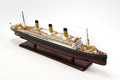
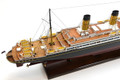
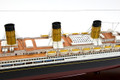
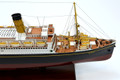
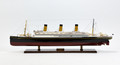
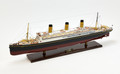
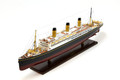
RMS MAJESTIC OCEAN LINER
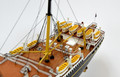
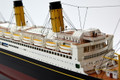
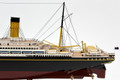
SAVY DIRECT PRICE $999.96MSRP: $1,099.99RMS MAJESTIC OCEAN LINER FULLY BUILT AND READY TO DISPLAY MUSEUM QUALITY SHIP MODEL Dimension Approx.: 38″ L x 4.5″ W x 12.5″ H SCALE 1:300 RMA MAJESTIC: A GIANT REBORN...She -


RMS LUSITANIA LIGHTED OCEAN LINER
SAVY DIRECT PRICE $1,199.96MSRP: $1,299.99RMS LUSITANIA LIGHTED FULLY BUILT AND READY TO DISPLAY, QUALITY SHIP MODEL Dimension approx.: 39.5″ L x 4.5″ W x 12.5″ H. The model is already built. THIS IS NOT A MODEL SHIP... -
 img:low-2-bottom-with-special-offer.pngimg:low-2-bottom-with-special-offer.png
RMS OLYMPIC LIGHTED OCEAN LINER
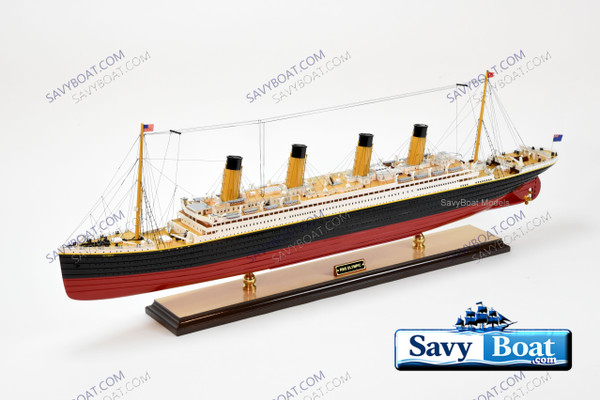
SAVY DIRECT PRICE $100.00 - $1,199.96LIGHTED RMS OLYMPIC PASSENGER SHIP - FULLY BUILT AND READY TO DISPLAY MUSEUM QUALITY SHIP MODEL Dimension approx.: 40″ L x 5.5″ W x 14″ H LIGHTED - LED LIGHTS pre-installed (power supply not...
Description

RMS MAJESTIC LIGHTED OCEAN LINER
FULLY BUILT AND READY TO DISPLAY MUSEUM QUALITY SHIP MODEL
- Dimension Approx.: 38″ L x 4.5″ W x 12.5″ H
- SCALE 1:300
- LED LIGHTING INCLUDED (power supply not included)
RMA MAJESTIC: A GIANT REBORN...She was born into a world that vanished before she ever touched the sea.
In 1914, the great German liner Bismarck stood on the slips at Blohm & Voss, the last and largest of Albert Ballin’s triumphant trio. She was meant to be a declaration — that Germany could outbuild, outshine, and out‑luxury the British on the North Atlantic. Her hull towered over the yard, a steel cathedral of ambition. But as she neared completion, Europe descended into war, and the ship built to symbolize national pride became a silent, unfinished monument to a world suddenly on fire.
For years she waited, immense and unused, while the conflict reshaped nations. When peace finally came, it came with terms. Under the Treaty of Versailles, the unfinished giant was surrendered to the Allies. The ship that had been designed to carry the German flag across the Atlantic would instead sail for the very nation she was meant to surpass.
Completed for the White Star Line and renamed RMS Majestic, she emerged in 1922 as a paradox — German engineering wrapped in British identity. At 56,551 tons, she became the largest ship in the world, and the largest ever to serve under White Star. Her interiors, finished by Charles Mewès of Ritz fame, were vast and indulgent: sweeping lounges, gilded dining rooms, and suites that felt more like grand hotels than accommodations at sea. Passengers adored her. Crew members, with a mix of affection and mischief, called her “The Magic Stick.”
Throughout the 1920s, Majestic dominated the Southampton–New York run. She wasn’t the fastest, but she didn’t need to be. Her appeal lay in her scale, her comfort, and the sense of effortless grandeur she projected. She routinely carried more passengers than her running mates Olympic and Homeric, and she became the ship many travelers specifically requested. For a time, she was the queen of the North Atlantic.
But the world changed again. The Great Depression thinned passenger lists, and the 1934 merger that created Cunard‑White Star left the aging Majestic without a clear role. Plans were made to scrap her — until the British government intervened. Instead of the breakers, she was sent to Rosyth, stripped of her finery, and transformed into a stationary naval training ship. Under her new name, HMS Caledonia, thousands of cadets learned seamanship on decks once graced by aristocrats and celebrities.
Her final chapter came suddenly. In September 1939, as another global conflict erupted, a fire broke out aboard the old liner. Flames raced through her wooden interiors, and despite frantic efforts, she capsized and sank at her moorings. Salvage crews dismantled her where she lay, completing the work in 1943. The last of Ballin’s giants was gone.
Yet Majestic endures in memory — a ship that lived three lives under three names. She was a German superliner that never sailed for Germany, a British flagship beloved by passengers, and finally a naval schoolhouse that shaped a generation. Her story is a reminder of how ships can outgrow the purposes they were built for, becoming symbols of eras, ambitions, and the unpredictable tides of history.
A titan of peace. A star of the Atlantic. A guardian of young sailors.
Few liners ever carried so many identities with such grace.