







-
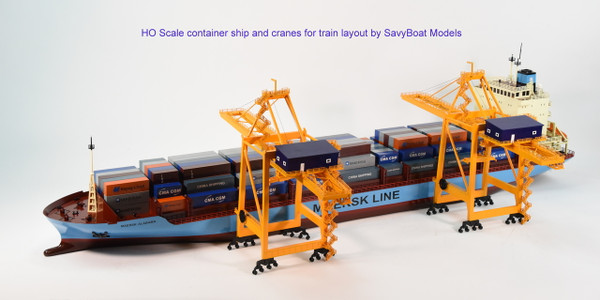
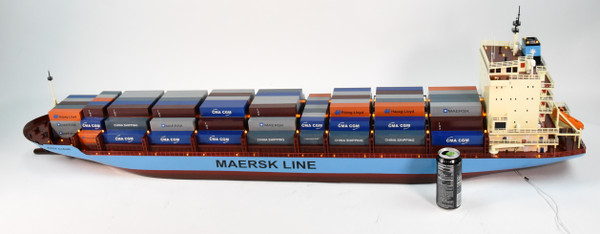
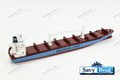
MAERSK ALABAMA HO-SCALE WATERLINE CONTAINER SHIP
SAVY DIRECT PRICE $4,999.96MSRP: $5,999.99MAERSK ALABAMA HO-SCALE WATERLINE CONTAINER SHIP FULLY BUILT AND READY TO DISPLAY MUSEUM QUALITY SHIP MODEL Dimension approx.: 70″ L x 15” W x 16” H – approx scale : HO Scale 1:87.< -
 img:low-bottom-with-special-offer.pngimg:low-bottom-with-special-offer.png
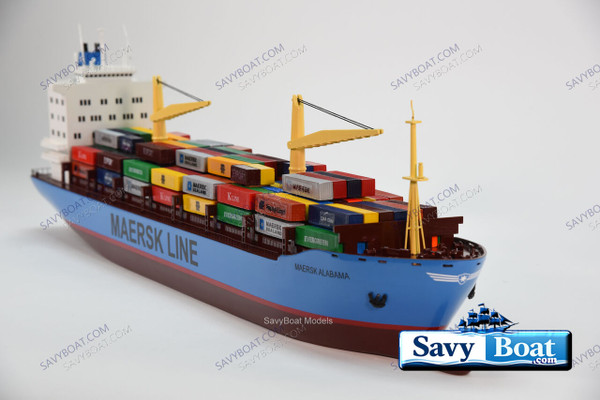
MAERSK ALABAMA N-SCALE CONTAINER SHIP
SAVY DIRECT PRICE $100.00 - $769.96MAERSK ALABAMA N-SCALE WATERLINE MODEL FULLY BUILT AND READY TO DISPLAY, QUALITY SHIP MODEL Dimension approx.: 36″ L x 6″W x 15″H Approx scale Scale 1:160 The model is already built... -

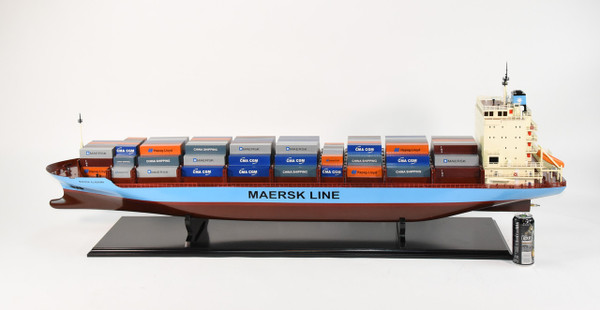
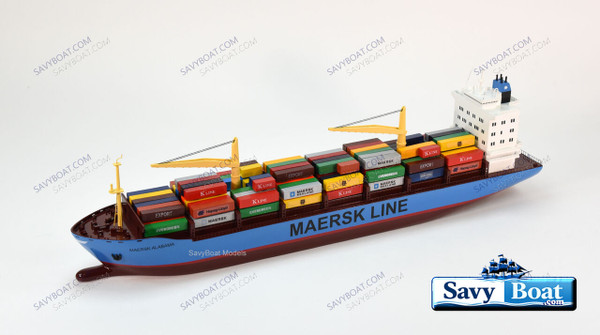
MAERSK ALABAMA HO-SCALE CONTAINER SHIP
SAVY DIRECT PRICE $4,999.96MSRP: $5,999.99MAERSK ALABAMA HO-SCALE WATERLINE CONTAINER SHIP FULLY BUILT AND READY TO DISPLAY MUSEUM QUALITY SHIP MODEL Dimension approx.: 70″ L x 15” W x 16” H – approx scale : HO Scale 1:87.<
Description

MAERSK ALABAMA Z-SCALE WATERLINE MODEL
FULLY BUILT AND READY TO DISPLAY, QUALITY SHIP MODEL
- Dimension approx.: 28″ L x 3.5″ W x 6.5″ H
- Approx Z Scale 1:220
- The model is already built. THIS IS NOT A MODEL SHIP KIT
Maersk Alabama — A Modern Cargo Ship Thrust Into History
Long before its name became synonymous with piracy and rescue, the Maersk Alabama was an unassuming workhorse of global commerce — a 508‑foot U.S.-flagged container ship carrying food, machinery, and humanitarian aid across some of the world’s busiest and most dangerous sea lanes. Built for reliability rather than fame, she spent her early years quietly threading the Indian Ocean, linking ports from Oman to Kenya under the blue-and-white banner of Maersk Line.
In early April 2009, the Alabama departed Salalah, Oman, loaded with 401 containers of relief supplies for East Africa — grain, vegetable oil, and emergency rations bound for Somalia, Uganda, Kenya, and Rwanda. The waters off the Horn of Africa were notorious for pirate attacks, but the Alabama’s crew was seasoned, alert, and trained for the threat.
On April 8, 2009, roughly 240 nautical miles southeast of Eyl, four Somali pirates in a small skiff closed in on the ship. Armed with AK‑47s and fueled by desperation, they scaled the hull and seized control. It was the first successful hijacking of a U.S.-flagged vessel in nearly two centuries, a jarring reminder that piracy — once the scourge of the Age of Sail — had returned in modern form.
Captain Richard Phillips and several crew members retreated to a secure room, disabling the ship and cutting power. But to protect his crew, Phillips offered himself as a hostage. The pirates forced him into the Alabama’s enclosed lifeboat — a cramped, sweltering capsule meant for survival, not negotiation — and fled toward the Somali coast.
The U.S. Navy responded with overwhelming speed. The destroyer USS Bainbridge intercepted the lifeboat the next day, establishing a perimeter and beginning tense, round‑the‑clock negotiations. For four days, Phillips endured heat, exhaustion, and constant threats as the pirates tried to maneuver closer to shore.
The standoff ended on April 12, when three Navy SEAL snipers — each tracking a different pirate — fired simultaneously from the Bainbridge’s fantail. Three pirates were killed instantly. Phillips was pulled from the lifeboat alive. The fourth pirate, Abduwali Muse, was captured and later sentenced to more than 33 years in U.S. federal prison.
The Maersk Alabama returned to service almost immediately, but the incident changed her forever. Armed security teams were placed aboard, and between 2009 and 2011, the ship successfully repelled four additional pirate attacks — a testament to how rapidly the maritime world adapted to the new threat.
In the years that followed, the Alabama was sold to Element Shipmanagement SA and renamed MV Tygra, continuing her commercial career under a new identity. As of 2025, she remains in active service, a working ship with a dramatic chapter in her logbook.
The hijacking inspired Captain Phillips’ memoir, A Captain’s Duty, and the 2013 film Captain Phillips, starring Tom Hanks, which brought the story to a global audience. The lifeboat used in the standoff — still marked by bullet holes — is preserved at the National Navy UDT‑SEAL Museum in Florida, a stark reminder of the ordeal.
But the Alabama’s true legacy lies in what followed. The incident triggered sweeping reforms in maritime security, from armed guards to new defensive protocols, and highlighted the fragile balance between global trade and regional instability.
Most merchant ships pass through history unnoticed. The Maersk Alabama did not. For a few days in 2009, she became the center of a geopolitical drama — a symbol of vulnerability, resilience, and the razor‑thin line between routine commerce and international crisis.