










-
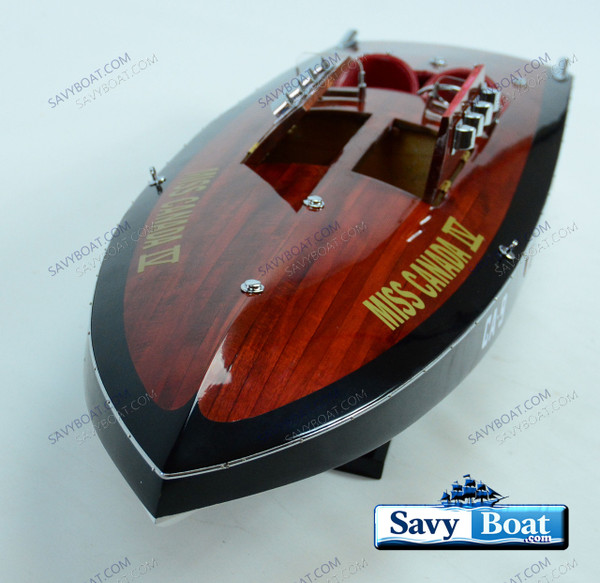

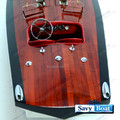
MISS CANADA IV CA-9 RACE BOAT RC READY
SAVY DIRECT PRICE $739.96MSRP: $749.99MISS CANADA IV CA-9 RACE BOAT RC READY FULLY BUILT AND READY TO DISPLAY HIGH QUALITY SHIP MODEL Dimension Approx.: 33.75& -

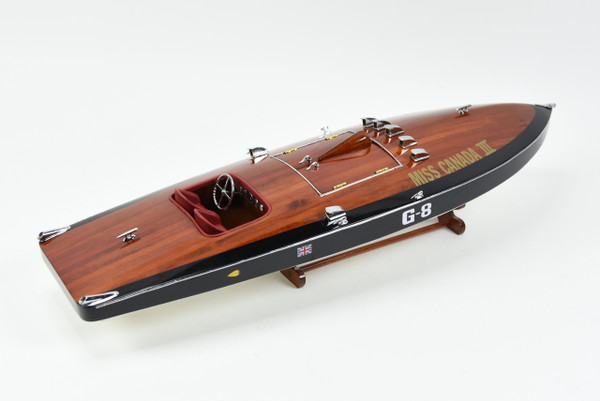
MISS CANADA III RACE BOAT
SAVY DIRECT PRICE $689.96MSRP: $699.99MISS CANADA III RACE BOAT FULLY BUILT AND READY TO DISPLAY HIGH QUALITY SHIP MODEL Dimension Approx.: 33.5″L x 9.5″W x 7″H -


MISS SEVERN RACING BOAT
SAVY DIRECT PRICE $599.96MSRP: $649.99MISS SEVERN RACING BOAT FULLY BUILT AND READY TO DISPLAY HIGH QUALITY SHIP MODEL Dimension Approx.: 31.5″L x 8″W x 7″H
Description

MISS CANADA IV CA-9 RACE BOAT
FULLY BUILT AND READY TO DISPLAY HIGH QUALITY SHIP MODEL
- Dimension Approx.: 33.75″ L x 10.5″ W x 7.25″ H
- The model is already built, NOT a model ship kit
In the years following World War II, as nations pushed the limits of engineering and speed, Canada produced one of the most ambitious hydroplanes of the era: Miss Canada IV. Built by the Greavette Boat Company of Ingersoll, Ontario, and designed by the gifted naval architect Douglas Van Patten, she was the culmination of the Wilson family’s long pursuit of racing excellence. Ernest A. Wilson, the team’s patriarch, had already campaigned Miss Canada II and III; with Miss Canada IV, he and his son — driver Harold Wilson — set their sights on the highest prize in the sport: the Harmsworth Trophy.
At 34 feet long with a 10‑foot‑6‑inch beam, Miss Canada IV was a striking presence on the water. Her keel‑knuckle step hydroplane hull represented the cutting edge of late‑1940s design, combining lift, stability, and minimal drag. Beneath her gleaming mahogany deck roared a Rolls‑Royce Griffon V‑12, a massive aircraft engine whose power transformed the boat into one of the fastest hydroplanes ever built.
Her performance quickly justified the ambition behind her creation. In 1949, Miss Canada IV set an official world speed record of 138.6 mph, making her the fastest propeller‑driven boat in the world. The following year, she attempted to reclaim the record from Slo‑Mo‑Shun IV’s groundbreaking 160‑mph run. In trials, Miss Canada IV reached 173 mph over one mile, a staggering achievement for the time. Later in 1950, during another record attempt, she was believed to be approaching 200 mph when a gearbox failure ended the run just short of the measured course — a dramatic moment that became part of her legend.
Miss Canada IV also competed in the 1950 Harmsworth Trophy, finishing fourth but proving that Canada could challenge the dominant American teams on the world stage. After the 1951 season, the Wilsons sold the boat to the Thompson family, who renamed her Miss Supertest (I). She served as a testbed for the Thompsons’ future racing program, which would eventually produce the legendary Miss Supertest II and III.
Though retired from competition, Miss Canada IV survived the decades that followed. Rediscovered in the 1970s by the Mistele family of Detroit, she appeared at shows and exhibitions before returning to Canada in 2011. Over the years she has been displayed at institutions including the Port Carling Museum and the Ingersoll Cheese Factory Museum, preserved as a national treasure of Canadian racing history.
Today, Miss Canada IV stands as more than a relic of mid‑century hydroplane engineering. She represents a moment when Canada dared to compete at the highest level of international powerboat racing — and nearly conquered it. Sleek, powerful, and unmistakably ambitious, she remains one of the most iconic racing boats ever built on Canadian shores.