







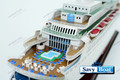


-

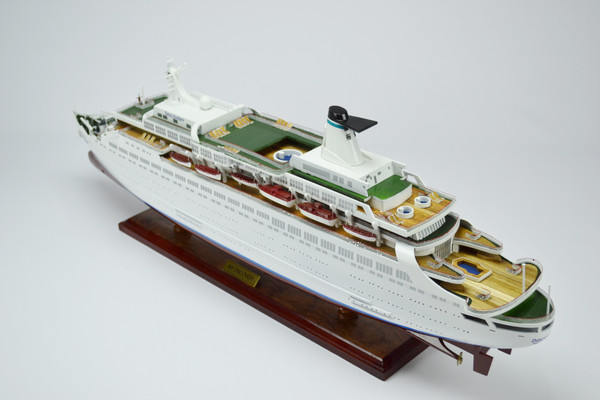
MV DISCOVERY - SISTER OF THE "LOVE BOAT"
SAVY DIRECT PRICE $749.96MSRP: $799.99MV DISCOVERY - SISTER OF THE "LOVE BOAT" FULLY BUILT AND READY TO DISPLAY, QUALITY SHIP MODEL Dimension approx.: 38″ (long) x 6.5″ (wide) x 13.5″ (high) The model is already built. ... -


MV DEUTSCHLAND CRUISE SHIP
SAVY DIRECT PRICE $999.96MSRP: $1,099.99MV DEUTSCHLAND CRUISE SHIP FULLY BUILT AND READY TO DISPLAY, HIGH QUALITY SHIP MODEL Dimension Approx.: 34.25L x 4.75W x 12.5H The model is already built, NOT a model ship kit Sails in unf -
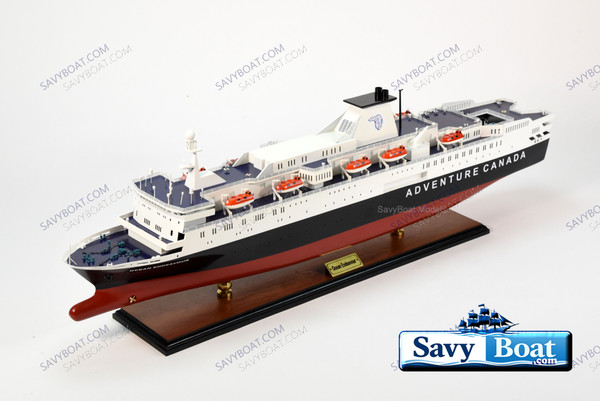
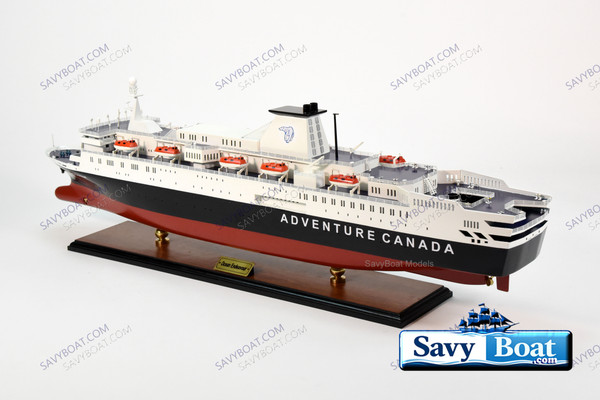
MV OCEAN ENDEAVOUR (ADVENTURE CANADA)
SAVY DIRECT PRICE $999.96MSRP: $1,099.99MS OCEAN ENDEAVOUR (ADVENTURE CANADA) FULLY BUILT AND READY TO DISPLAY MUSEUM QUALITY SHIP MODEL Dimension Approx.: 36″ (long) x 6″ (wide) x 11″ (high) Open die cut side hull windows, NOT...
Description

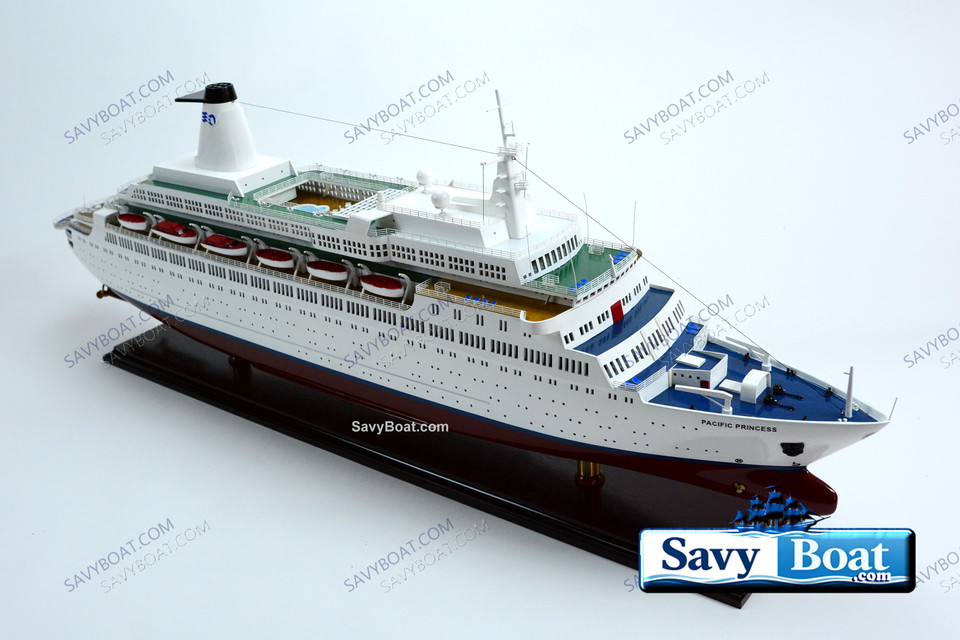
MV PACIFIC PRINCESS - THE "LOVE BOAT"
FULLY BUILT AND READY TO DISPLAY, QUALITY SHIP MODEL
- Dimension approx.: 38″ (long) x 6.5″ (wide) x 13.5″ (high)
- The model is already built. THIS IS NOT A MODEL SHIP KIT
The Life and Last Voyage of The Love Boat
She began her life in 1971, sliding down the ways of the Nordseewerke yard in Emden, a crisp white hull meant for bright seas and easy horizons. Back then she was Sea Venture, a modern little cruise ship built for Flagship Cruises, carrying vacationers between the American coast and Bermuda. She was young, confident, and quick — quick enough, in fact, to come to the aid of the mighty Queen Elizabeth 2 in 1974 when the great liner faltered with engine trouble. For a moment, the small newcomer proved herself capable of rescuing royalty.
In 1975 she changed hands and identities, sold to Princess Cruises and renamed Pacific Princess. It was under this name that she slipped into a strange kind of immortality. When Hollywood came calling, Princess Cruises agreed to let their ships appear in a new television series about romance and adventure at sea. The show — The Love Boat — became a cultural phenomenon, and Pacific Princess became its unofficial star. Though most scenes were filmed on studio sets, the ship herself appeared often enough to become instantly recognizable. For millions of viewers, she wasn’t just a vessel; she was the Love Boat, a floating promise of escape.
For decades she sailed the world, carrying passengers who wanted to step into the fantasy they had seen on television. But time moves differently for ships. By the late 1990s she was aging, and in 1998 she made headlines for darker reasons when authorities in Greece discovered heroin smuggled aboard by crew members. The incident tarnished her image but didn’t end her career. She was sold in 2001, leased back to Princess Cruises for a final year, and then passed into new hands.
Renamed simply Pacific, she worked for Pullmantur, then for CVC in Brazil, then for Quail Cruises in Spain. She was still recognizable — the same graceful lines, the same compact silhouette — but she was no longer the Love Boat of television fame. Renovations proved costly. Mechanical issues mounted. In 2008 she was seized in Genoa over unpaid repair bills, and for years she sat idle, tied to the pier, her future shrinking with each season.
Attempts to auction her failed. A sale for scrap collapsed. Rust crept across her hull. The ship that had once symbolized carefree romance now waited in silence, a relic no one quite knew what to do with.
At last, in the summer of 2013, tugs took her in tow. She crossed the Mediterranean slowly, without passengers, without fanfare, bound for the breakers’ yards of Aliağa, Turkey. She arrived on August 6. Four days later, tragedy struck: a flooding incident in a machinery space released toxic fumes, killing two workers and injuring others. It was a grim final chapter for a ship that had once been associated with laughter, music, and sunset cocktails.
By early 2014, most of her had been cut apart. By the end of the year, she was gone entirely — her steel melted down, her fittings sold off, her name surviving mostly in reruns and nostalgia.
Yet in a way, Pacific Princess never truly disappeared. She lives on in the collective memory of a generation who watched her sail across their television screens each week, a symbol of optimism and possibility. Ships are built to move, to carry stories from one shore to another. Hers simply drifted into a different kind of harbor — one made of memory rather than water.