











-
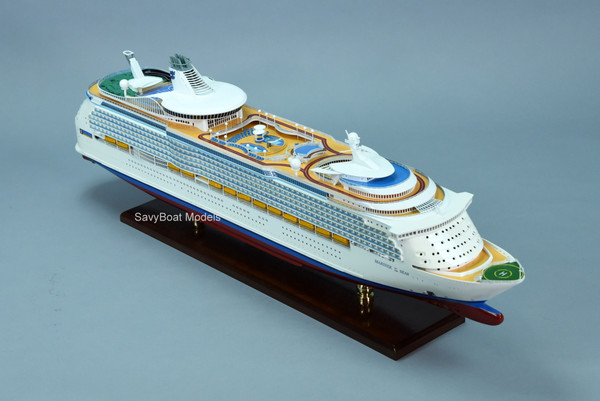

MS MARINER OF THE SEAS LIGHTED CRUISE SHIP
SAVY DIRECT PRICE $1,999.96MSRP: $2,199.99MS MARINER OF THE SEAS CRUISE SHIP FULLY BUILT AND READY TO DISPLAY MUSEUM QUALITY SHIP MODEL Open die cut side hull windows, NOT painted like those built by most other companies. LIGHTED -... -


MS VOYAGER OF THE SEAS LIGHTED CRUISE SHIP
SAVY DIRECT PRICE $1,999.96MSRP: $2,199.99MS VOYAGER OF THE SEAS FULLY BUILT AND READY TO DISPLAY MUSEUM QUALITY SHIP MODEL Dimension Approx.: 35″ L x 5″ W x 11″ H SCALE 1:350 The model is already built, NOT a model ship... -

MS NAVIGATOR OF THE SEAS LIGHTED CRUISE SHIP
SAVY DIRECT PRICE $1,899.96MSRP: $2,099.99MS NAVIGATOR OF THE SEAS LIGHTED CRUISE SHIP FULLY BUILT AND READY TO DISPLAY MUSEUM QUALITY SHIP MODEL Dimension Approx.: 35″ L x 5″ W x 11″ H SCALE 1:350 LIGHTED - preinstalled LED...
Description

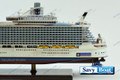
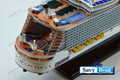
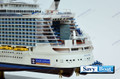
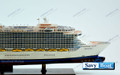
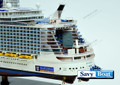
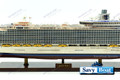
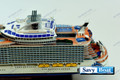
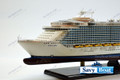
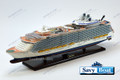
OASIS OF THE SEAS LIGHTED CRUISE SHIP
FULLY BUILT AND READY TO DISPLAY MUSEUM QUALITY SHIP MODEL
- Dimension approx.: 40.5″ L x 7.5″ W x 12.5″ H Scale 1:350.
- The model is already built, NOT a model ship kit
- LIGHTED - LED LIGHTS pre-installed (power supply not included)
In the mid‑2000s, Royal Caribbean set out to do something no cruise line had ever attempted: build a ship so large, so innovative, and so radically different that it would redefine the very idea of ocean travel. The project, code‑named Genesis, began in February 2006, and the contract went to the storied shipyard in Turku, Finland. What emerged from that vision was MS Oasis of the Seas — a vessel that would become the world’s largest passenger ship and a turning point in cruise‑ship design.
Her keel was laid on 12 November 2007, and over the next two years, hull number 1363 grew into a floating city. When she floated out on 21 November 2008, she dwarfed everything around her. Even her first appearance was dramatic: during the float‑out, tugs briefly lost control, causing minor dock damage — a reminder of the sheer scale of the ship they were handling. But construction continued on schedule, and by 28 October 2009, she was complete.
At 361.8 meters (1,187 feet) and 226,838 gross tons, Oasis of the Seas was more than 40% larger than the previous record‑holder. She could carry nearly 6,700 passengers, supported by a crew of over 2,000. When she embarked on her maiden voyage on 5 December 2009, she wasn’t just a new ship — she was a new category of ship.
What set Oasis apart wasn’t only her size, but her design philosophy. Royal Caribbean introduced the concept of seven themed neighborhoods, each crafted to create atmosphere, flow, and variety. The most revolutionary was Central Park, an open‑air garden in the middle of the ship, filled with 12,000 tropical plants and lined with restaurants and lounges. The Boardwalk evoked seaside amusement piers, complete with a carousel and the open‑air AquaTheater, where high‑divers and acrobats performed against the backdrop of the sea.
Her split superstructure allowed sunlight and fresh air to reach interior spaces — a radical departure from traditional cruise‑ship layouts. She featured multiple pools, beach‑style entries, two FlowRider surf simulators, and the first full Broadway production at sea, Hairspray. Every deck offered something new, and every neighborhood felt like its own destination.
Homeported in Port Everglades, Florida, Oasis of the Seas quickly became the flagship of Royal Caribbean’s fleet. Her success led to a lineage of sister ships — Allure, Harmony, Symphony, Wonder, and Utopia — each building on the innovations she introduced. In 2019, she underwent a major amplification, adding new attractions and modernizing her public spaces, ensuring she remained competitive in a rapidly evolving industry.
Though newer ships have since surpassed her in size, Oasis of the Seas remains one of the most influential vessels ever built. She changed the expectations of passengers, reshaped the strategies of cruise lines, and set the template for the mega‑ships that now dominate the world’s oceans.
More than a decade after her debut, she continues to sail as a symbol of ambition, engineering prowess, and the moment when cruising stepped boldly into a new era.