




-


STANCRAFT TORPEDO SPEED BOAT
SAVY DIRECT PRICE $599.96MSRP: $749.99STANCRAFT TORPEDO SPEED BOAT FULLY BUILT AND READY TO DISPLAY BOAT MODEL Dimension approx.: 38"L x 9"W x 10"H The model is already built. THIS IS NOT A MODEL SHIP KIT The Stancraft... -

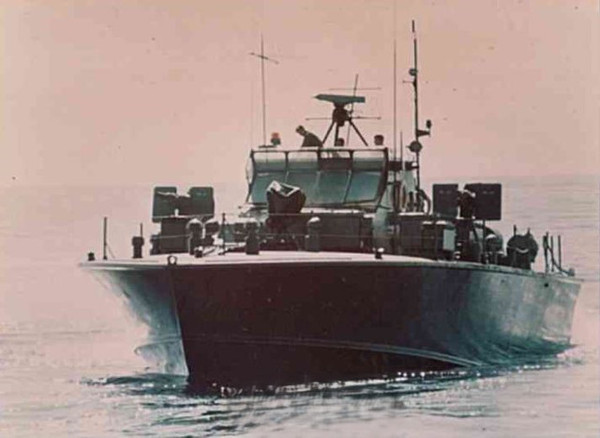
PTF BOAT (PATROL TORPEDO, FAST)
SAVY DIRECT PRICE $1,099.96MSRP: $1,249.99PTF BOAT (PATROL TORPEDO, FAST) FULLY BUILT AND READY TO DISPLAY MUSEUM QUALITY SHIP MODEL Dimension Approx.: 41″L x 15.5"W x 16.5″H APPROX SCALE : 1/24 The model is already built, NOT a model ship... -


KRIEGSMARINE WWII SCHNELLBOOT S100 FAST ATTACK E-BOAT
SAVY DIRECT PRICE $1,199.96MSRP: $1,299.99SCHELLBOAT, WWII E-EBOAT - GERMAN FAST ATTACK TORPEDO BOAT FULLY BUILT AND READY TO DISPLAY MUSEUM QUALITY SHIP MODEL Dimension Approx.: 43.5″L x 10.5"W x 12.5″H SCALE APPX 1:32 The model is...
Description

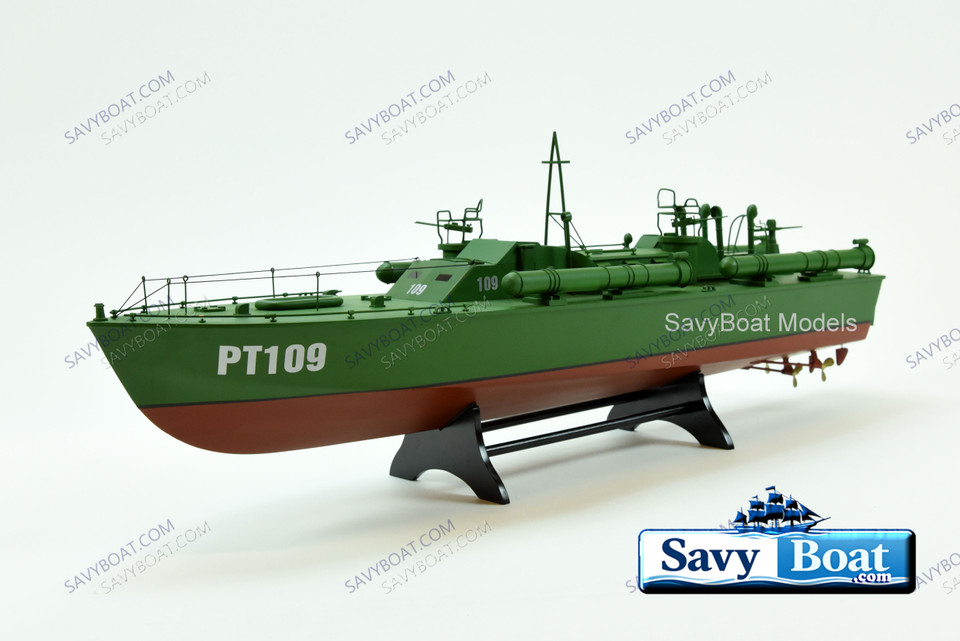
PT 109 WWII TORPEDO BOAT
FULLY BUILT AND READY TO DISPLAY, HIGH QUALITY SHIP MODEL
- Dimension Approx.: 39.25L x 4.75W x 12.5H
- The model is already built, NOT a model ship kit
Among the hundreds of fast, lightly built patrol torpedo boats that fought in the Pacific during World War II, none is remembered more vividly than PT‑109. Laid down in March 1942 at the Elco Works in Bayonne, New Jersey, the 80‑foot craft embodied the daring spirit of the U.S. Navy’s mosquito fleet — small wooden boats powered by roaring Packard engines, designed to strike quickly at night and vanish before the enemy could respond. With three gasoline engines producing 4,500 horsepower, PT‑109 could reach 41 knots, carrying torpedoes, machine guns, and a 20 mm cannon on a hull that weighed barely 40 tons.
After her launch in June 1942, PT‑109 was assigned first to Motor Torpedo Boat Squadron Five, then transferred to Squadron Two, eventually joining MTB Flotilla One in the Solomon Islands. There, in the dark waters around Guadalcanal, the boat took part in the nightly struggle against the Japanese “Tokyo Express” — the fast destroyer runs that attempted to reinforce and resupply Japanese forces. These missions were tense, chaotic, and often fought at point‑blank range, with PT boats relying on stealth, speed, and the cover of darkness.
In April 1943, command of PT‑109 passed to a young lieutenant junior grade named John F. Kennedy. At 26, Kennedy brought determination, calm under pressure, and a willingness to take risks — qualities that would soon be tested in one of the war’s most dramatic small‑craft incidents.
On the night of 2 August 1943, while patrolling the Blackett Strait near Kolombangara, PT‑109 was idling at low speed when the Japanese destroyer Amagiri suddenly emerged from the darkness. In seconds, the 2,000‑ton destroyer struck the smaller boat amidships, slicing it in two. The explosion and impact threw the crew into the water; two men were killed instantly, and the survivors clung to the drifting bow section as it slowly sank.
Kennedy’s leadership in the hours that followed became the heart of PT‑109’s legend. Gathering his injured crew, he led them on a grueling swim to a small uninhabited island, towing a badly wounded crewman by gripping the strap of the man’s life jacket in his teeth. Over the next several days, Kennedy and his men survived on coconuts, attempted to signal passing boats, and eventually made contact with local Solomon Islanders who carried a message carved into a coconut shell — a message that led to their rescue.
For his actions, Kennedy received the Navy and Marine Corps Medal, and the story of PT‑109 became a defining chapter in his public life, symbolizing courage, endurance, and responsibility under fire.
Though PT‑109’s service was brief, her legacy endures. She represents the hazardous, close‑quarters warfare of the PT boat squadrons and the extraordinary heroism that could emerge from even the smallest vessels. Today, PT‑109 remains one of the most famous patrol boats in U.S. naval history — a reminder that valor at sea is not measured in tonnage, but in the character of those who serve.