









-
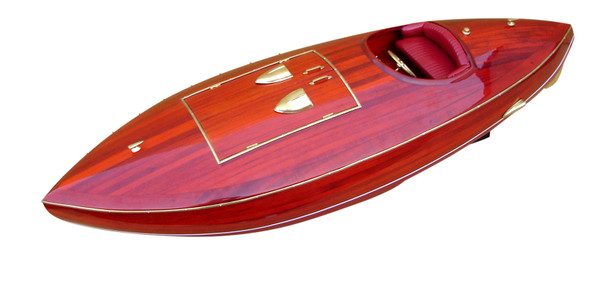
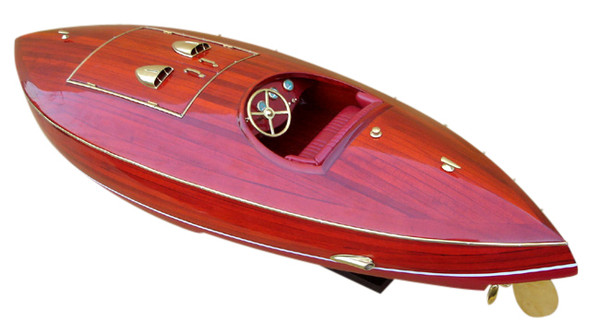
FLYER CLASSIC SPEED BOAT
SAVY DIRECT PRICE $649.96MSRP: $699.99FLYER CLASSIC SPEED BOAT FULLY BUILT AND READY TO DISPLAY BOAT MODEL Dimension approx.: 35.5"L x 10.5"W x 8"H The model is already built. THIS IS NOT A MODEL SHIP KIT The name Flyer... -
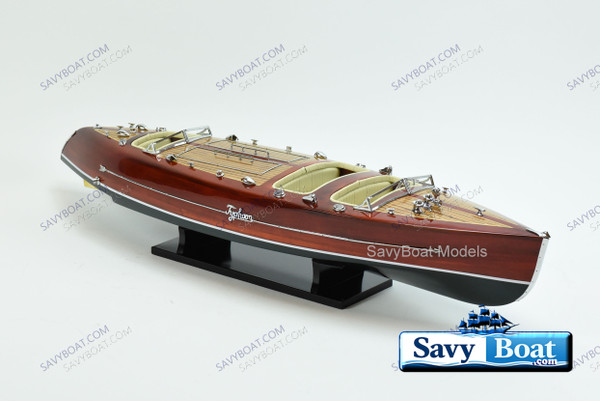

TYPHOON PAINTED CLASSIC SPEED BOAT
SAVY DIRECT PRICE $649.96MSRP: $699.99TYPHOON PAINTED CLASSIC SPEED BOAT FULLY BUILT AND READY TO DISPLAY BOAT MODEL Dimension approx.: 39.5"L x 9.5"W x 9"H The model is already built. THIS IS NOT A MODEL SHIP KIT In the... -

HACKER CRAFT CLASSIC SPEED BOAT
SAVY DIRECT PRICE $629.96MSRP: $699.99HACKER CRAFT CLASSIC SPEED BOAT FULLY BUILT AND READY TO DISPLAY BOAT MODEL Dimension approx.: 31.5"L x 9"W x 10"H The model is already built. THIS IS NOT A MODEL SHIP KIT The story of...
Description

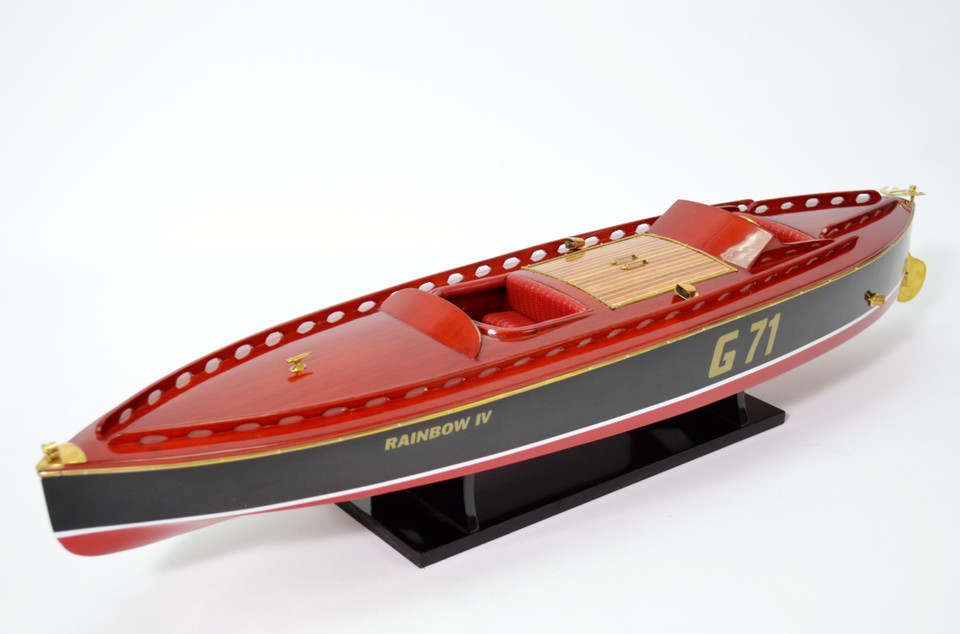
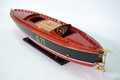
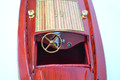
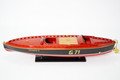
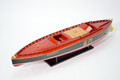
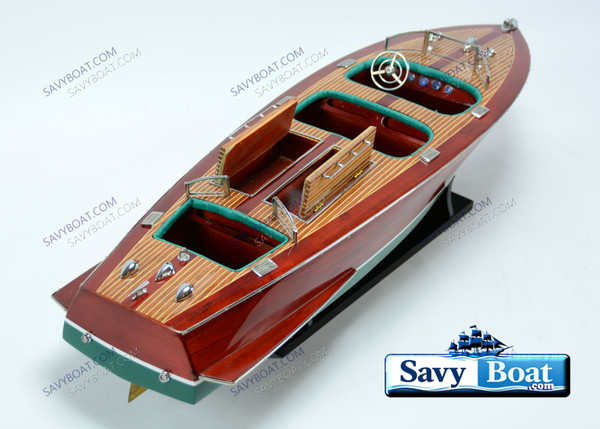
RAINBOW IV CLASSIC RACING SPEED BOAT
FULLY BUILT AND READY TO DISPLAY BOAT MODEL
- Dimension approx.: 35.5"L x 8"W x 8"H
- The model is already built. THIS IS NOT A MODEL SHIP KIT
In the early decades of the 20th century, few names carried more weight in Canadian powerboating than Harry Greening of Hamilton, Ontario. A self‑taught engineer and relentless competitor, Greening began in 1903 with a homemade 3‑horsepower canoe motor and spent the next two decades refining a fleet of increasingly sophisticated racing craft. His boats — the Rainbow and Gadfly series — became fixtures of North American competition, each new hull pushing the boundaries of speed, stability, and hydrodynamic design.
By 1924, Greening unveiled his most ambitious creation: the Rainbow IV, a sleek 27‑foot racing boat powered by a formidable Packard engine. She was the culmination of years of experimentation, following the successes of Rainbow I, winner of the Fisher‑Allison Trophy, and Rainbow III, the first planing hull to use an external propeller and rudder. Rainbow IV carried that lineage forward with a hull optimized for lift and efficiency, capable of extraordinary performance on both short‑course and endurance runs.
Her debut season was dramatic. At the 1924 APBA Gold Cup in Detroit, Rainbow IV dominated the field, finishing with a commanding lead. But her innovative lapstrake bottom — a series of small steps that behaved like a hydroplane surface — sparked controversy. Although technically legal under the rules at the time, the APBA judged the design outside the spirit of the competition and disqualified the boat, awarding the victory to Baby Bootlegger. The decision ended Greening’s participation in the Gold Cup and became one of the most debated rulings in early powerboat racing.
Greening, however, was not deterred. In 1925, he turned Rainbow IV toward endurance racing and achieved one of the most remarkable feats in motorboat history. On Lake Rosseau, Rainbow IV set a 24‑hour world distance record, covering 1,218 miles at an average speed of 50.78 mph — all without mechanical adjustments. The run shattered Greening’s own previous record and demonstrated the boat’s extraordinary reliability and engineering finesse.
Rainbow IV’s legacy is inseparable from Greening’s broader influence on the sport. After her record‑setting triumph, he continued to innovate, winning the Duke of York Trophy in England with Rainbow V and later campaigning Rainbow VII in Gold Cup competition. His boats embodied the tension between rulemaking and technological progress, often forcing racing authorities to reconsider what constituted a “legal” hull.
Today, Rainbow IV stands as a symbol of early hydroplane ingenuity — a boat that challenged conventions, broke records, and helped define the future of high‑speed racing. Her story reflects both the brilliance and the boldness of Harry Greening, a pioneer whose pursuit of speed left an enduring mark on the history of motorboat competition.