








-


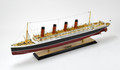
RMS LUSITANIA LIGHTED OCEAN LINER
SAVY DIRECT PRICE $1,199.96MSRP: $1,299.99RMS LUSITANIA LIGHTED FULLY BUILT AND READY TO DISPLAY, QUALITY SHIP MODEL Dimension approx.: 39.5″ L x 4.5″ W x 12.5″ H. The model is already built. THIS IS NOT A MODEL SHIP... -
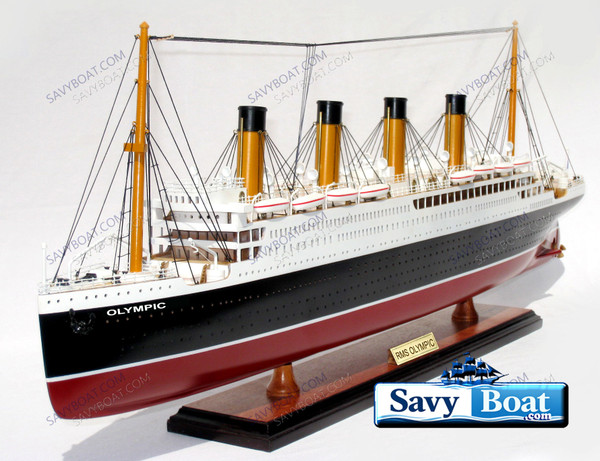

RMS OLYMPIC OCEAN LINER
SAVY DIRECT PRICE $1,099.96MSRP: $1,199.99RMS OLYMPIC PASSENGER SHIP - FULLY BUILT AND READY TO DISPLAY MUSEUM QUALITY SHIP MODEL Dimension approx.: 40″ L x 5.5″ W x 14″ H This beautiful model is already built, NOT a kit. The... -


RMS TITANIC OCEAN LINER
SAVY DIRECT PRICE $1,049.96MSRP: $1,199.99RMS TITANIC PASSENGER SHIP - EXCLUSIVE SPECIAL EDITION FULLY BUILT AND READY TO DISPLAY MUSEUM QUALITY SHIP MODEL BEAUTIFUL MUSEUM QUALITY MODEL Dimension approx.: 40″ L x 5.5″ W x 14″...
Description

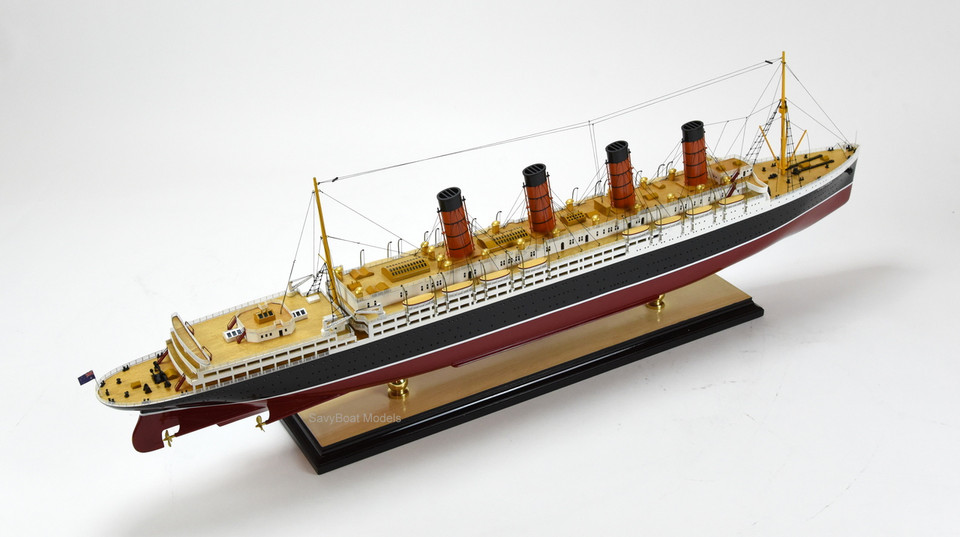
RMS LUSITANIA
FULLY BUILT AND READY TO DISPLAY, QUALITY SHIP MODEL
- Dimension approx.: 39.5″ L x 4.5″ W x 12.5″ H.
- The model is already built. THIS IS NOT A MODEL SHIP KIT
- LIGHTED - LED LIGHTS pre-installed (power supply not included)
The Rise and Fall of Lusitania
When Lusitania slid down the ways at Clydebank in 1906, she represented more than a new ship — she embodied a national answer to a challenge. For years, German liners had dominated the Atlantic, seizing the Blue Riband and the prestige that came with it. Cunard, backed by the British Admiralty, responded with two extraordinary vessels: Lusitania and Mauretania, “ocean greyhounds” built to reclaim speed, luxury, and pride.
She was immense, elegant, and astonishingly modern. The document notes that she “provided 50 percent more passenger space than any other ship,” and her interiors glowed with carved mahogany, frescoed domes, and Georgian lounges lit by stained glass skylights. Her turbine engines — a bold, untested choice — pushed her to a service speed of 24 knots, fast enough to win back the Blue Riband in 1907. For a brief moment, she was the largest ship in the world, and for years she was among the fastest.
But beneath the glamour lay a second identity. Built with Admiralty funds, she carried gun mounts and was classified as a Royal Naval Reserve vessel. Though she never sailed armed, she was always intended as a ship that could serve the empire in wartime. That duality — civilian luxury and military potential — would haunt her final voyage.
When war erupted in 1914, Lusitania continued her transatlantic service. She carried civilians, mail, and, at times, small quantities of war materiel. The document makes this explicit: she transported “a quantity of .303 ammunition” in her cargo. Germany, facing the British blockade, declared the waters around the United Kingdom a war zone. Submarines were authorized to sink Allied ships without warning.
As Lusitania prepared to leave New York on 1 May 1915, American newspapers carried a chilling notice from the German Embassy warning travelers of the danger. Many dismissed it. Others trusted in the old rules of war — that passenger ships were off‑limits. Nearly 2,000 people boarded anyway.
On the afternoon of 7 May, as she approached the Irish coast, the sea was calm and visibility clear. At 2:10 p.m., the German submarine U‑20 fired a single torpedo. Survivors recalled a sharp, cracking impact on the starboard side. Moments later came a second, deeper explosion — internal, violent, and catastrophic. The document states plainly: “the damage caused her to sink in 18 minutes.”
The ship immediately listed, making it nearly impossible to launch lifeboats. Only six reached the water intact. Passengers clung to rails, scrambled across slanting decks, or leapt into the cold sea. When the great liner finally rolled and disappeared, 1,197 people were gone — among them 128 Americans.
The world reacted with shock and fury. Germany defended the attack, arguing that the ship carried contraband and could be treated as a naval auxiliary. Britain denied this, insisting — as the document records — that “there were no ‘munitions’, apart from small arms ammunition.” The United States, still neutral, condemned the killing of civilians, arguing that “nothing could justify the killing of large numbers of un-resisting civilians.”
The sinking did not immediately bring America into the war, but it shifted the emotional tide. It hardened public opinion, strained diplomacy, and forced Germany to temporarily restrict submarine warfare. When Germany resumed unrestricted attacks in 1917, the memory of Lusitania helped push the United States toward its declaration of war.
Today, the wreck lies off the Old Head of Kinsale, collapsed and corroded, her once‑bright interiors reduced to twisted steel. Yet her story endures — not only as a tragedy, but as a turning point. She began as a symbol of speed, luxury, and national pride. She ended as a symbol of the brutal new reality of modern warfare.
Her final voyage lasted only minutes. Her legacy has lasted more than a century.