






-


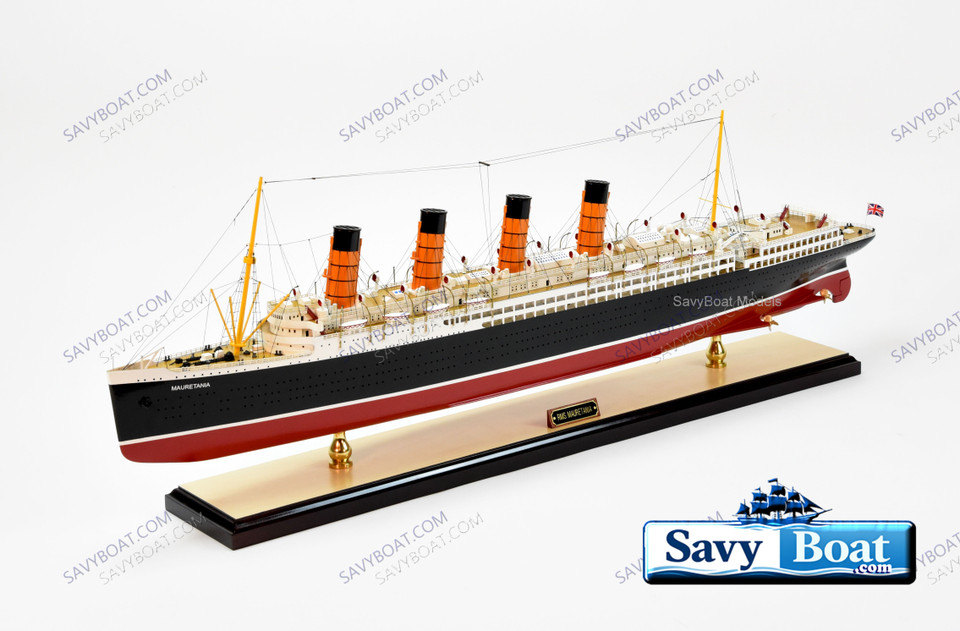
RMS MAURETANIA 38" LIGHTED OCEAN LINER
SAVY DIRECT PRICE $1,149.96MSRP: $1,299.99CUNARD LINE, RMS MAURETANIA LIGHTED LUXURY LINER MODEL FULLY BUILT AND READY TO DISPLAY QUALITY SHIP MODEL Dimension approx.: 38″ (long) x 4.5″ (wide) x 13″ (high). LIGHTED - LED lights... -

RMS BRITANNIC OCEAN LINER
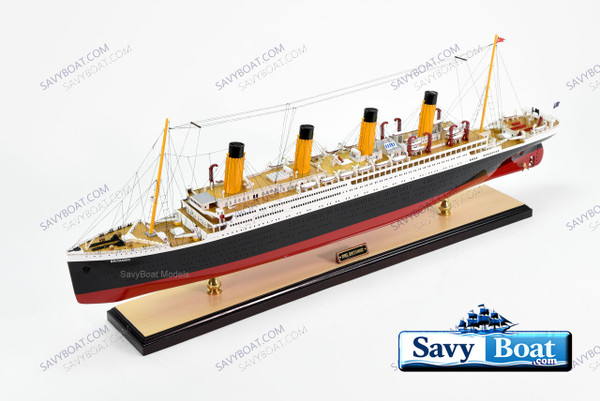
SAVY DIRECT PRICE $1,099.96MSRP: $1,199.99RMS BRITANNIC CIVILIAN COLOR SCHEME PASSENGER LINER FULLY BUILT AND READY TO DISPLAY MUSEUM QUALITY SHIP MODEL BEAUTIFUL MUSEUM QUALITY MODEL Dimension approx.: 40.5″ (long) x 5″ (wide) x 13... -

RMS OLYMPIC OCEAN LINER
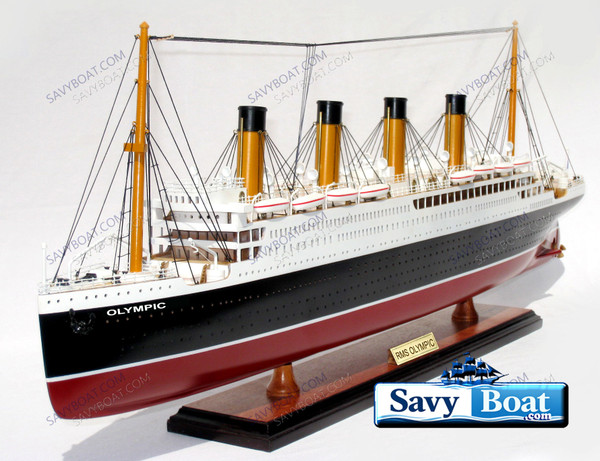
SAVY DIRECT PRICE $1,099.96MSRP: $1,199.99RMS OLYMPIC PASSENGER SHIP - FULLY BUILT AND READY TO DISPLAY MUSEUM QUALITY SHIP MODEL Dimension approx.: 40″ L x 5.5″ W x 14″ H This beautiful model is already built, NOT a kit. The...
Description

CUNARD LINE, RMS MAURETANIA LUXURY LINER MODEL
FULLY BUILT AND READY TO DISPLAY QUALITY SHIP MODEL
- Dimension approx.: 38″ (long) x 4.5″ (wide) x 13″ (high).
- This beautiful model is already built, NOT a kit.
When RMS Mauretania slid down the ways at Swan, Hunter & Wigham Richardson in 1906, she was more than a ship — she was a national statement. Built with government backing to reclaim Britain’s supremacy on the Atlantic, she emerged as the largest moving structure ever built and the most technologically advanced liner of her age. Her four raked funnels, turbine engines, and long, lean hull announced a new era of speed and power.
From the moment she entered service, Mauretania was destined for legend.
The early 1900s were a battleground of prestige. Germany had seized the Blue Riband with Kaiser Wilhelm der Grosse, and J.P. Morgan’s IMM threatened to dominate global shipping. Britain answered with two turbine‑driven greyhounds: Lusitania and Mauretania.
Mauretania was the faster of the pair. Her turbines — the largest application of the new Parsons technology — gave her a ferocious turn of speed. After a storm‑battered maiden westbound crossing, she roared home on the return voyage and captured the eastbound Blue Riband in December 1907. Two years later she seized the westbound record as well, and for 20 years no ship could touch her.
Her interiors matched her performance: a grand Edwardian world of carved woods, marble, tapestries, and a vast domed dining saloon. As the document notes, she featured “twenty‑eight different types of wood… marble, tapestries… and a large dome skylight” — a floating palace of the age.
Mauretania’s early years were dramatic. She broke loose from her moorings in New York during a squall, smashing barges around her. She survived rogue waves, lost propeller blades, and endured violent storms that exposed her screws and shook her hull. Yet she always pressed on, earning a reputation for speed, strength, and reliability.
In 1912, she was in Queenstown when news arrived of the Titanic disaster. Aboard was Cunard chairman A.A. Booth, who organized a shipboard vigil for the lost.
By 1913, even King George and Queen Mary toured her, acknowledging her status as Britain’s fastest and most celebrated merchant vessel.
When war erupted in 1914, Mauretania dashed to Halifax for safety. Initially considered for armed merchant cruiser duty, she was soon requisitioned as a troopship, carrying soldiers to the Gallipoli campaign. Later she became a hospital ship, painted white with buff funnels and red crosses, tending the wounded from the Dardanelles.
She then carried Canadian troops, and after the U.S. entered the war, transported 35,000 American soldiers to Europe. During this period she wore striking dazzle camouflage, a geometric pattern designed to confuse U‑boats.
Returned to Cunard in 1919, she resumed civilian service — older, but still proud.
In the 1920s, Mauretania underwent major changes. She was converted from coal to oil, reducing her engineering crew from 446 to 175 and improving efficiency. As the document notes, she could now complete a round trip “without having to refuel” — a major advantage.
Her turbines were overhauled, her promenade enclosed, and her funnels reshaped. In 1928, she received a glamorous interior refresh. But the world was changing. New German liners like Bremen and Europa were faster and more modern. Mauretania made one last attempt to reclaim the Blue Riband in 1929, coming tantalizingly close but ultimately falling short.
Still, she remained beloved — a ship of character, speed, and history.
The Great Depression ended the golden age of Atlantic travel. In 1930, Mauretania became a full‑time cruise ship, painted white and sailing to warmer waters. She rescued survivors of the Swedish freighter Ovidia in 1930, adding another chapter to her storied career.
But by 1934, with Cunard merging with White Star and newer ships on the horizon, Mauretania was deemed surplus. After a final crossing in September, she was retired.
Mauretania’s final voyage to the breakers in 1935 was a national event. Crowds lined the Tyne as she paused at her birthplace. The town of Amble famously sent her a telegram: “Still the finest ship on the seas.” She replied: “To the last and kindliest port in England, greetings and thanks.”
A lone piper played Auld Lang Syne as she arrived at Rosyth. Thousands paid to walk her decks one last time before scrapping began.
Though gone, Mauretania lives on in pieces scattered across Britain. Her ship’s bell stands in Lloyd’s Register, honored each Remembrance Day. Her first‑class lounge paneling adorns a Bristol bar. Her reading room survives at Pinewood Studios. Her fittings decorate churches, cinemas, and private homes. Her models reside in museums from Newcastle to Washington, D.C.
She remains a symbol of Edwardian engineering, British pride, and the golden age of the Atlantic liner — a ship whose speed, beauty, and service made her one of the most celebrated vessels ever to sail.
Mauretania was not just fast. She was unforgettable.