






-


RMS TITANIC OCEAN LINER
SAVY DIRECT PRICE $1,049.96MSRP: $1,199.99RMS TITANIC PASSENGER SHIP - EXCLUSIVE SPECIAL EDITION FULLY BUILT AND READY TO DISPLAY MUSEUM QUALITY SHIP MODEL BEAUTIFUL MUSEUM QUALITY MODEL Dimension approx.: 40″ L x 5.5″ W x 14″... -


RMS TITANIC 24" OCEAN LINER
SAVY DIRECT PRICE $339.96MSRP: $399.99RMS TITANIC OCEAN LINER FULLY BUILT AND READY TO DISPLAY MUSEUM QUALITY SHIP MODEL Dimension approx.: 24 inches long This beautiful model is already built, NOT a kit. Probably the most famous... -

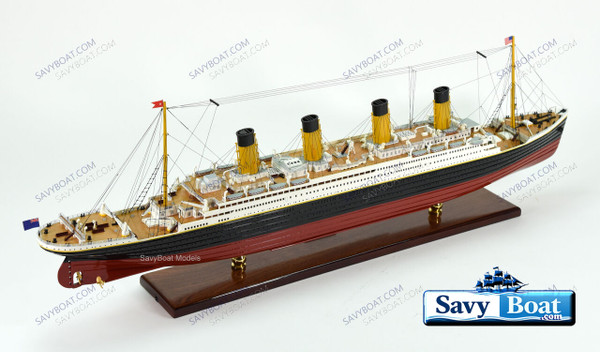
EXCLUSIVE EDITION RMS TITANIC OCEAN LINER
SAVY DIRECT PRICE $1,149.96MSRP: $1,249.99LIGHTED RMS TITANIC PASSENGER SHIP - EXCLUSIVE SPECIAL EDITION FULLY BUILT AND READY TO DISPLAY MUSEUM QUALITY SHIP MODEL BEAUTIFUL MUSEUM QUALITY MODEL Dimension approx.: 40″ L x 5.5″ W...
Description

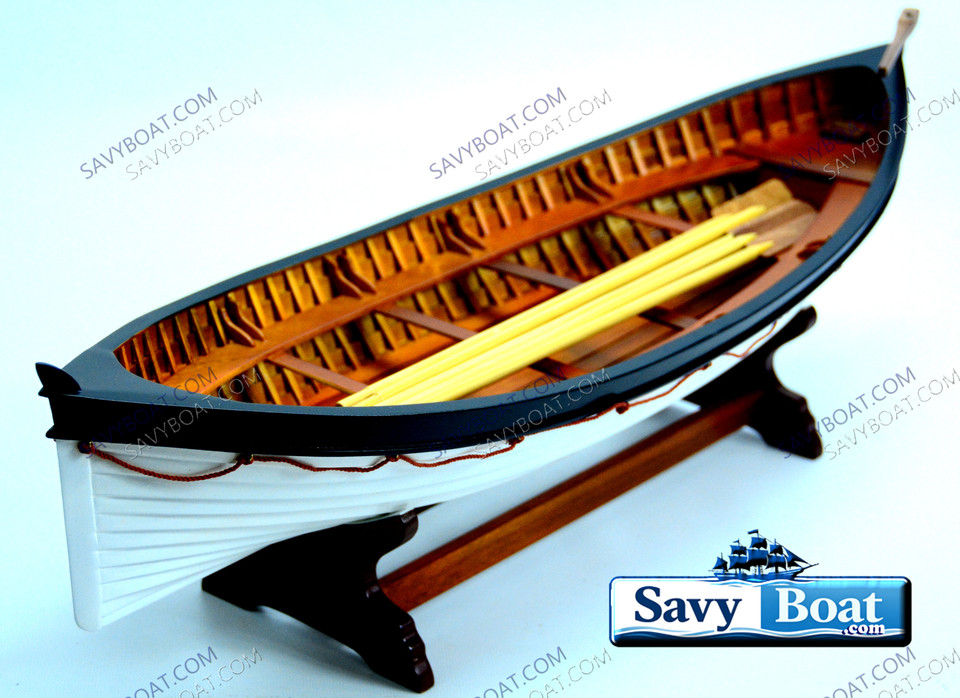
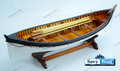
TITANIC LIFE BOAT
FULLY BUILT AND READY TO DISPLAY, QUALITY SHIP MODEL
- Dimension approx.: 24″ (long) x 8.5″ (wide) x 8″ (high)
- The model is already built. THIS IS NOT A MODEL SHIP KIT
When the Titanic left Southampton on 10 April 1912, she carried the confidence of a new century — a ship so vast, so modern, so carefully engineered that few could imagine her in peril. Her designers had given her watertight compartments, electric watertight doors, and a double bottom. But on her boat deck, resting quietly in their davits, were only 20 lifeboats, enough for 1,178 people — “just over half of the 2,209 on board,” as your source notes.
It was not negligence by the standards of the day. British Board of Trade regulations, written for ships a fraction of her size, required only 16 lifeboats. Titanic exceeded that number. Her collapsible boats — labeled A through D — were considered innovative additions. Her wooden lifeboats, double‑ended and sturdy, were mounted on Welin davits capable of handling more boats than she carried. In theory, she was compliant. In practice, she was vulnerable.
On the night of 14 April 1912, when the iceberg tore open her starboard side, the lifeboats suddenly became the ship’s only hope. But they were never meant to evacuate everyone — only to ferry passengers to rescue ships that, in an emergency, were assumed to be nearby. That assumption died with the first rush of seawater.
As the bow settled lower, the crew moved to the boat deck. The starboard boats were numbered 1–15, the port 2–16, with the collapsibles stored near the officers’ quarters. The order to load “women and children first” was interpreted differently on each side of the ship. Officers worried the davits might fail if the boats were filled to capacity. Many passengers, seeing the brightly lit, seemingly stable liner beneath their feet, hesitated to climb into small wooden craft suspended over the dark Atlantic.
The result was tragic: hundreds of empty seats left the ship. Lifeboat 7, the first launched, carried only 28 people despite space for 65. Others followed with similar numbers. The launch sequence unfolded in two parallel streams — starboard boats 7, 5, 3, 1, 9, 11, 13, 15, then Collapsible C; port boats 8, 6, 16, 14, 12, 2, 4, 10, then Collapsible D.
Two more — Collapsibles A and B — were never properly launched. They floated off as the bow submerged, overturned, and became desperate rafts for those who managed to climb atop them.
When the ship finally broke apart and disappeared, the sea was filled with cries. But only Lifeboat 14, under Fifth Officer Harold Lowe, returned to search for survivors. Lifeboat 4, still near the sinking, managed to pull a few aboard. Most boats stayed away, fearing — wrongly — that suction or panicked swimmers would capsize them.
By dawn, the cries had faded. The RMS Carpathia arrived between 4:00 and 8:30 a.m., hauling survivors aboard and hoisting 13 lifeboats onto her decks. The rest were left adrift, grim reminders of the night’s chaos.
In the aftermath, the world demanded answers. How could a ship so advanced carry lifeboats for only half its people? Why had so many seats gone empty? The disaster exposed the fatal gap between outdated regulations and modern shipbuilding. Within two years, the SOLAS Convention of 1914 mandated lifeboat space for all, continuous radio watches, and davits capable of launching every boat quickly.
Titanic’s lifeboats were seaworthy. They were legal. But they were not enough — and their story became one of the most enduring lessons in maritime safety. They were meant to be a precaution. They became the dividing line between life and death.