









-

 img:low-3-bottom-with-special-offer.pngimg:low-3-bottom-with-special-offer.png
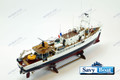
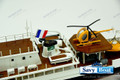
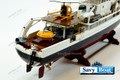
RV CALYPSO LIGHTED RESEARCH SHIP
SAVY DIRECT PRICE $100.00 - $1,249.96JACQUES COUSTEAU'S, RV CALYPSO EXPLORER SHIP FULLY BUILT AND READY TO DISPLAY MUSEUM QUALITY SHIP MODEL Dimension Approx.: 36" L x 7" W x 15" H APPROX SCALE 1:45 LED LIGHTED MODEL (power... -
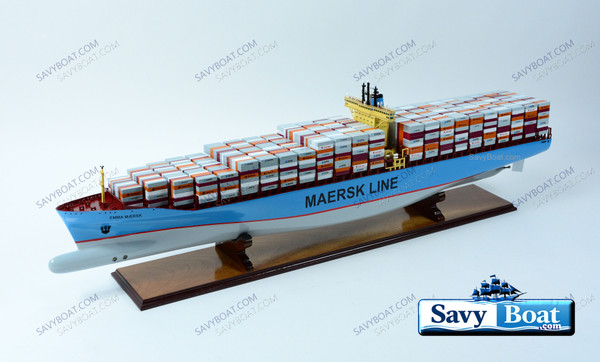

MAERSK EMMA CONTAINER 48” RC READY SHIP
SAVY DIRECT PRICE $1,299.96MSRP: $1,499.99Mærsk EMMA CONTAINER CARGO SHIP READY TO DISPLAY MUSEUM QUALITY SHIP MODEL Dimension Approx.: 48″L x 6.5"W x 13″H The model is already built, NOT a model ship kit -


SS AMERICAN SCOUT RC WWII CARGO SHIP
SAVY DIRECT PRICE $1,299.96MSRP: $1,399.99SS AMERICAN SCOUT RC READY WWII C2-S -AJ5 CLASS CARGO SHIP FULLY BUILT AND READY TO DISPLAY MUSEUM QUALITY SHIP MODEL Dimension approx.: 35″ L x 5″ W x 11″ H LIGHTED - LED LIG
Description

JACQUES COUSTEAU'S RC READY , RV CALYPSO EXPLORER SHIP
FULLY BUILT AND READY TO DISPLAY MUSEUM QUALITY SHIP MODEL
- Dimension Approx.: 36" L x 7" W x 15" H
- APPROX SCALE 1:45
- RC READY - propeller shafts and rudders installed with hatches open for easy installation of motors and RC equipment (not included)
- LED LIGHTED MODEL (power supplier not included)
- The model is already built, NOT a model ship kit
Jacques-Yves Cousteau’s Calypso Ocean Exploration Research Vessel
She began her life far from the romance of exploration that would one day define her name. In 1941, in the wartime urgency of a Seattle shipyard, a wooden‑hulled minesweeper took shape—Oregon pine laid over a frame meant for danger, not discovery. Launched as BYMS‑26 and later commissioned into the Royal Navy as HMS J‑826, she spent the war years sweeping the Mediterranean for mines, a small, sturdy craft working the quiet, perilous edges of conflict. When peace came, she was laid up in Malta, forgotten by the navies that had built and borrowed her.
Her second life began modestly. Sold to a Maltese businessman in 1949, she was refitted as a ferry and renamed Calypso G, after the nymph whose island was said to be Gozo itself. For a few months she carried mail and passengers across the narrow channel between Malta and Gozo, a practical little vessel doing practical work. But this chapter was brief, and she soon changed hands again—drifting, as if waiting for the purpose she had not yet found.
That purpose arrived in 1950, when British millionaire Thomas Loel Guinness purchased the ship and quietly leased her to a French naval officer turned ocean dreamer: Jacques Cousteau. For a symbolic franc a year, under the condition that he never ask for money and never reveal his benefactor, Cousteau transformed the unassuming ferry into something entirely new. The ship was rebuilt from bow to stern—equipped with laboratories, cameras, mini‑submarines, diving saucers, underwater scooters, and the now‑famous glass observation “nose” that allowed her crew to peer directly into the sea.
Thus reborn simply as Calypso, she became the wandering heart of Cousteau’s expeditions. She carried filmmakers, scientists, divers, and dreamers across the world’s oceans. She surveyed coral reefs and ancient wrecks, filmed the deep for audiences who had never imagined such worlds, and even—once, and only once—conducted an oil survey in the waters of Abu Dhabi. Her decks echoed with the hum of helicopters, the clatter of gear, and the laughter of a crew bound together by saltwater and curiosity. Through Cousteau’s films, she became a global icon, a symbol of exploration and environmental wonder.
But time and fate are unkind even to legends. In January 1996, while moored in Singapore, a barge struck her hull and sent her to the bottom. She was raised days later, patched and pumped dry, but the accident marked the beginning of a long and troubled twilight. Towed to France with hopes of restoration, she instead became entangled in legal battles, financial disputes, and family conflicts. Shipyards halted work, courts intervened, and the once‑proud vessel sat in limbo—her wooden bones aging, her future uncertain.
Ownership eventually passed fully to the Cousteau Society, and attempts at restoration resumed, only to falter again. In 2017, a fire in a Turkish shipyard damaged newly rebuilt sections, another setback in a saga already heavy with them. Yet through all the delays, lawsuits, and disappointments, the idea of Calypso—the dream she represented—never faded.
Today she remains a ship suspended between past and future, a vessel that once carried the world’s imagination across the oceans and now waits for the chance to sail again. Her legacy lives on in films, in music, in tributes from astronauts and artists, and in the countless people who first glimpsed the underwater world through her cameras. Calypso may rest in uncertainty, but her story continues to ripple outward—an enduring reminder of the era when she and Cousteau opened the sea to the world.