













-
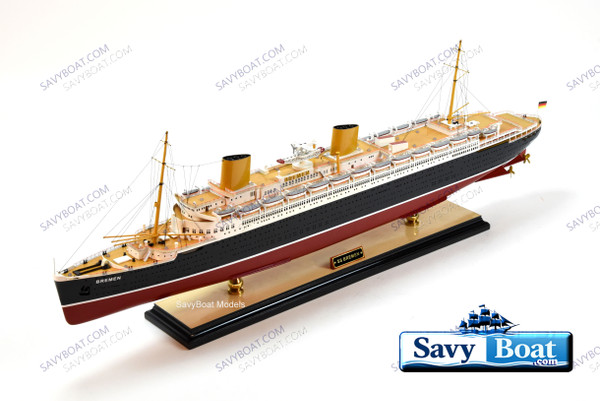

SS BREMEN OCEAN LINER
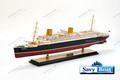
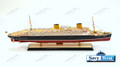
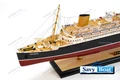
SAVY DIRECT PRICE $999.96MSRP: $1,099.99SS BREMEN OCEAN LINER FULLY BUILT AND READY TO DISPLAY, QUALITY SHIP MODEL Dimension Approx.: 37.5″ L x 4.5″ W x 15″ H approx Scale 1:300 The model is already built, NOT a model ship kit -


SS POSEIDON LIGHTED OCEAN LINER
SAVY DIRECT PRICE $1,099.96MSRP: $1,199.99SS POSEIDON LIGHTED OCEAN LINER FULLY BUILT AND READY TO DISPLAY, HIGH QUALITY SHIP MODEL Dimension Approx.: 36.5″ L x 4.5″ W x 11.5″ H LIGHTED - LED LIGHTS pre-install -


SS FAIRWIND LIGHTED OCEAN LINER
SAVY DIRECT PRICE $1,099.96MSRP: $1,199.99SS FAIRWIND LIGHTED CRUISE SHIP FULLY BUILT AND READY TO DISPLAY MUSEUM QUALITY SHIP MODEL Dimension approx.: 40″ (long) x 4.75″ (wide) x 12″ (high) Lighted with LED lighting (power supply not...
Description

SS BREMEN LIGHTED OCEAN LINER
FULLY BUILT AND READY TO DISPLAY, QUALITY SHIP MODEL
- Dimension Approx.: 37.5″ L x 4.5″ W x 15″ H
- Approx Scale 1:300
- LIGHTED - LED LIGHTS pre-installed (power supply not included)
- The model is already built, NOT a model ship kit
When SS Bremen slid down the ways on 16 August 1928, launched by President Paul von Hindenburg, she represented the pinnacle of German engineering between the wars. Built by Deutsche Schiff- und Maschinenbau, she and her sister SS Europa were conceived as technological marvels — fast, streamlined, and unmistakably modern. Their low profiles, powerful steam turbines, and innovative Taylor bulbous bows made them the most advanced ocean liners of their era, symbols of a nation eager to reclaim maritime prestige.
Inside her hull, Bremen was a machine of astonishing complexity. She carried 20 oil‑fired boilers, four airtight boiler rooms, and a propulsion system capable of producing 135,000 shaft horsepower. Her four bronze propellers, each five meters across, could drive her at sustained speeds above 27.5 knots, and during trials she reportedly touched 32 knots — speeds unheard of for a commercial liner. She required an engineering crew of 170 men, a testament to the sophistication of her machinery.
Her maiden voyage in July 1929 was a triumph. With Commodore Leopold Ziegenbein on the bridge, Bremen crossed the Atlantic in 4 days, 17 hours, 42 minutes, seizing the Blue Riband from Mauretania. She repeated the feat on her return voyage, becoming the first liner to break both eastbound and westbound records on her first two crossings. She also pioneered a new era of mail service: launching a Heinkel HE 12 seaplane from a catapult between her funnels, delivering mail to shore hours before the ship arrived.
Throughout the early 1930s, Bremen was a floating symbol of German pride — but also a stage for political tension. As Nazism rose, anti‑Nazi demonstrators targeted the ship during her New York calls. In 1935, the “Bremen Six” famously tore down her swastika flag and threw it into the Hudson River, sparking diplomatic outrage and a legal spectacle that reflected the growing unease between Germany and the world.
By 1939, as war loomed, Bremen was still one of the fastest ships afloat. She completed nearly 190 transatlantic crossings before her final arrival in New York that August. When Germany ordered all merchant ships home, she disembarked her passengers and slipped out of New York on 30 August 1939, racing across the Atlantic at high speed. Painted gray and running under blackout, she evaded British warships and reached Murmansk on 6 September, then dashed home to Bremerhaven in December — narrowly escaping an encounter with the British submarine HMS Salmon, whose commander chose not to fire.
Once back in Germany, Bremen was laid up as a barracks ship, her days as a glamorous liner over. Plans to use her in Operation Sea Lion, the proposed invasion of Britain, never materialized.
Her end came not from enemy action but from tragedy within. On 16 March 1941, a 14‑year‑old crew member, angered by punishment from an officer, set a fire aboard the ship. The blaze gutted Bremen from stem to stern. The boy was later executed — one of the youngest victims of Nazi justice — and the ship was left a burned‑out hulk.
From 1942, she was dismantled for scrap to feed the German war machine. In 1946, the remains were towed up the Weser, beached, and destroyed with explosives. Only fragments of her double hull survived into the 21st century.
Though gone, Bremen left a powerful legacy. She helped ignite the great ocean‑liner rivalry of the 1930s, pushed marine engineering into a new era, and symbolized both the ambition and turbulence of her time. Models, museum exhibits, and even a Guinness‑record‑holding 39‑foot replica built by enthusiasts keep her memory alive.
For a brief, brilliant decade, SS Bremen was the fastest, most modern ship in the world — a steel embodiment of speed, elegance, and the restless energy of the interwar Atlantic.