





-


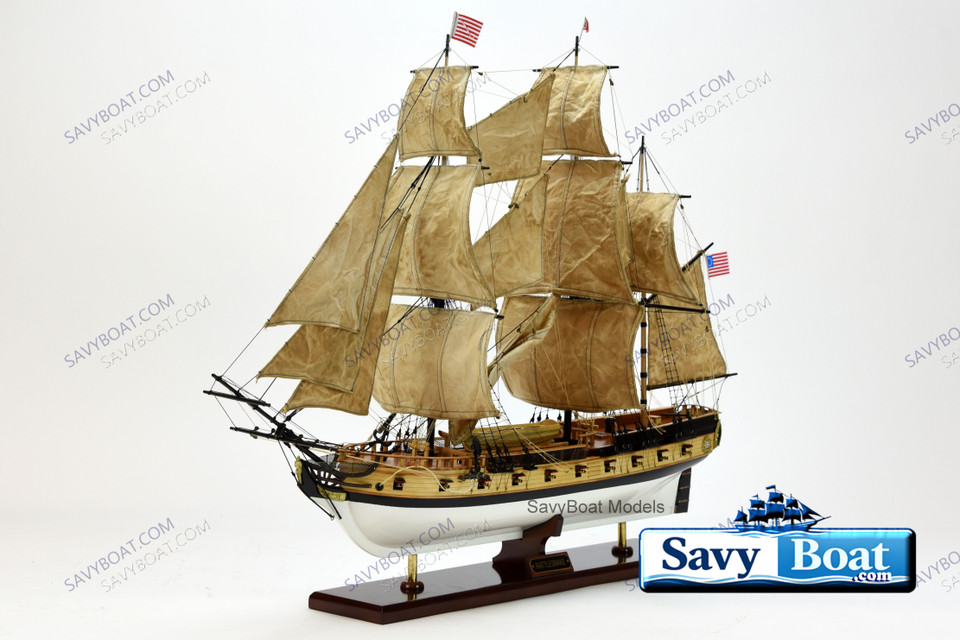
USS RATTLESNAKE TALL SHIP (NO SAILS)
SAVY DIRECT PRICE $579.96MSRP: $629.99USS RATTLESNAKE TALL SHIP (NO SAILS) FULLY BUILT AND READY TO DISPLAY, QUALITY SHIP MODEL Dimension approx.: 28″ (long) x 9″ (wide) x 20″ (high) The model is already built. THIS IS... -


USS OHIO TALL SHIP W/ SAILS
SAVY DIRECT PRICE $799.96MSRP: $799.99USS OHIO TALL SHIP WITH SAILS FULLY BUILT AND READY TO DISPLAY QUALITY SHIP MODEL Dimension Approx.: 32″ (high) x 7″ (wide) x 28″ (high) The model is already built, NOT a model shi -

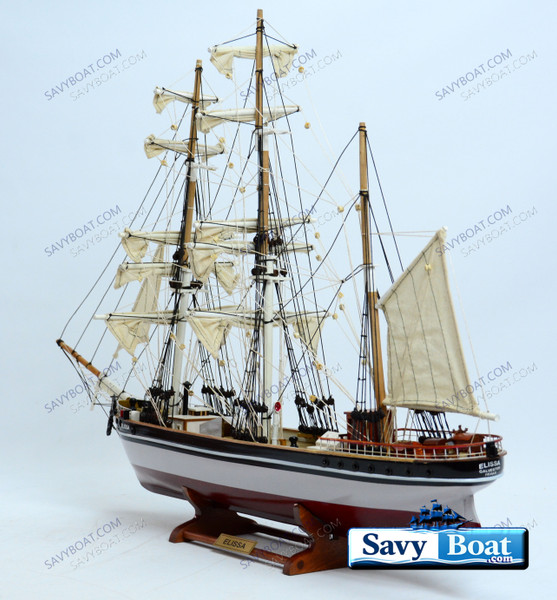
ELISSA TALL SHIP
SAVY DIRECT PRICE $739.96MSRP: $789.99ELISSA TALL SHIP FULLY BUILT AND READY TO DISPLAY QUALITY SHIP MODEL Dimension approx.: 31″ (long) x 9″ (wide) x 19″ (high) The model is already built. THIS IS NOT A MODEL SHIP...
Description

USS RATTLESNAKE TALL SHIP
FULLY BUILT AND READY TO DISPLAY, QUALITY SHIP MODEL
- Dimension approx.: 28″ (long) x 9″ (wide) x 20″ (high)
- The model is already built. THIS IS NOT A MODEL SHIP KIT
USS Rattlesnake — Privateer, Predator, and Prize of the War of 1812
In the shipyards of Medford, Massachusetts — a town famous for turning out fast, sharp‑lined privateers — a new brig slid down the ways in 1812. Built by Charles Turner for Captain Benjamin Rich, she was christened Rambler, a rakish, two‑masted vessel meant to chase prizes across the Atlantic. Her hull was lean, her rig powerful, and her purpose unmistakable: she was built for speed, pursuit, and the dangerous game of commerce raiding.
Within a year, the United States Navy took notice.
On 3 July 1813, the Navy purchased the Rambler for $18,000, refitted her for war, and renamed her USS Rattlesnake — a name chosen to evoke the coiled, striking spirit of the young republic.
Commissioned on 10 January 1814 under Master Commandant John O. Creighton, the Rattlesnake sailed from Portsmouth, New Hampshire, and soon joined the frigate USS Enterprise in the Caribbean. The two ships prowled the warm waters together, snapping up merchantmen and disrupting British trade.
But the Caribbean was also thick with Royal Navy cruisers. On 25 February 1814, the appearance of a heavily armed British warship forced the American pair to separate. The Rattlesnake slipped away and made for Wilmington, North Carolina, arriving safely on 9 March.
After refitting, now under Lt. James Renshaw, the Rattlesnake crossed the Atlantic and began a bold cruise in the eastern ocean, north of the equator. Here she lived up to her name — swift, elusive, and deadly.
Among her captures were the Brig Rambler — burned after capture, Société — a Swedish vessel bound for St. Amelia, Mars — a Nassau privateer, , Schooner Eliza — bound for Pensacola, Henry Dundas — plundered, then released, John — Liverpool to Oporto, and Crown Prince of Poole — Newfoundland to Alicante. She was a thorn in Britain’s side, a small brig with an outsized impact, striking where she pleased and vanishing into the Atlantic haze.
On 31 May 1814, she encountered a British frigate. To escape, her crew threw overboard all but two of her guns — a desperate but effective tactic. Lightened, she fled into the wind and disappeared over the horizon.
Her luck ran out on 22 June 1814 off Cape Sable, Nova Scotia.
The British 50‑gun frigate HMS Leander — one of the fastest heavy ships in the Royal Navy — spotted the American brig and gave chase. The Rattlesnake, already stripped of most of her armament, ran hard before the wind. But the weather turned foul, and in heavy seas the larger frigate gained steadily.
After a long pursuit, the Rattlesnake was overtaken and captured. The Royal Navy purchased her at Nova Scotia, but her subsequent career vanished into the fog of history. No records survive of what became of her — whether she served, was sold, or quietly broken up.
Though her time under the U.S. flag was brief, the USS Rattlesnake left a vivid mark on the War of 1812 as she was A privateer reborn as a naval brig, A hunter of merchantmen in two oceans, A ship that escaped frigates, captured prizes, and fought the world’s greatest navy, and A vessel whose final fate remains a mystery.
In the tall‑ship world, the Rattlesnake fits the classic silhouette of the early 19th‑century brig — twin masts, square‑rigged, fast and agile, built for the chase. She was not a grand frigate or a ship‑of‑the‑line, but something leaner and more dangerous: a predator of the sea, striking swiftly before disappearing into the horizon.
A small ship, but a memorable one — a rattlesnake indeed.