







-

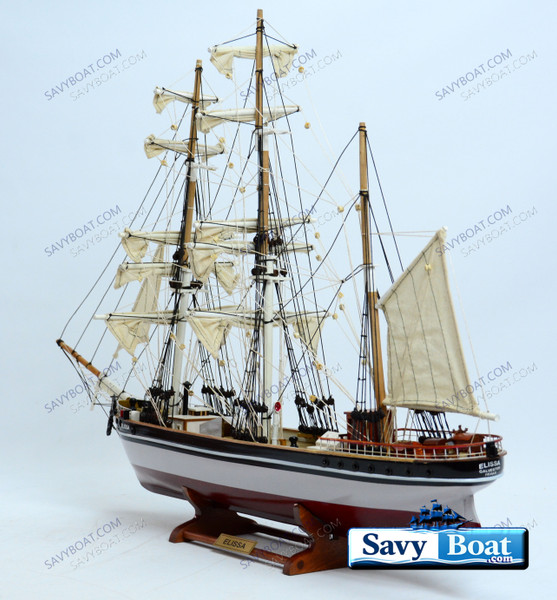
ELISSA TALL SHIP
SAVY DIRECT PRICE $739.96MSRP: $789.99ELISSA TALL SHIP FULLY BUILT AND READY TO DISPLAY QUALITY SHIP MODEL Dimension approx.: 31″ (long) x 9″ (wide) x 19″ (high) The model is already built. THIS IS NOT A MODEL SHIP... -
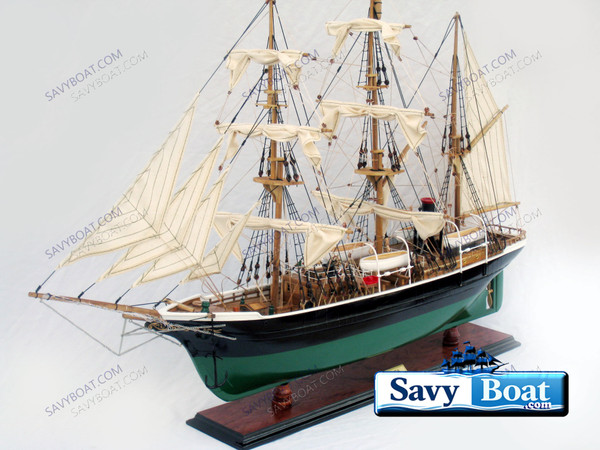
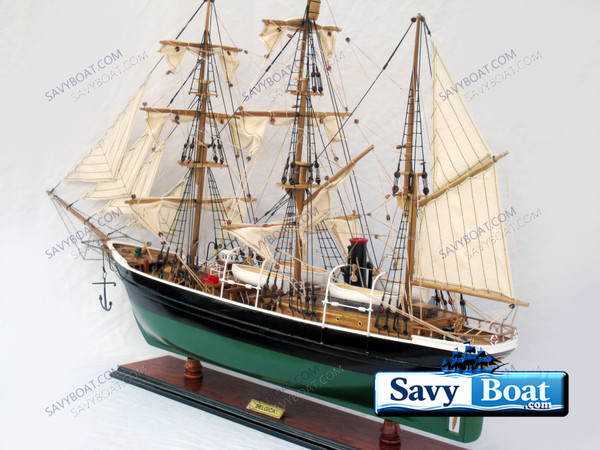
BELGICA TALL SHIP
SAVY DIRECT PRICE $799.96MSRP: $849.99BELGICA TALL SHIP FULLY BUILT AND READY TO DISPLAY, QUALITY SHIP MODEL Dimension approx.: 28.74L x 5.51W x 25.59H (inches) The model is already built. THIS IS NOT A MODEL SHIP KIT When... -


FRIESLAND DUTCH 80 GUN SHIP (WHITE)
SAVY DIRECT PRICE $1,199.96MSRP: $1,399.991663 FRIESLAND - DUTCH 80 GUN SHIP FULLY BUILT AND READY TO DISPLAY MUSEUM QUALITY SHIP MODEL Dimension approx.: 30″ L x13.5″ W x 32″ H Cloth sails Panted white hull
Description

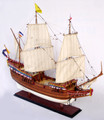
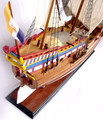
1595 DUYFKEN DUTCH TALL SHIP
FULLY BUILT AND READY TO DISPLAY QUALITY SHIP MODEL
- Dimension Approx.: 32″ (long) x 8″ (wide) x 30″ (high)
- The model is already built, NOT a model ship kit
Small, fast, and built for exploration, the Duyfken (“Little Dove”) was one of the Dutch East India Company’s most agile vessels — a compact jacht designed for scouting, shallow‑water navigation, and carrying small but valuable cargoes across the East Indies. Built around 1601 in the Dutch Republic, she measured only about 19.6 meters in length and 5.45 meters in beam, armed with eight small cannons and crewed by roughly twenty sailors. Though modest in size, she would become one of the most historically significant ships of the early 17th century.
The name Duyfken had already appeared in VOC records: an earlier vessel sailed to Bantam in 1595 and was later renamed Overijssel. But the 1601 jacht is the ship remembered today — the vessel that carried the Dutch flag farther south than any European ship before her.
In late 1605, the Duyfken departed Texel under Willem Janszoon, tasked with exploring the unknown waters south of New Guinea in search of new trade opportunities. Early in 1606, she crossed the Arafura Sea and reached the western coast of Cape York Peninsula — the first documented European ship to make landfall on the Australian continent. Janszoon charted roughly 300 kilometers of coastline, believing it to be part of New Guinea, and on 26 February 1606 he went ashore near modern Weipa and the Pennefather River.
The encounter between Janszoon’s crew and the Indigenous Australians was the first recorded meeting between Europeans and Aboriginal peoples. Initial contact was cautious but soon turned violent after misunderstandings and coercion, resulting in casualties on both sides. Janszoon withdrew and named the place Kaap Keerweer — “Cape Turn‑Back” — marking the end of the expedition and the beginning of Australia’s documented European history.
The Duyfken continued to serve the VOC for only a short time afterward. In 1608, she was condemned as unseaworthy at Ternate and abandoned — a quiet end for a ship that had opened a new chapter in world exploration.
Centuries later, her legacy inspired a remarkable revival. In the late 1990s, volunteers and historians constructed a full‑scale replica using period research and computer modeling. Launched in 1999, the modern Duyfken sailed along the Australian coast, retracing Janszoon’s route and serving as a floating classroom for maritime history. Today, she resides at the Australian National Maritime Museum in Sydney, offering visitors an authentic glimpse into the cramped, demanding world of early VOC exploration.
Though small and short‑lived, the Duyfken occupies an outsized place in maritime history. Her 1606 voyage marked the first authenticated European landing on Australia and the earliest recorded encounter between Europeans and Indigenous Australians. The replica ensures that her story — and the experiences of the twenty Dutch sailors who crewed her — continues to be told, preserving a pivotal moment in the age of exploration.