






-

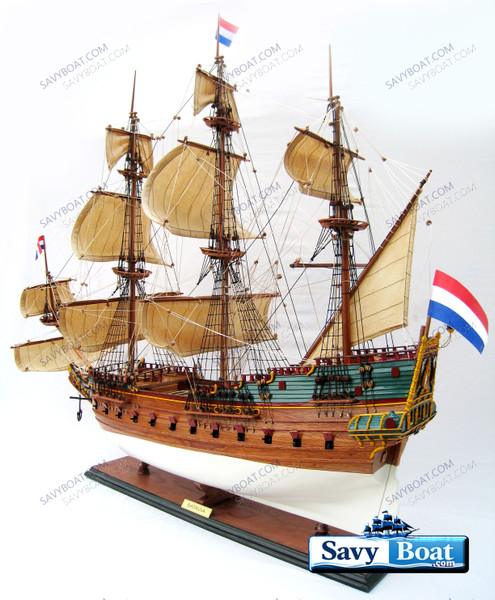
BATAVIA MERCHANT TALL SHIP W/ SAILS
SAVY DIRECT PRICE $1,099.96MSRP: $1,199.99BATAVIA MERCHANT TALL SHIP (WITH SAILS) FULLY BUILT AND READY TO DISPLAY MUSEUM QUALITY SHIP MODEL Dimension approx.: 32.6L x 7.4W x 29.5H The model is already built. THIS IS... -


USS OHIO TALL SHIP W/ SAILS
SAVY DIRECT PRICE $799.96MSRP: $799.99USS OHIO TALL SHIP WITH SAILS FULLY BUILT AND READY TO DISPLAY QUALITY SHIP MODEL Dimension Approx.: 32″ (high) x 7″ (wide) x 28″ (high) The model is already built, NOT a model shi -

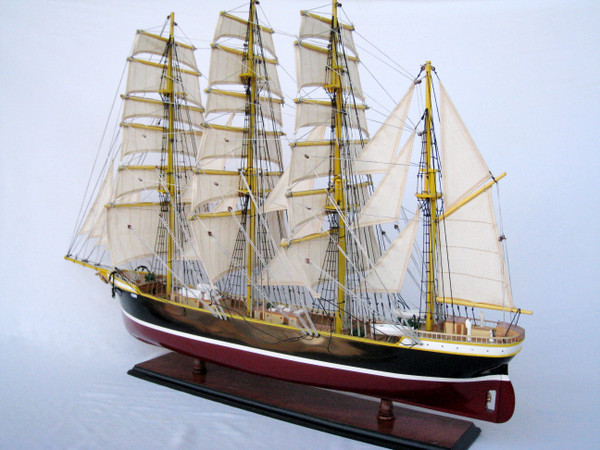
PARMA WINDJAMMER TALL SHIP W/SAILS
SAVY DIRECT PRICE $749.96MSRP: $799.99(1902-1938) PARMA TALL SHIP W/ SAILS FULLY BUILT AND READY TO DISPLAY QUALITY SHIP MODEL Dimension Approx.: 31.5″ (long) x 7″ (wide) x 27.5″ (high) The model is
Description

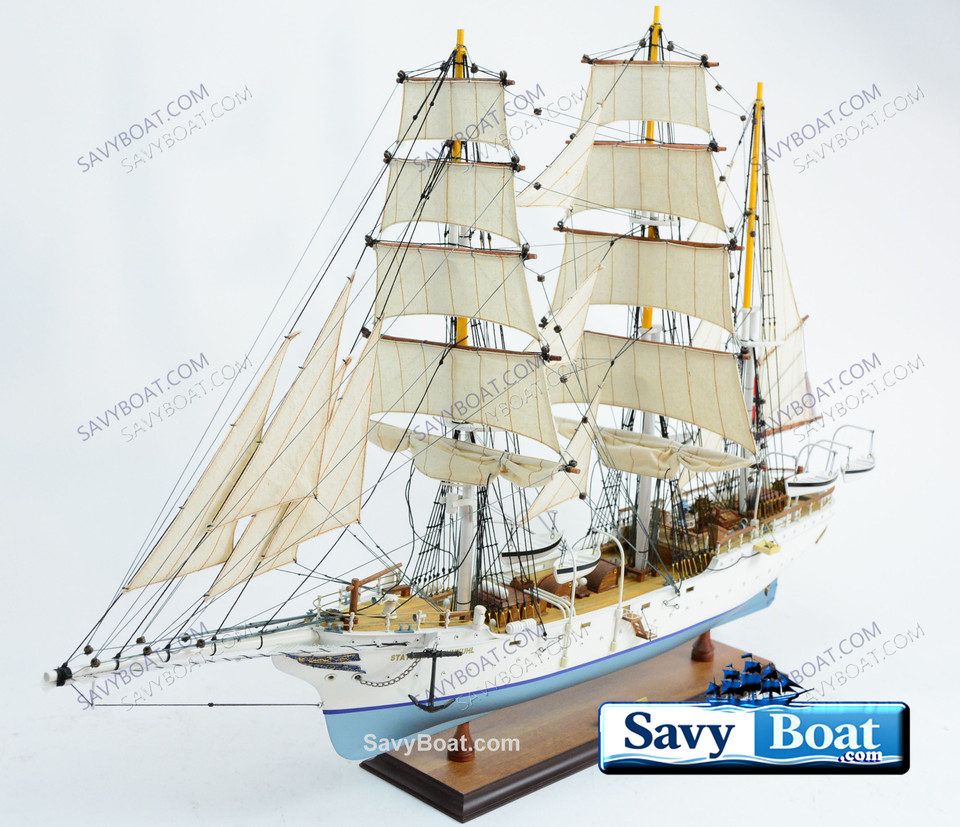
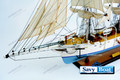
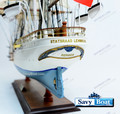
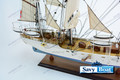
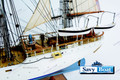
1914 STATSRAAD LEHMKUHL TALL SHIP W/ SAILS
FULLY BUILT AND READY TO DISPLAY QUALITY SHIP MODEL
- Dimension Approx.: 31.5″ (high) x 5.5″ (wide) x 26.5″ (high)
- The model is already built, NOT a model ship kit
Few sailing ships have lived as many lives, under as many flags, or trained as many mariners as the Statsraad Lehmkuhl. Launched in 1914 from the Johann C. Tecklenborg yard in Bremerhaven, she was built as Grossherzog Friedrich August, a modern steel barque designed for Germany’s merchant‑marine training program. Even at birth she was ahead of her time: equipped with electric lighting, wireless telegraphy, and a diesel auxiliary engine — the first ever installed on a school ship. She represented the pinnacle of early 20th‑century sail training, blending traditional rig with cutting‑edge technology.
During World War I, the ship never saw combat. Instead, she remained in Germany as a stationary training vessel, her voyages halted by the conflict. After the war, she was surrendered to Britain as part of Germany’s reparations. Her future might have been uncertain, but in 1921 Norwegian statesman and shipping magnate Kristofer Lehmkuhl arranged her purchase. Two years later she arrived in Bergen, renamed Statsraad Lehmkuhl (“Cabinet Minister Lehmkuhl”), and began a new life as Norway’s premier sail‑training vessel.
For the next two decades, she served the Bergen School Ship Foundation, training thousands of young sailors in seamanship, discipline, and life at sea. Her tall masts and graceful lines became familiar sights along the Norwegian coast and across the Atlantic during her “America Voyages,” which strengthened ties between Norway and the United States.
Her fortunes changed again during World War II. When Germany occupied Norway, the ship was seized, painted black, and renamed Westwärts. She served as floating barracks for German soldiers, receiving little care and suffering significant deterioration. By war’s end, she was in poor condition — but not beyond saving.
Restored after 1945, Statsraad Lehmkuhl returned to training voyages and international regattas. She won her first major Tall Ships Race in 1960 and became a beloved ambassador of Norwegian maritime heritage. Yet by the late 1960s, rising costs and declining interest in traditional sail training threatened her future. Shipowner Hilmar Reksten purchased her in 1967 to prevent her sale abroad, maintaining her at personal expense until financial troubles forced her lay‑up in 1973. She remained idle in Bergen until 1978, when she was donated to the newly formed Statsraad Lehmkuhl Foundation, securing her preservation.
In the modern era, the ship has enjoyed a renaissance. Operated from Bergen, she sails year‑round as a training vessel, public cruise ship, and international regatta competitor. In 2019, she entered a new technological chapter with a hybrid propulsion upgrade — a 370 kWh battery system that complements her sails and reduces emissions, blending tradition with sustainability.
Today, after more than a century at sea, the Statsraad Lehmkuhl remains one of the world’s most iconic tall ships. She has survived war, neglect, and changing maritime priorities, emerging as a living monument to seamanship, education, and Norway’s enduring maritime spirit.