










-


RIVA ARISTON 28" SPEEDBOAT SPEEDBOAT
SAVY DIRECT PRICE $609.96MSRP: $649.99RIVA ARISTON 28" SPEEDBOAT (WHITE HULL) Dimension: 28″ Length x 9″ Beam Authentic scale gauges, dials and chrome steering wheel on dash Hand stitched individual leather seats -


RIVA CORSARO SPEEDBOAT
SAVY DIRECT PRICE $609.96MSRP: $669.99RIVA CORSARO SPEED BOAT Dimension Approx.: 35″ L x 11″ W x 9.5″ H This is a fully built model. it is NOT a kit Authentic scale gauges, dials and chrome steering wheel on dash Hand stitched... -

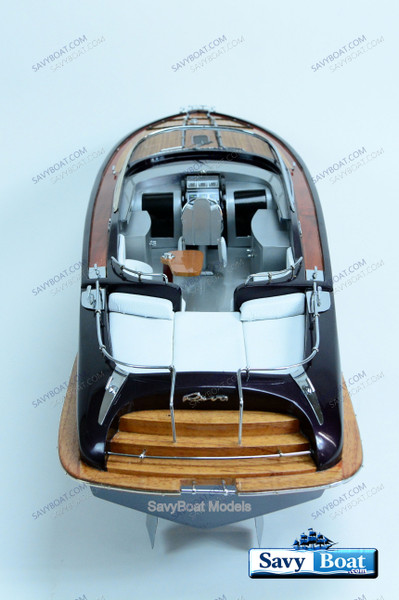
RIVA RAMA 35" SPEEDBOAT
SAVY DIRECT PRICE $729.96MSRP: $789.99RIVA RAMA 35" SPEEDBOAT Dimension Approx.: 35″ L x 10″ W x 8.5″ H (not including base) This is a fully built model. it is NOT a kit Authentic scale gauges, dials and chrome steering wheel on...
Description

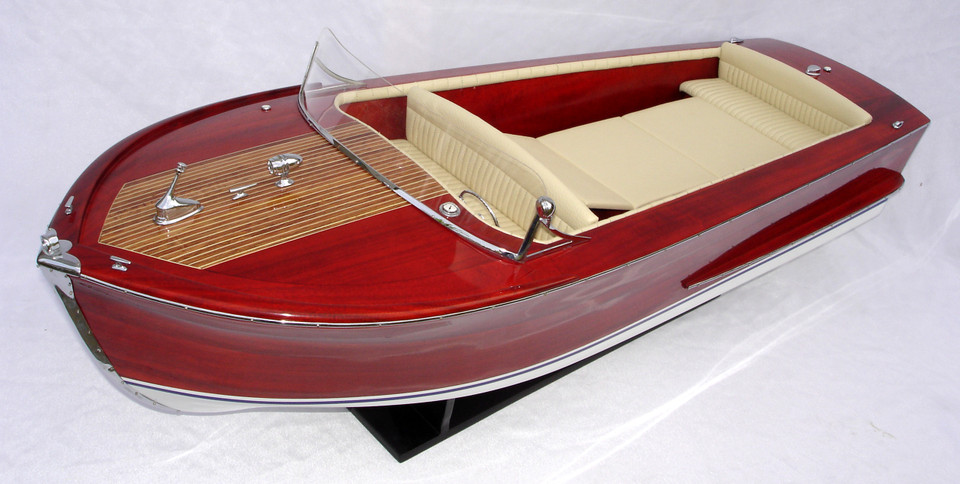
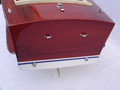
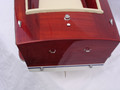
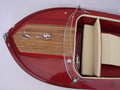
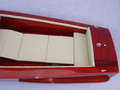
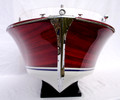
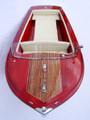
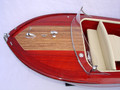
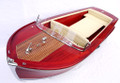
1952 RIVA SEBINO CLASSIC SPEEDBOAT
- Dimension Approx.: 32″ L x 9″ W x 11″ H
- This is a fully built model. it is NOT a kit
- Authentic scale gauges, dials and chrome steering wheel on dash
- Hand stitched individual leather seats
The Riva Sebino, introduced in 1952, marks one of the most important turning points in the history of the Riva shipyard. Before the Sebino, Riva boats were custom‑built one by one, each identified only by internal codes and tailored to the specific wishes of individual clients. With the Sebino, Riva entered a new era: series production, standardized design, and the birth of the named model lineup that would eventually include icons like the Tritone, Ariston, and Aquarama. In many ways, the Sebino is the boat that transformed Riva from a boutique workshop into a global brand.
Compact, elegant, and versatile, the Sebino was designed for the booming leisure‑boat market of the early 1950s. At 4.90 to 5.11 meters in length, it was small enough for easy handling yet large enough for family outings, water skiing, and coastal cruising. Its hull was originally planked in Honduras mahogany, giving it the warm glow and craftsmanship that defined Riva’s early wooden runabouts. Beginning in 1956, Riva introduced a more modern construction method, using waterproof plywood for the bottom and deck with inlaid veneers — a technique that improved durability while preserving the boat’s classic appearance.
The Sebino’s design evolved throughout its production run. Early models featured a two‑part frameless glass windscreen, while later versions adopted a single curved wrap‑around screen that gave the boat a more modern, aerodynamic look. The interior combined green vinyl upholstery with red‑and‑green checked fabric, later transitioning to padded green vinyl panels from 1953 onward. These details, though simple, gave the Sebino a distinctive charm and a clear identity within the growing Riva family.
Power came from a reliable 60 hp Chris‑Craft B‑type four‑cylinder engine, chosen for its balance of speed, handling, and ease of maintenance. With this engine, the Sebino delivered lively performance suitable for water skiing — a sport rapidly gaining popularity in the 1950s — and for spirited cruising on lakes and coastal waters. Its compact size and straightforward layout made it accessible to new boaters, helping Riva reach a broader audience.
Between 1952 and 1957, Riva built 119 Sebinos, making it a rare and highly collectible model today. But its significance goes far beyond production numbers. The Sebino was the first Riva to carry a standardized name, the first to be built in a true series, and the first to establish the design philosophy that would define Riva’s golden age. It paved the way for the Ariston, the Tritone, and ultimately the Aquarama — boats that would become symbols of Italian elegance and international glamour.
Today, the Riva Sebino is cherished not only for its beauty and craftsmanship but for its historical importance. It represents the moment when Riva stepped confidently into the modern era, blending artisanal tradition with forward‑looking innovation. For collectors and enthusiasts, the Sebino remains a jewel of the 1950s — rare, refined, and foundational to the legacy of one of the world’s most iconic boatbuilders.