




-


1953 CHRIS CRAFT RACING RUNABOUT
SAVY DIRECT PRICE $629.96MSRP: $699.991953 CHRIS CRAFT RACING RUNABOUT FULLY BUILT AND READY TO DISPLAY BOAT MODEL Dimension approx.: 32″ (long) x 9.5″ (beam) The model is already built. THIS IS NOT A MODEL SHIP KIT In... -


1954 CHRIS CRAFT COMMANDER
SAVY DIRECT PRICE $879.96MSRP: $979.991954 CHRIS CRAFT COMMANDER FULLY BUILT AND READY TO DISPLAY MODEL Dimension approx.: 37″ (long) x 14.5″ (wide) x 12.5″ (high) The model is already built. THIS IS NOT A MODEL SHIP... -


CHRIS CRAFT HOLIDAY RUNABOUT
SAVY DIRECT PRICE $629.96MSRP: $699.991962 CHRIS CRAFT HOLIDAY RUNABOUT FULLY BUILT AND READY TO DISPLAY BOAT MODEL Dimension approx.: 32″ (long) x 8″ (beam) The model is already built. THIS IS NOT A MODEL SHIP...
Description

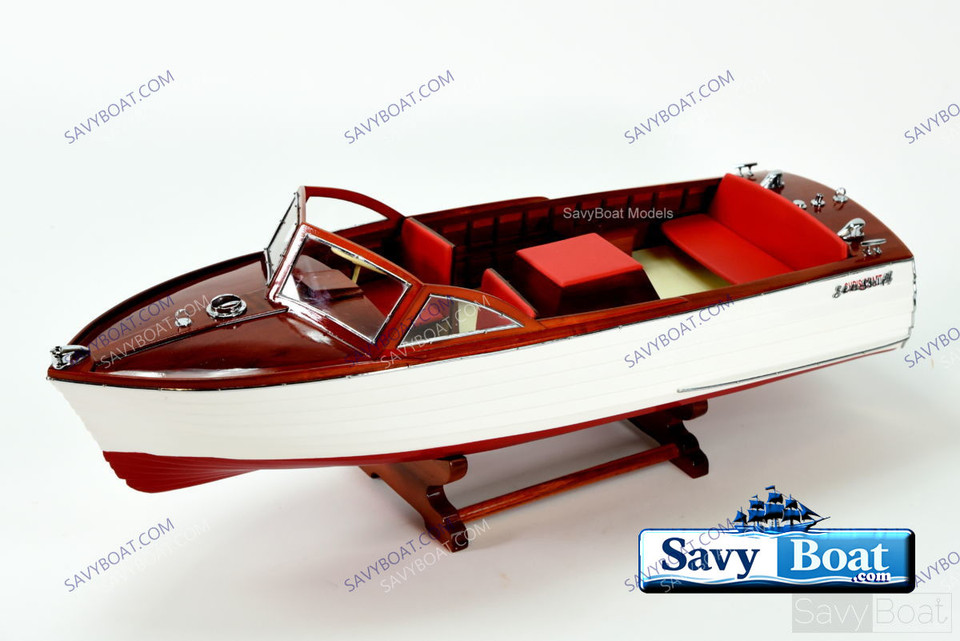
1953 CHRIS CRAFT SEA SKIFF
FULLY BUILT AND READY TO DISPLAY BOAT MODEL
- Dimension approx.: 26″ L x 9″ W x 9″ H
- The model is already built. THIS IS NOT A MODEL SHIP KIT
By the early 1950s, American boating was entering a golden age. Families were heading to lakes and rivers on weekends, marinas were expanding, and Chris‑Craft—already the most recognizable name in wooden pleasure boats—was building vessels that blended craftsmanship with affordability. The 1953 Sea Skiff emerged from this moment as one of the company’s most practical and versatile designs, a lapstrake‑hulled runabout or cruiser that offered strength, stability, and unmistakable mid‑century style.
The Sea Skiff line was introduced as a more economical alternative to Chris‑Craft’s premium planked mahogany boats. Instead of smooth carvel planking, the Sea Skiff used lapstrake construction, with overlapping plywood planks that created a distinctive ribbed texture along the hull. This method produced a lighter, more resilient boat—ideal for choppy water, fishing trips, and family cruising. It also gave the Sea Skiff a character all its own: rugged, handsome, and instantly recognizable.
The 1953 lineup ranged widely in size, from nimble 16–20 foot runabouts to larger 22–30 foot cruisers. Many carried bright mahogany or teak decks, especially the twin‑engine models like the 28 Express, which famously used imported teak for its horizontal topside planks. Cockpit layouts were functional and open, designed for anglers, families, and weekend explorers alike. Larger models often featured twin 283‑cubic‑inch Chevy V8s, their engine boxes doubling as passenger seating—a practical touch that became a hallmark of the line.
Culturally, the Sea Skiff captured the spirit of postwar boating. It was a boat for families who wanted adventure without extravagance, for fishermen who needed a stable platform, and for owners who valued Chris‑Craft quality but preferred a more approachable price point. Many Sea Skiffs became heirlooms, passed down through generations, their lapstrake hulls and simple layouts aging gracefully with time and care.
One of the best‑known examples is the 1953 Chris‑Craft 28 Express “Muskie,” a working guide boat on the St. Lawrence River. For decades, the Garnsey family used Muskie to take anglers in search of Northern Pike, Muskellunge, and Walleye. Her distinctive blue hardtop and twin engines made her a familiar sight on the river, and her restoration and continued use speak to the durability and affection these boats inspire.
Today, the 1953 Sea Skiff stands as a symbol of mid‑century American boating—practical, stylish, and deeply tied to the culture of its time. Collectors prize them for their craftsmanship and history, and restorers appreciate their straightforward construction. Whether preserved in original condition or lovingly rebuilt, the Sea Skiff remains one of Chris‑Craft’s most enduring contributions to classic wooden boating.