








-


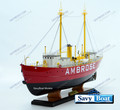
US CHESAPEAKE LIGHTSHIP (LV-116)
SAVY DIRECT PRICE $649.96MSRP: $699.99US CHESAPEAKE LIGHTSHIP (LV-116) FULLY BUILT AND READY TO DISPLAY, QUALITY SHIP MODEL Dimension approx.: 27L x 6.5W x15.5H (inch) The model is already built. THIS IS NOT A MODEL SHIP... -


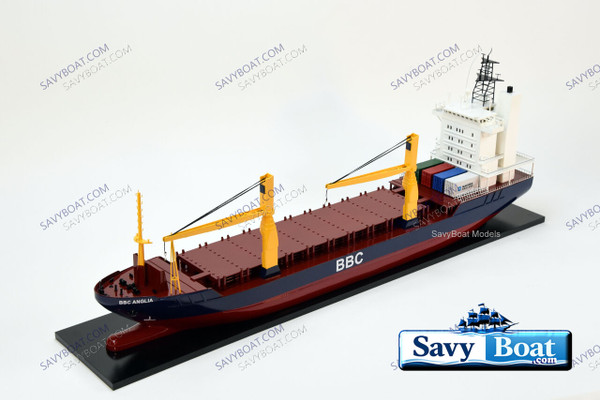
BBC BREAK BULK 1/87 CARGO SHIP
SAVY DIRECT PRICE $749.96MSRP: $799.99BBC BREAK BULK CARGO SHIP FULLY BUILT AND READY TO DISPLAY SHIP MODEL Dimension Approx.: 40″L x 8.5"W x 10″H HO SCALE 1:87 The model is already built. THIS IS NOT A MODEL SHIP KIT When... -

BBC BREAK BULK 1/87 CARGO SHIP WATERLINE
SAVY DIRECT PRICE $749.96MSRP: $799.99BBC BREAK BULK CARGO SHIP WATERLINE FULLY BUILT AND READY TO DISPLAY SHIP MODEL Dimension Approx.: 40″L x 8.5"W x 10″H HO SCALE 1:87 The model is already built. THIS IS NOT A MODEL SHIP...
Description

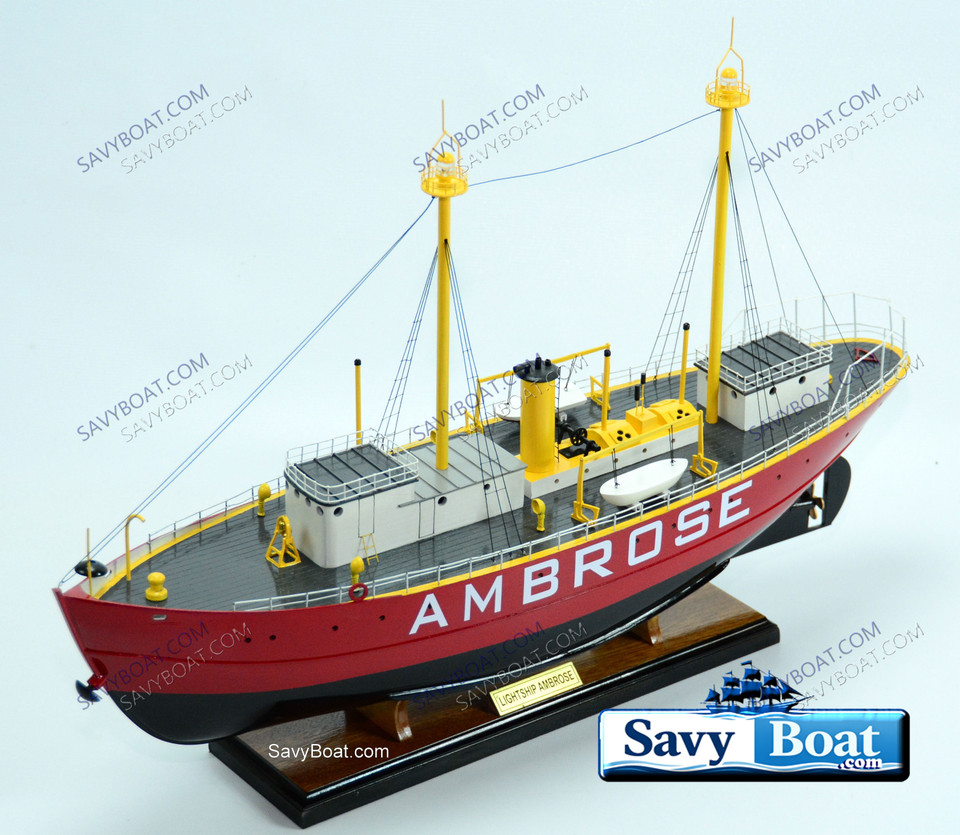
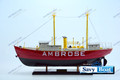
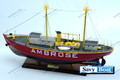
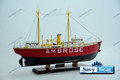
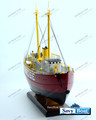
AMBROSE LIGHTSHIP LV-87 / WAL-512
FULLY BUILT AND READY TO DISPLAY, QUALITY SHIP MODEL
- Dimension approx.: 27L x 6.5W x15.5H (inch)
- The model is already built. THIS IS NOT A MODEL SHIP KIT
For nearly a century and a half, the name Ambrose meant one thing to mariners approaching New York: the first fixed point of certainty after the long Atlantic crossing. Before radar, before GPS, before the skyline itself became a navigational cue, the Ambrose lightships stood guard at the mouth of the harbor, marking the narrow, shifting entrance to the busiest port in the United States. They were not glamorous ships, nor fast, nor meant for distant voyages. But they were steadfast — the sentinels of Ambrose Channel.
The Ambrose Channel was the lifeline into New York Harbor, but in the early 19th century it was treacherous, shallow, and poorly marked. In 1823, the first lightship station was established off Sandy Hook, New Jersey, to guide ships safely toward the channel’s southern edge. Over the next 144 years, a succession of vessels — wooden schooners, steel steamships, and diesel-powered beacons — would carry the name Lightship Ambrose, each painted boldly with the station’s name so that even in daylight, mariners could find their way.
These ships did not roam. They held position in storms, in fog, in winter ice, and in the path of countless steamers and liners. Their job was simple and brutal: stay put, shine bright, and survive whatever the sea delivered.
The first long-serving vessel, LV‑16, known as Sandy Hook, was a white-oak schooner that held station from 1854 to 1891. She was a relic of an earlier age — oil lamps in twin lanterns, a hand‑rung fog bell, and a crew who lived in constant vulnerability. Two collisions marked her career, including one with the British barque Star of the East, a reminder that even anchored ships were not safe in the fog-choked approaches to New York.
Yet LV‑16 endured, becoming a familiar silhouette to the great sailing packets and early steamers that threaded their way toward the harbor.
In 1892, the Lighthouse Service launched LV‑51, the first U.S. lightship built with an all‑steel hull and the first to use electric lights. She represented a leap into modernity — a steam-powered vessel with the strength to withstand the pounding seas off Sandy Hook.
By 1907, she officially took the name Ambrose, just as the station prepared to move closer to the center of the channel. Her career ended violently in 1919, when a Standard Oil barge rammed and sank her while she was relieving another station. The resulting lawsuit forced Standard Oil to fund the construction of a new lightship — a rare moment when maritime law directly shaped the evolution of the fleet.
The most famous of the Ambrose ships, LV‑87, arrived in 1908 and held station until 1932. She was the first to occupy the relocated, more central position in the channel — a place of even greater danger and responsibility.
In 1921, she made history by transmitting the first radio beacon in the United States, allowing ships to home in on her signal even in zero visibility. For the liners of the Jazz Age — Olympic, Leviathan, Mauretania — LV‑87 was the invisible hand guiding them toward New York.
Retired in 1964 and donated to the South Street Seaport Museum in 1968, she survives today as a National Historic Landmark, her red hull and white letters still watching over the East River.
Commissioned in 1932, LV‑111 was the first diesel-powered Ambrose lightship and served through the entirety of World War II. Though unarmed, she remained on station — a fixed target in wartime waters — relying on vigilance and luck.
Fog was her constant enemy. In 1935, the Grace Line’s Santa Barbara rammed her. In 1950, another Grace Line vessel, Santa Monica, struck her hard enough to rupture her hull. She survived, was repaired, and eventually reassigned to Portland, Maine, before being retired and later scrapped in 1984.
The final Ambrose lightship, WLV‑613, entered service in 1952. She was modern, reliable, and built for the postwar era — but her time at Ambrose was short. On 24 August 1967, she was replaced by the Ambrose Light, a towering Texas Tower–style structure that rendered the station’s lightships obsolete.
WLV‑613 went on to serve as a relief vessel, later as Nantucket II, alternating with her sister ship on the Nantucket Shoals station. She remained active until 1983, then drifted through various owners and ceremonial roles, even appearing at the Statue of Liberty rededication in 1986.
The Ambrose lightships were never famous in the way great liners or warships were. They did not cross oceans or fight battles. But they were essential — the first American vessel seen by millions of immigrants, the fixed point that allowed commerce, travel, and hope to enter New York safely.
From wooden schooners to steel steamers to diesel-powered beacons, each Lightship Ambrose carried the same mission: Hold the line. Shine the light. Guide them home.
And for nearly 150 years, they did exactly that.