




-

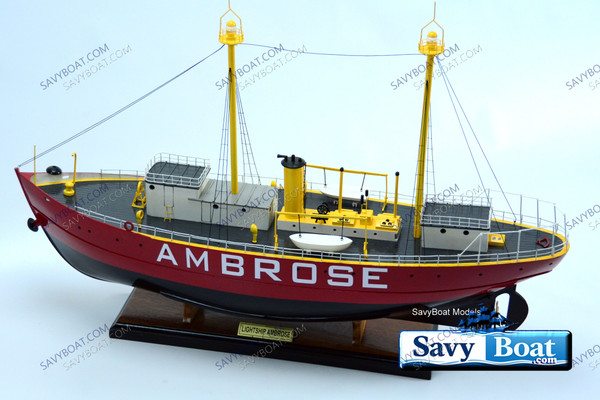
AMBROSE LIGHTSHIP LV-87 / WAL-512
SAVY DIRECT PRICE $599.96MSRP: $649.99AMBROSE LIGHTSHIP LV-87 / WAL-512 FULLY BUILT AND READY TO DISPLAY, QUALITY SHIP MODEL Dimension approx.: 27L x 6.5W x15.5H (inch) The model is already built. THIS IS NOT A MODEL... -
 img:preorder-offer-upper-rigth-corner.pngimg:preorder-offer-upper-rigth-corner.png
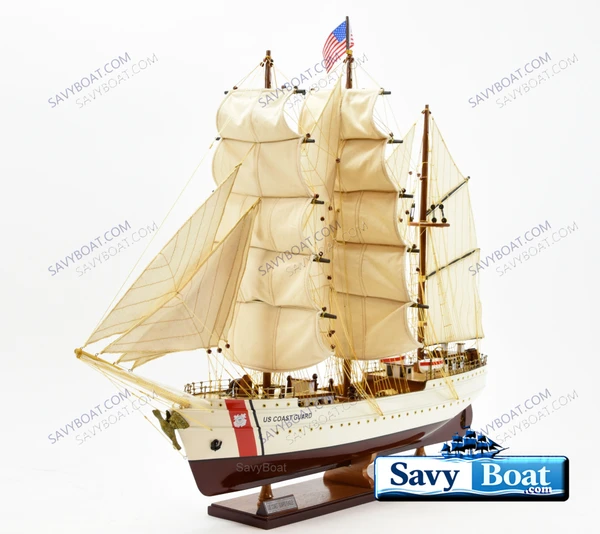
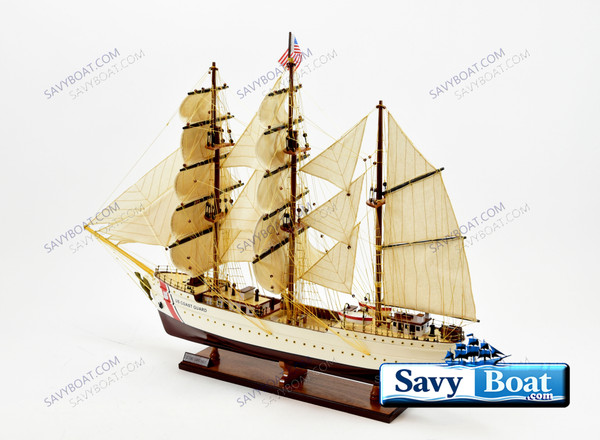
US COAST GUARD EAGLE TALL SHIP (WIX-327)
SAVY DIRECT PRICE $100.00 - $799.96US COAST GUARD EAGLE TALL SHIP (WIX-327) FULLY BUILT AND READY TO DISPLAY, QUALITY SHIP MODEL Dimension approx.: 36″ (long) x 7″ (wide) x 28″ (high) The model is already built. THIS IS...
Description

US CHESAPEAKE LIGHTSHIP (LV-116)
FULLY BUILT AND READY TO DISPLAY, QUALITY SHIP MODEL
- Dimension approx.: 27L x 6.5W x15.5H (inch)
- The model is already built. THIS IS NOT A MODEL SHIP KIT
Launched in 1929 from the Charleston Drydock & Machine Company in South Carolina, the U.S. Lightship Chesapeake (LV‑116) was one of the most advanced lightships ever built for the U.S. Lighthouse Service. Constructed at a cost of $274,434, she belonged to the LS‑100 class, a new generation of steel‑hulled, diesel‑electric vessels designed to hold their station in the worst Atlantic storms. With redundant lighting and radio systems, two massive 5,000‑pound anchors, and a rugged hull form, Chesapeake represented the pinnacle of manned navigational aids in the early 20th century.
Her first assignment came in 1930, when she was stationed off Fenwick Island Shoal on the Delaware coast. In 1933, she was reassigned to the entrance of the Chesapeake Bay, the station that would give her the name she carried for the rest of her career. Positioned near the busy approaches to Norfolk and Baltimore, she served as a floating lighthouse—her bright 375 mm electric lanterns, fog bell, submarine bell, and later electric foghorn guiding countless ships through one of America’s most important maritime gateways.
Life aboard was demanding but steady. A crew of 16–17 men lived in close quarters, supported by a galley, refrigeration system, and two small washrooms with showers. Their job was simple in description but difficult in practice: hold position, maintain the lights, and endure whatever the sea delivered. Hurricanes, winter gales, and heavy seas were routine. In 1936, Chesapeake even lost her main anchor during a violent storm, a reminder of the forces she was built to resist.
During World War II, the lightship’s role changed dramatically. From 1942 to 1945, she served off Cape Cod as an armed examination and patrol vessel, helping protect the approaches to Boston Harbor. Equipped with 20 mm machine guns and later fitted with detection radar, she became part of the coastal defense network guarding against German U‑boats. After the war, she returned to her Chesapeake station, resuming her quiet but essential work as a navigational sentinel.
By the 1960s, automation was transforming maritime safety. In 1965, Chesapeake was replaced by the new “Texas Tower” automated lighted buoy, and in 1970, she was formally decommissioned by the U.S. Coast Guard. Rather than being scrapped, she was preserved—first displayed at Hains Point in Washington, D.C., and then moved in 1982 to Baltimore’s Inner Harbor, where she became part of the city’s growing maritime heritage collection.
Today, the Lightship Chesapeake is a National Historic Landmark and a museum ship operated by Historic Ships in Baltimore. Visitors can walk her decks, explore her crew spaces, and experience firsthand the environment in which generations of lightship sailors lived and worked. As one of the few surviving American lightships, she stands as a testament to the era before automated aids—when human endurance, bright lanterns, and a steel hull held the line against darkness and sea.
From storms to wartime patrols, from the Chesapeake Bay to her final home in Baltimore, Chesapeake remains a powerful symbol of the United States’ maritime safety legacy and the men who kept the lights burning offshore.