







-

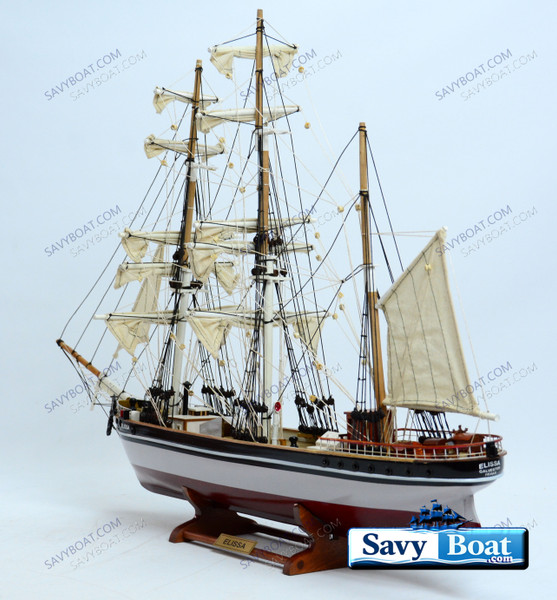
ELISSA TALL SHIP
SAVY DIRECT PRICE $739.96MSRP: $789.99ELISSA TALL SHIP FULLY BUILT AND READY TO DISPLAY QUALITY SHIP MODEL Dimension approx.: 31″ (long) x 9″ (wide) x 19″ (high) The model is already built. THIS IS NOT A MODEL SHIP... -
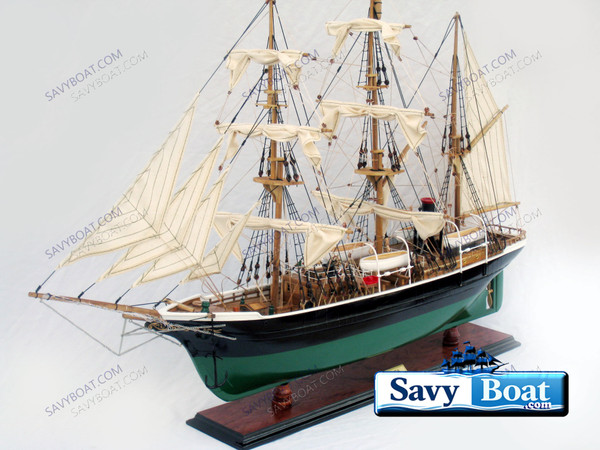
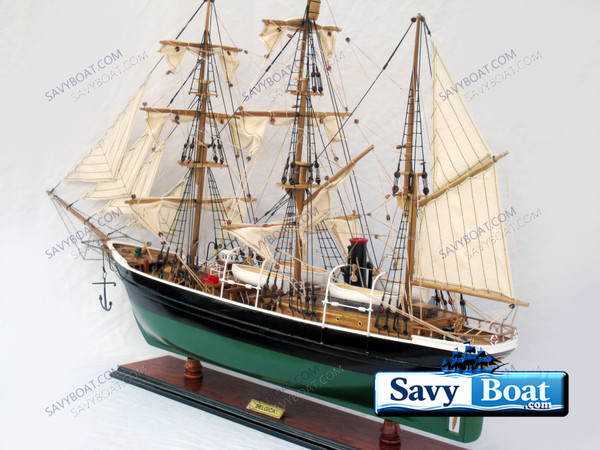
BELGICA TALL SHIP
SAVY DIRECT PRICE $799.96MSRP: $849.99BELGICA TALL SHIP FULLY BUILT AND READY TO DISPLAY, QUALITY SHIP MODEL Dimension approx.: 28.74L x 5.51W x 25.59H (inches) The model is already built. THIS IS NOT A MODEL SHIP KIT When... -


HMS AGAMEMNON TALL SHIP
SAVY DIRECT PRICE $989.96MSRP: $1,049.99HMS AGAMEMNON TALL SHIP FULLY BUILT AND READY TO DISPLAY MUSEUM QUALITY SHIP MODEL Dimension approx.: 35L x 11W x 31H (inch) The model is already built. THIS IS NOT A MODEL...
Description

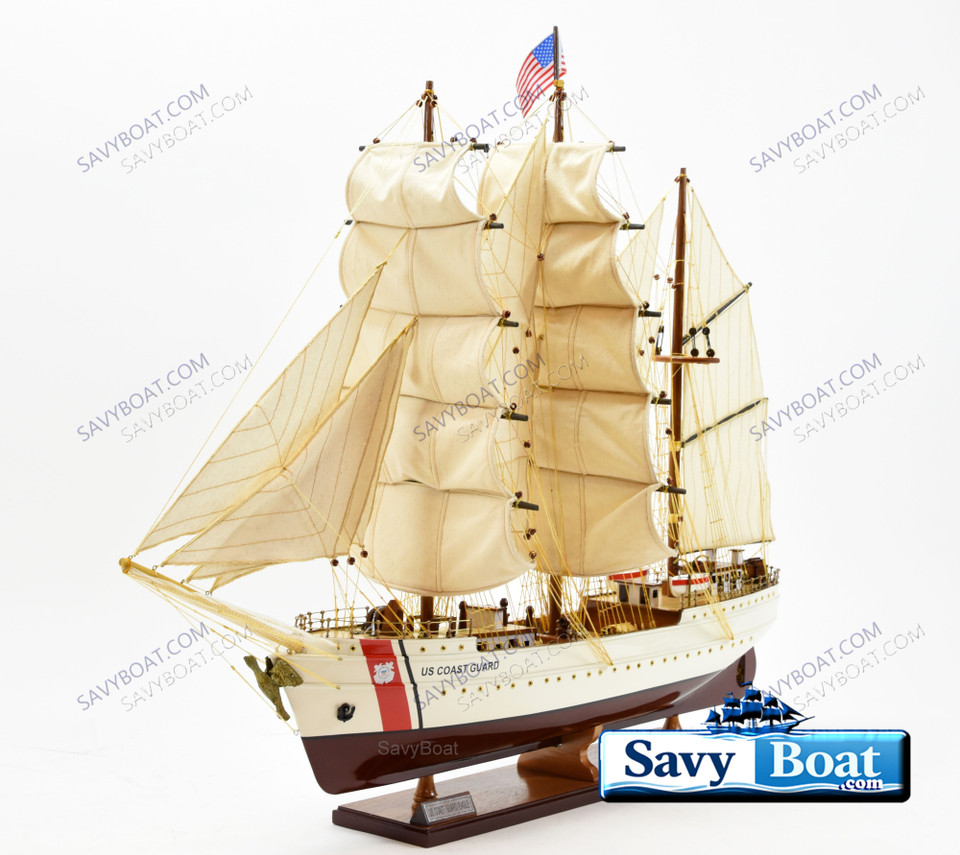
US COAST GUARD EAGLE TALL SHIP (WIX-327)
FULLY BUILT AND READY TO DISPLAY, QUALITY SHIP MODEL
- Dimension approx.: 36″ (long) x 7″ (wide) x 28″ (high)
- The model is already built. THIS IS NOT A MODEL SHIP KIT
From Horst Wessel to “America’s Tall Ship”: The Long Voyage of USCGC Eagle
She began her life in a very different world, under a very different flag. In 1936, at the Blohm & Voss shipyard in Hamburg, the tall ship that would one day be known as USCGC Eagle was launched as Horst Wessel, a proud new member of Germany’s Gorch Fock–class sail‑training fleet. Her keel was laid in February, she was launched in June, and by September she was commissioned — a sleek, steel‑sparred barque built to teach young sailors the old ways of wind and canvas. As your document notes, she was “an improvement on the original 1932 design,” larger and more modern than her sister.
Her early years were filled with long training cruises across the North Atlantic, voyages to the Caribbean, and ceremonial visits from the highest ranks of the Nazi regime. She was a symbol of national pride, but also a working ship — catching sharks and turtles for fresh food, carrying trainee officers and petty officers, and serving as the flagship of Germany’s sail‑training fleet.
When war came in 1939, Horst Wessel was decommissioned, her sails furled and her decks quiet. But she did not remain idle for long. Re‑armed and recommissioned in 1942, she trained cadets in the Baltic, her decks bristling with 20 mm anti‑aircraft guns. She survived mines, storms, and the chaos of the war’s final months. In April 1945, with refugees aboard, she sailed to Flensburg and surrendered to the British. Soon after, she was claimed by the United States as war reparations — her future decided by the drawing of lots.
On 15 May 1946, she was commissioned into the U.S. Coast Guard as USCGC Eagle. Her Nazi insignia was removed, her figurehead replaced, and a mixed American–German crew sailed her across the Atlantic through a hurricane to her new home in New London, Connecticut. The ship that had once trained sailors for the Kriegsmarine would now train the future officers of the United States Coast Guard.
From that moment on, Eagle’s life became one of tradition, transformation, and service.
Every summer since 1946, she has carried cadets to sea — teaching them the fundamentals of seamanship, navigation, leadership, and teamwork. The document captures the spirit of this training perfectly: cadets “are required to write up the rough log, observe the making and taking in of sail, and… after reaching proficiency, are exercised in charge of the deck.” They climb her rigging, haul her lines, steer her triple helm, and learn celestial navigation with sextants when GPS receivers are deliberately covered.
Her voyages have taken her across the Atlantic, into the Caribbean, through the Panama Canal, and around the world as a goodwill ambassador. She has raced in tall ship regattas, led parades of sail, and represented the United States at international celebrations from the 1976 Bicentennial to the 2012 OpSail events. She has weathered hurricanes, squalls, and even collisions — including the 1972 accident that snapped both her foremast and mainmast under a bridge in New London.
Through decades of service, she has been refitted and renewed: new engines, new generators, new watertight compartments, new teak decks, and modernized navigation systems. Yet her essential character remains unchanged. She is still a three‑masted barque with over 22,000 square feet of sail, still powered by wind and teamwork, still teaching the lessons that only a tall ship can teach.
Today, she is known around the world as “America’s Tall Ship.” She carries the legacy of her complex origins, the pride of her adopted nation, and the traditions of seamanship that span centuries. From her beginnings in pre‑war Germany to her long career under the Coast Guard ensign, Eagle has lived a life unlike any other vessel afloat.
She was born under one flag, reborn under another, and has spent nearly a century shaping the sailors who guide ships into the future — one voyage, one watch, one rising wind at a time.