




-
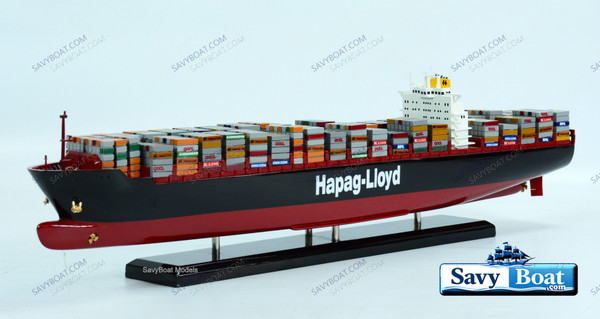
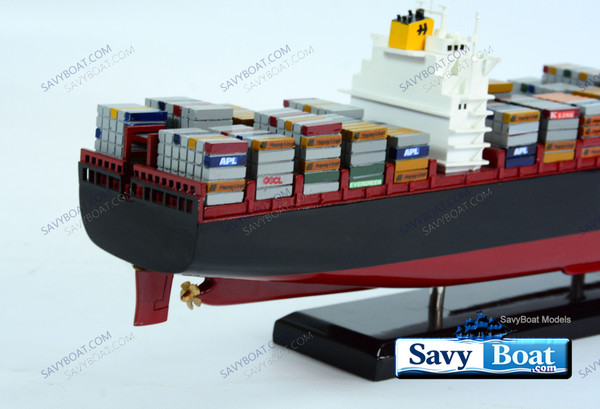
HAPAG-LLOYD CONTAINER SHIP 28
SAVY DIRECT PRICE $499.96MSRP: $549.99HAPAG LLOYD CONTAINER SHIP FULLY BUILT AND READY TO DISPLAY MUSEUM QUALITY SHIP MODEL Dimension Approx.: 27.5L x 3.5W x 8H (inch) The model is already built. THIS IS NOT A MODEL SHIP... -


HAMBURG SUD CONTAINER SHIP 28
SAVY DIRECT PRICE $499.96MSRP: $549.99HAMBURG SüD CONTAINER SHIP FULLY BUILT AND READY TO DISPLAY, QUALITY SHIP MODEL Dimension approx.: 28″ L x 3.5″ W x 8.5″ H The model is already built. THIS IS NOT A MODEL SHIP... -

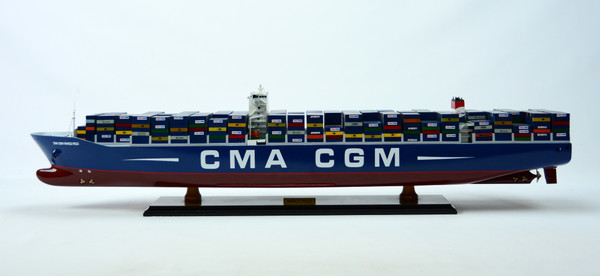
CMA CGM MARCO POLO CONTAINER SHIP 28
SAVY DIRECT PRICE $499.96MSRP: $549.99CMA CGM MARCO POLO CONTAINER SHIP 28 FULLY BUILT AND READY TO DISPLAY MUSEUM, QUALITY SHIP MODEL Dimension approx.: 28L x 4.5W x 8H (inch) The model is already built. THIS IS NOT A MODEL...
Description

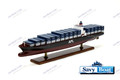
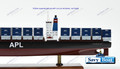
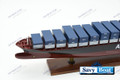
APL CONTAINER SHIP
FULLY BUILT AND READY TO DISPLAY, QUALITY SHIP MODEL
- Dimension approx.: 28″ L x 3.5″ W x 8.5″ H
- The model is already built. THIS IS NOT A MODEL SHIP KIT
American President Lines: From Gold Rush Steamers to Global Container Giant
The story of American President Lines begins long before the name existed — long before containers, cranes, or steel‑hulled freighters. Its roots stretch back to the age of steam and sail, when the Pacific was still a frontier and the United States was racing to connect its coasts.
In 1848, as the Mexican–American War ended and the West Coast opened to American settlement, Congress authorized mail service by sea via Panama. Entrepreneur William Henry Aspinwall seized the opportunity, founding the Pacific Mail Steamship Company. His first ship, SS California, left New York just as the California Gold Rush erupted — and by the time she reached Panama, she was mobbed by miners desperate for passage north.
Pacific Mail quickly became a powerhouse. Its ships carried gold eastward during the Civil War, ferried passengers and freight across the Pacific, and helped knit together a young nation. The company built some of the fastest clippers ever to sail — including Sea Witch, whose China‑to‑New York speed record still stands.
By the 1860s and 1870s, Pacific Mail steamers were crossing the Pacific to Japan, China, and beyond. The company expanded, modernized, and became a symbol of American maritime ambition.
The next chapter belonged to Robert Dollar, a Scottish immigrant who began in the lumber trade. Frustrated by unreliable shipping, he bought his own schooner in 1893 — the seed of what became the Dollar Steamship Line.
Dollar’s ambitions grew quickly. He expanded into Asia, bought modern liners, and by the 1920s was running round‑the‑world passenger service aboard elegant “President” liners. His ships carried diplomats, businessmen, and tourists in grand style, and the Dollar Line became one of the most profitable shipping companies in the world.
But the Great Depression hit hard. The luxurious SS President Hoover ran aground in 1937, debts mounted, and by 1938 the company was collapsing.
The U.S. Maritime Commission stepped in, taking control of the Dollar Line and reorganizing it as American President Lines. The new name honored the tradition of “President”‑class ships while signaling a fresh start.
During World War II, APL became a crucial wartime operator. It managed Liberty and Victory ships for the War Shipping Administration and carried troops, supplies, and equipment across the world’s oceans. One of its wartime vessels, SS Lane Victory, survives today as a museum ship in Los Angeles.
After the war, APL returned to commercial service. It launched new passenger liners like SS President Cleveland and SS President Wilson, marketed as “your American hotel abroad.” But the future was already shifting.
In the late 1950s, APL began studying a radical idea: containerization.
By the 1960s, APL was launching hybrid break‑bulk/container ships, then fully containerized vessels. It built new terminals, expanded its fleet, and embraced technology. By the 1970s, it pioneered intermodal service, moving containers seamlessly by ship, rail, and truck.
APL’s innovations reshaped global shipping:
-
LinerTrain (1979) — a dedicated rail land‑bridge from Los Angeles to New York
-
StackTrain (1984) — the first fully integrated double‑stack rail service
-
Post‑Panamax ships — vessels too large for the Panama Canal, carrying 4,300+ TEUs
-
Oversized containers — 45‑, 48‑, and 53‑foot boxes that became industry standards
By the late 1980s, APL was considered one of the most technologically advanced shipping companies in the world.
In 1997, Singapore‑based Neptune Orient Lines (NOL) purchased APL, moving its headquarters to Singapore. Under NOL, APL continued to innovate, though it faced fierce competition and occasional setbacks — including the infamous APL China storm incident in 1998, one of the largest cargo losses in maritime history.
In 2016, French shipping giant CMA CGM acquired NOL and APL, integrating the brand into its global network. APL later shifted to focus exclusively on U.S. Government transport, while CMA CGM took over its commercial transpacific operations.
From Gold Rush steamers to double‑stack trains, from clipper ships to post‑Panamax giants, American President Lines has lived many lives. It has carried miners, mail, soldiers, presidents, and millions of containers across the world’s oceans.
It is a story of ambition, reinvention, and global reach — a company that helped shape the history of American shipping and continues to serve today under the CMA CGM family.