




-
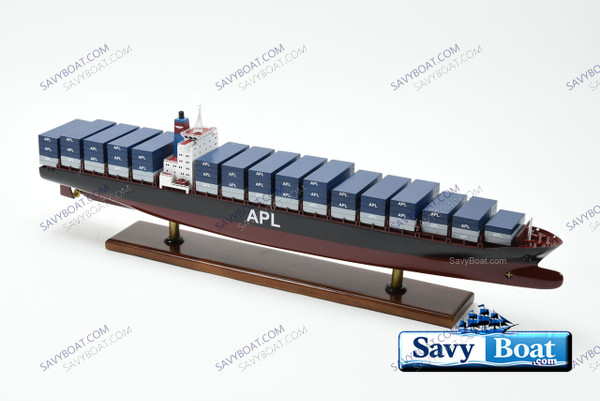
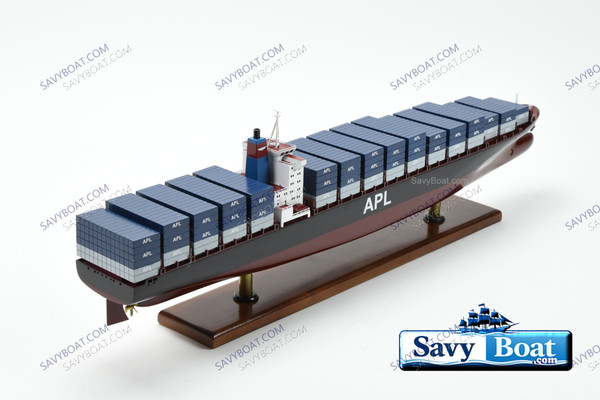
APL CONTAINER SHIP 28
SAVY DIRECT PRICE $499.96MSRP: $549.99APL CONTAINER SHIP FULLY BUILT AND READY TO DISPLAY, QUALITY SHIP MODEL Dimension approx.: 28″ L x 3.5″ W x 8.5″ H The model is already built. THIS IS NOT A MODEL SHIP KIT -
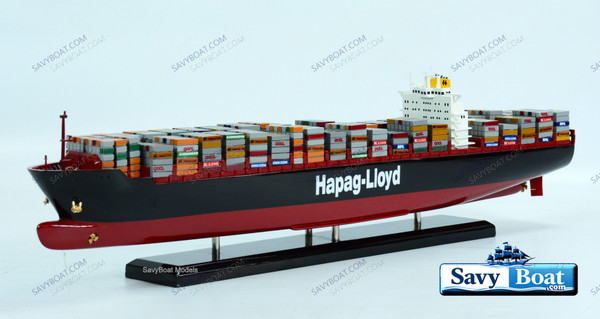
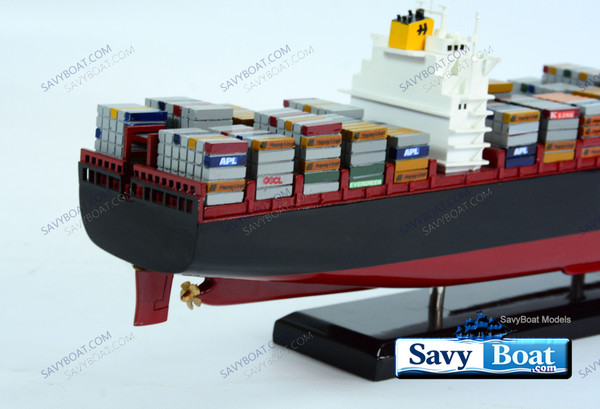
HAPAG-LLOYD CONTAINER SHIP 28
SAVY DIRECT PRICE $499.96MSRP: $549.99HAPAG LLOYD CONTAINER SHIP FULLY BUILT AND READY TO DISPLAY MUSEUM QUALITY SHIP MODEL Dimension Approx.: 27.5L x 3.5W x 8H (inch) The model is already built. THIS IS NOT A MODEL SHIP... -

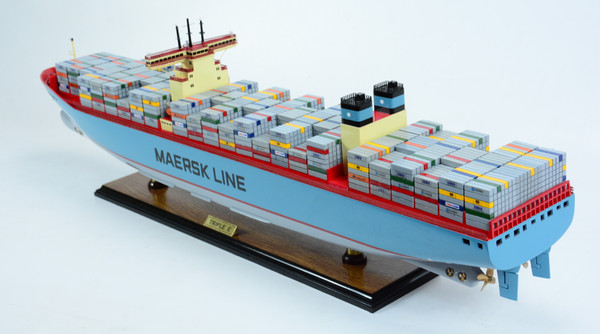
MAERSK TRIPLE E CLASS CONTAINER SHIP 28
SAVY DIRECT PRICE $499.96MSRP: $549.99Mærsk TRIPLE E CLASS CONTAINER SHIP 28 FULLY BUILT AND READY TO DISPLAY, QUALITY SHIP MODEL Dimension approx.: 28″ L x 3.5″ W x 8.5″ H The model is already built. THIS IS NOT A MODEL...
Description

HAMBURG SüD CONTAINER SHIP
FULLY BUILT AND READY TO DISPLAY, QUALITY SHIP MODEL
- Dimension approx.: 28″ L x 3.5″ W x 8.5″ H
- The model is already built. THIS IS NOT A MODEL SHIP KIT
Hamburg Süd: From Steamship Pioneer to Global Container Line
Hamburg has always been a city that looks outward to the sea, and in 1871, as Germany’s merchant marine was rising in global stature, a consortium of eleven Hamburg merchants, bankers, and shipowners founded a new company with an ambitious purpose: to link Europe with the distant markets of South America. They called it Hamburg Südamerikanische Dampfschifffahrts-Gesellschaft — soon known simply as Hamburg Süd.
The company’s origins lay partly in the earlier Hamburg–Brazilian Steam Shipping Company, and its first three steamships sailed from Germany to Brazil and the Río de la Plata. These early voyages carried emigrants, mail, and cargo, but they also established a reputation for reliability in a region where weather, distance, and politics made shipping unpredictable.
By the early 20th century, Hamburg Süd had become one of Germany’s premier shipping companies. Its fleet grew rapidly — more than 50 ships totaling 325,000 GRT by 1914 — and its name became synonymous with elegant long‑distance travel. Ships like Cap Trafalgar, Cap Arcona, and Cap Finisterre were floating ambassadors of German craftsmanship, offering refined accommodations on routes that stitched together Europe and South America.
The company also became a major carrier of reefer cargo, transporting fruit, meat, and other perishables from South America to European markets. This specialization would remain a defining strength for more than a century.
World War I shattered the fleet. Most of Hamburg Süd’s ships were seized or sunk, and the company had to rebuild almost from scratch. It did so through chartered vessels and new construction, slowly regaining its footing. One of its ships, later known as Empire Windrush, would become famous for carrying the first large group of Caribbean migrants to the United Kingdom — the beginning of the “Windrush Generation.”
In the 1950s, Hamburg Süd diversified into tramp shipping, tankers, and expanded refrigerated cargo operations. In 1955, the company entered a new era when it was acquired by the Oetker Group, whose investment fueled modernization and expansion into Mediterranean and global markets.
By the 1970s, Hamburg Süd had become a major force in North–South trade, connecting Europe, South America, Africa, and Oceania. It also began operating on major East–West routes, competing with the world’s largest carriers.
In 1971, the company made a bold leap into containerization with the Columbus New Zealand, one of the earliest container ships in the Pacific. Over the following decades, Hamburg Süd expanded aggressively, acquiring historic lines such as Deutsche Levante Linie (1956), Pacific Steam Navigation Company, Royal Mail Line, South Seas Steamship, Aliança (Brazil), and Ybarra Sud (Spain).
These acquisitions broadened its geographic reach and strengthened its position in refrigerated cargo — a market where it became a global leader.
For more than 60 years, Hamburg Süd remained part of the Oetker Group, but in 2016, the family sold the company to A.P. Moller–Maersk for approximately €3.7 billion. The acquisition, completed in 2017, made Maersk the world’s largest container carrier and integrated Hamburg Süd’s strong North–South expertise into its global network.
Hamburg Süd continued to operate as a distinct brand for several years, known for its red‑hulled ships, white superstructures, and premium reefer service.
In 2023, Maersk announced a global brand unification strategy. The Hamburg Süd name — after more than 150 years — would be phased out. Ships were repainted in Maersk’s blue with the seven‑pointed star, and operations were folded into the Maersk platform. By the end of 2023, the transition was complete.
The company’s identity disappeared, but its legacy remained embedded in Maersk’s global supply chain.
Hamburg Süd’s story mirrors the evolution of global shipping itself, From steamships to superliners, From break‑bulk cargo to containerization, From regional routes to worldwide logistics, and From family ownership to integration into the world’s largest carrier. Its ships — from the elegant Cap San Diego to the modern Monte‑class container vessels — remain symbols of a company that connected continents for more than a century and a half.
Hamburg Süd may no longer sail under its own flag, but its influence continues to shape the world’s trade routes, refrigerated logistics, and the history of German maritime enterprise.