








-


RUSSAIN CRUISER AURORA
SAVY DIRECT PRICE $949.96MSRP: $999.99RUSSIAN CRUISER AURORA FULLY BUILT AND READY TO DISPLAY MUSEUM QUALITY SHIP MODEL Dimension approx.: 40.5L x 7W x18.5H The model is already built. THIS IS NOT A MODEL SHIP KIT When the... -
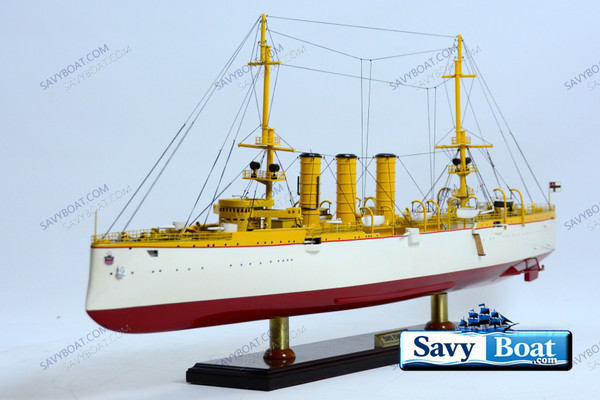

SMS EMDEN BATTLESHIP CRUISER
SAVY DIRECT PRICE $669.96MSRP: $699.99SMS EDMEN BATTLE CRUISER FULLY BUILT AND READY TO DISPLAY MUSEUM QUALITY SHIP MODEL Dimension Approx.: 35.5″L x 7"W x 15.5″H The model is 100% hand built by artisans from scratch Base and name plate... -

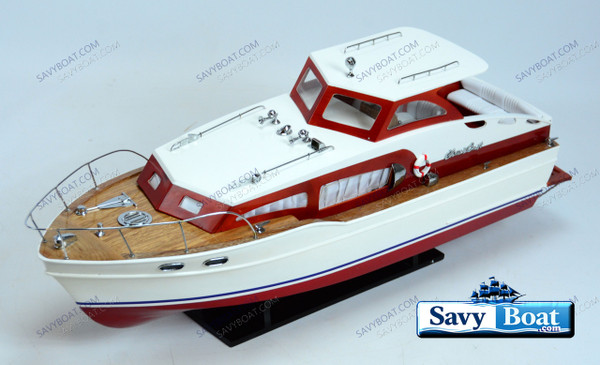
1956 CHRIS CRAFT CABIN CRUISER
SAVY DIRECT PRICE $829.96MSRP: $899.99CHRIS CRAFT CABIN CRUISER FULLY BUILT AND READY TO DISPLAY BOAT MODEL Dimension approx.: 34″ (long) x 11″ (beam) The model is already built. THIS IS NOT A MODEL SHIP KIT In...
Description

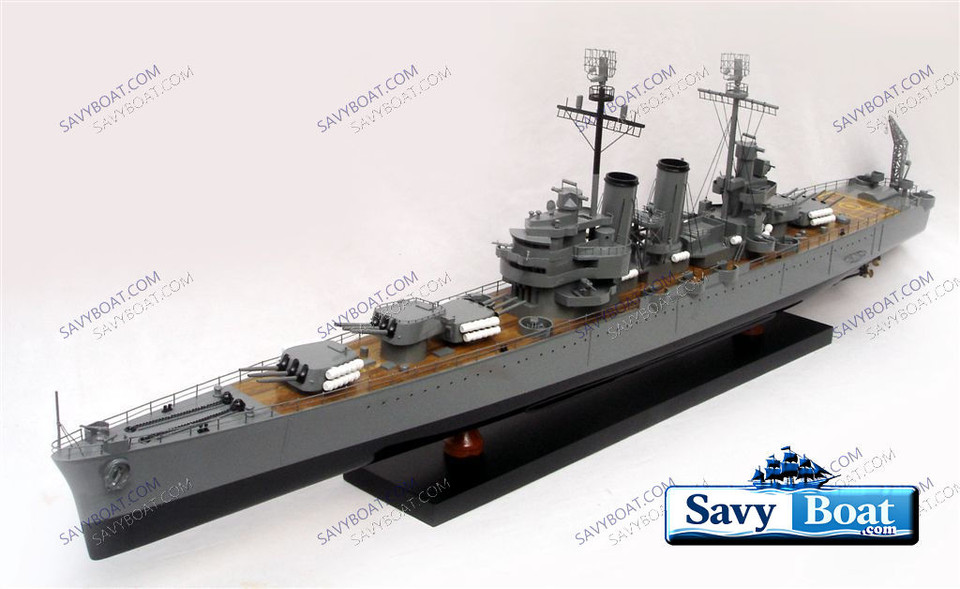
ARA GENERAL BELGRANO (C-4) CRUISER
FULLY BUILT AND READY TO DISPLAY, QUALITY SHIP MODEL
- Dimension approx.: 40″ (long) x 4.5″ (wide) x 12″ (high)
- The model is already built. THIS IS NOT A MODEL SHIP KIT
Long before she became one of the most controversial symbols of the Falklands War, the cruiser that Argentina would know as ARA General Belgrano (C‑4) lived an entirely different life under a different flag. She began as USS Phoenix, a Brooklyn‑class light cruiser launched in 1938, a sleek, fast warship built in Camden, New Jersey. She survived the attack on Pearl Harbor “undamaged,” as the document notes, and went on to earn nine battle stars for her service in the Pacific (“She survived the Japanese attack on Pearl Harbor in 1941 undamaged, and went on to earn nine battle stars…”). When the war ended, she was placed in reserve — a veteran without a mission.
From Phoenix to Belgrano
In 1951, Argentina purchased Phoenix and her sister ship, USS Boise. Renamed 17 de Octubre, she quickly became entangled in the political tides of her new nation. She even took part in the 1955 coup that overthrew President Juan Perón, after which she received her final name: General Belgrano, honoring the independence‑era statesman Manuel Belgrano.
Her early Argentine career was not without mishap. During exercises in 1956, she “accidentally rammed her sister ship Nueve de Julio,” damaging both cruisers. In the late 1960s she received the Sea Cat missile system, a modest modernization for a ship whose design dated back to the 1930s.
By the early 1980s, she was aging but still formidable — a steel reminder of mid‑century naval power.
When Argentina occupied the Falkland Islands in April 1982, the Belgrano was assigned to Task Group 79.3, patrolling the waters south of the islands. On April 26 she left Ushuaia with two destroyers and a tanker (“General Belgrano had left Ushuaia… on 26 April… joined… to form Task Group 79.3.”). By April 30, she was patrolling the Burdwood Bank, outside the British exclusion zone.
But the exclusion zone itself was not a guarantee of safety. Nine days before the sinking, the UK had warned via the Swiss Embassy that any Argentine ship posing a threat could be attacked, regardless of location (“any Argentine ship or aircraft… considered to pose a threat… would be attacked”).
On May 1, Argentine Admiral Juan Lombardo ordered a “massive attack” against the British task force. Belgrano was maneuvering to a new position when she was detected by the British submarine HMS Conqueror.
At 14:57 on May 2, 1982, Conqueror fired three unguided Mk 8 torpedoes (“Conqueror fired three 21‑inch Mk 8 mod 4 torpedoes…”). Two struck the cruiser.
The first torpedo blew off the bow, but the forward bulkheads held (“This blew off the ship’s bow, but the internal torpedo bulkheads held…”). The second torpedo was catastrophic. It tore into the aft machinery spaces, ripping a 20‑meter hole through multiple decks (“before finally ripping a 20‑metre‑long hole in the main deck”). The blast killed most of the men in that section — “Later reports put the number of deaths… at 275 men.”
Power failed. Water rushed in. Smoke filled the ship. At 16:24, Captain Héctor Bonzo ordered abandon ship (“Twenty minutes after the attack… Captain Bonzo ordered the crew to abandon ship.”).
Rescue efforts were hampered by worsening weather and the scattering of life rafts. Between May 3 and 5, Argentine and Chilean ships rescued 772 survivors. 323 men died — nearly half of all Argentine military deaths in the war (“In total, 323 were killed in the attack…”).
The sinking had an immediate and profound effect. The Argentine Navy withdrew its fleet to port and played no major role in the remainder of the conflict (“Following the loss… the Argentine fleet returned to its bases and played no major role…”). British nuclear submarines effectively controlled the South Atlantic from that point onward.
From the moment the news broke, the sinking of the Belgrano became a political flashpoint. Argentina claimed the attack was a “treacherous act of armed aggression,” emphasizing that the ship was 36 miles outside the exclusion zone. Britain countered that the ship was maneuvering as part of an attack plan and that the exclusion zone did not limit the UK’s right to self‑defense.
Over the years, key Argentine naval leaders — including Captain Bonzo himself — publicly affirmed that the sinking was not a war crime. Bonzo stated in 2003 that “It was absolutely not a war crime. It was an act of war, lamentably legal.” His view was echoed by Argentine admirals and by a 1994 Defense Ministry report describing the sinking as “a legal act of war.”
Yet the debate persisted in politics, media, and public memory. In Britain, the tabloid headline “Gotcha” became infamous. In Argentina, the Belgrano became a symbol of sacrifice and loss.
Today, the wreck of the General Belgrano lies undiscovered in the cold South Atlantic, designated a war grave under Argentine law. Her captain spent his final years supporting survivors and families. Her story remains one of the most emotionally charged episodes of the Falklands War — a moment where strategy, legality, and human cost collided.
From her beginnings as USS Phoenix to her final moments as ARA General Belgrano, the cruiser lived a long, complex life across two navies, two hemispheres, and two wars. Her sinking marked a turning point in the conflict and left a legacy still felt decades later.