






-
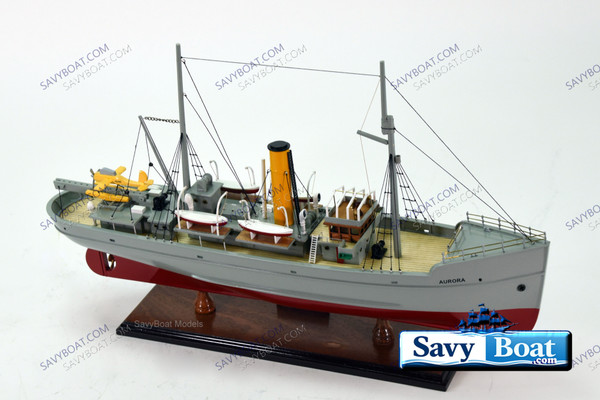

AURORA FISHING BOAT
SAVY DIRECT PRICE $479.96MSRP: $529.99AURORA FISHING BOAT FULLY BUILT AND READY TO DISPLAY, SHIP MODEL Dimension approx.: 23″ (high) x 5″ (wide) x 13.5″ (high) The model is already built. THIS IS NOT A MODEL SHIP KIT When... -
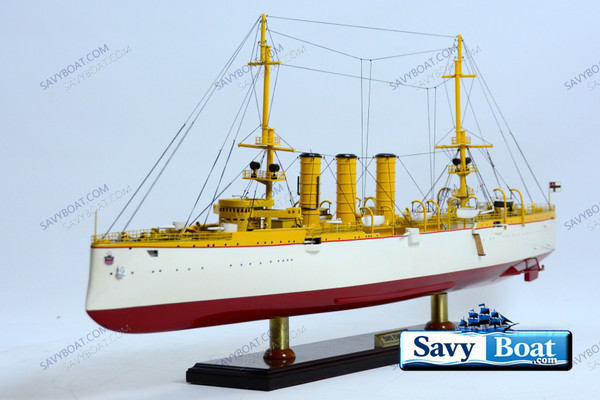

SMS EMDEN BATTLESHIP CRUISER
SAVY DIRECT PRICE $669.96MSRP: $699.99SMS EDMEN BATTLE CRUISER FULLY BUILT AND READY TO DISPLAY MUSEUM QUALITY SHIP MODEL Dimension Approx.: 35.5″L x 7"W x 15.5″H The model is 100% hand built by artisans from scratch Base and name plate... -

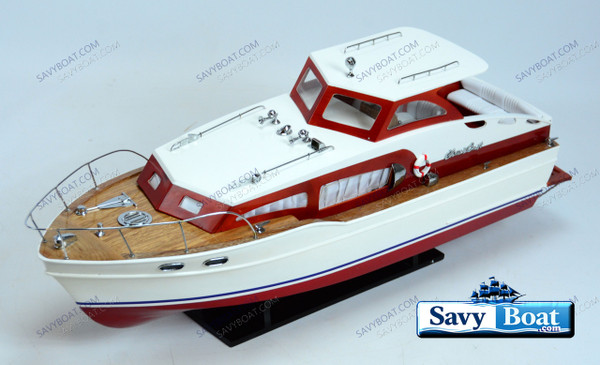
1956 CHRIS CRAFT CABIN CRUISER
SAVY DIRECT PRICE $829.96MSRP: $899.99CHRIS CRAFT CABIN CRUISER FULLY BUILT AND READY TO DISPLAY BOAT MODEL Dimension approx.: 34″ (long) x 11″ (beam) The model is already built. THIS IS NOT A MODEL SHIP KIT In...
Description

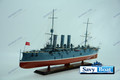
RUSSIAN CRUISER AURORA
FULLY BUILT AND READY TO DISPLAY MUSEUM QUALITY SHIP MODEL
- Dimension approx.: 40.5L x 7W x18.5H
- The model is already built. THIS IS NOT A MODEL SHIP KIT
When the steel hull of the cruiser Aurora first touched the waters of the Neva in 1900, few could have imagined that this modest protected cruiser would one day become one of the most recognizable symbols in Russian history. Ordered in 1896 and built at the Admiralty Shipyard in Saint Petersburg, she was one of three Pallada‑class cruisers intended to strengthen Russia’s Pacific presence. Tsar Nicholas II personally approved her name—Aurora, the Roman goddess of the dawn—an optimistic gesture toward a navy eager to modernize.
Commissioned in 1903, Aurora barely had time to settle into service before being swept into the turmoil of the Russo‑Japanese War. Assigned to the Second Pacific Squadron, she departed for the Far East in 1904 on a long, tense voyage that would become infamous for the Dogger Bank incident. In the fog‑shrouded North Sea, jittery Russian gunners mistook British trawlers for Japanese torpedo boats and opened fire. Aurora herself was hit in the confusion, and her chaplain was killed—an early omen of the hardships to come.
Reaching the Pacific months later, she joined the fleet at the Battle of Tsushima in May 1905, one of the most decisive naval defeats in modern history. Amid the chaos of exploding shells and burning ships, Aurora fought stubbornly but was battered into submission. Unlike many of her consorts, she survived, limping to Manila where she was interned by the neutral United States. When she finally returned to Russia, she carried the scars of a navy in crisis.
Refitted and modernized, Aurora spent the years before World War I in the Baltic Fleet, patrolling the cold, mine‑strewn waters and supporting Russian ground forces. She was no longer a frontline combatant, but she remained a steady presence—reliable, familiar, and increasingly tied to the political ferment sweeping the empire.
Her moment of destiny arrived not in battle, but in revolution. In November 1917, as Petrograd simmered with unrest, Aurora lay anchored in the Neva with a crew largely sympathetic to the Bolsheviks. On the night of 6–7 November, a single blank shot from her forecastle gun—more symbolic than destructive—signaled the start of the assault on the Winter Palace. Whether the shot truly “began” the revolution or merely marked it, history and legend fused in that moment. Aurora became the ship that heralded the birth of Soviet power.
Her later life was quieter but no less meaningful. She served as a training vessel, endured damage during the Siege of Leningrad, and after the war was preserved as a floating memorial. In 1948 she was permanently moored on the Petrogradskaya Embankment, and by 1950 she had become a museum ship—visited by millions, revered as both a survivor of Tsushima and a revolutionary icon.
Today, Aurora remains one of Saint Petersburg’s most recognizable landmarks. Her green hull and raked masts rise above the Neva as a reminder of a turbulent century—of imperial ambition, naval disaster, world war, and political upheaval. More than a warship, she is a symbol: of endurance, of revolution, and of the complicated history of the nation she has watched over for more than 120 years.