






-


MIDSHIP WORK SHIP FISHING BOAT
SAVY DIRECT PRICE $849.96MSRP: $999.9987FT MIDHIP FISHING BOAT/SHIP FULLY BUILT AND READY TO DISPLAY HIGH QUALITY SHIP MODEL Dimension Approx.: 35″L x 8″W x 11″H -


ERNEST HEMINGWAY'S FISHING BOAT, PILAR
SAVY DIRECT PRICE $699.96MSRP: $749.99ERNEST HEMINGWAY'S FISHING BOAT, PILAR FULLY BUILT AND READY TO DISPLAY, HIGH QUALITY SHIP MODEL Dimension Approx.: 33.5″ (long) x 9″ (wide) x 15″ (high) The model is already -


RUSSAIN CRUISER AURORA
SAVY DIRECT PRICE $949.96MSRP: $999.99RUSSIAN CRUISER AURORA FULLY BUILT AND READY TO DISPLAY MUSEUM QUALITY SHIP MODEL Dimension approx.: 40.5L x 7W x18.5H The model is already built. THIS IS NOT A MODEL SHIP KIT When the...
Description

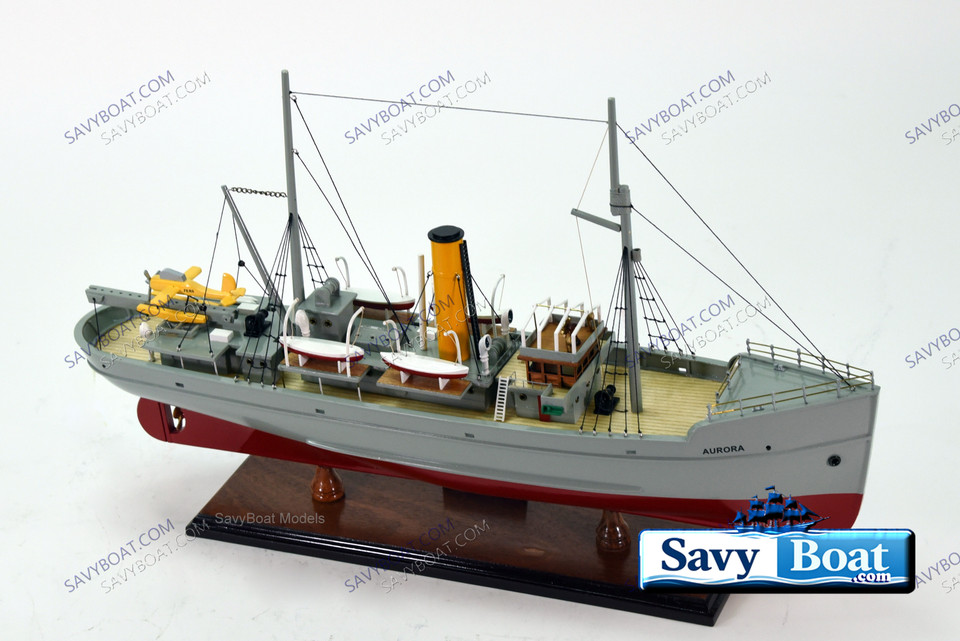
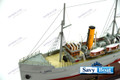
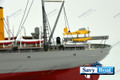
AURORA FISHING BOAT
FULLY BUILT AND READY TO DISPLAY, SHIP MODEL
- Dimension approx.: 23″ (high) x 5″ (wide) x 13.5″ (high)
- The model is already built. THIS IS NOT A MODEL SHIP KIT
When the fishing vessel Aurora slid down the ways at Halter Marine in 1981, she entered the world not as a showpiece or a future museum ship, but as a working boat—built for the long, unglamorous grind of America’s commercial fishing industry. At 175 feet in length and over 1,300 gross tons, she was large for her class, a steel‑hulled monohull designed to endure the punishing cycles of offshore fishing where weather, machinery, and time all conspire against the crew.
The early 1980s were a period of rapid change in U.S. fisheries. New federal regulations, expanding offshore quotas, and the rise of industrial‑scale processing meant that vessels like Aurora were increasingly expected to do more than simply catch fish—they had to stay out longer, haul heavier gear, and deliver larger, more consistent catches. Halter Marine, known for building rugged offshore vessels, gave Aurora the bones for that kind of work: a broad 12‑meter beam, deep draft, and the stability needed for trawling or longlining in rough seas.
Registered under the United States flag and documented with the Coast Guard under ID 636919, Aurora entered service with little fanfare. Like most commercial fishing vessels, her life was measured not in headlines but in seasons—runs to offshore grounds, long nights on deck, and the steady rhythm of hauling, sorting, and icing the catch. Public records rarely capture the details of such a vessel’s day‑to‑day existence, but her size and build suggest she operated in coastal and offshore fisheries, likely in the North Pacific, Gulf of Alaska, or along the West Coast where large steel trawlers are common.
Ownership records list Halter Marine, Inc. as a managing entity at various points, though modern databases often show her current ownership and flag status as “unknown”—a common fate for older commercial vessels whose documentation trails grow faint as they change hands, refit, or shift between fisheries. What is clear is that Aurora remained active long after her launch, appearing in maritime databases as a functioning commercial vessel rather than a derelict or scrapped hull.
Her name, of course, invites confusion. Maritime history already holds a far more famous SY Aurora, the 19th‑century Dundee‑built steam yacht that hunted whales in the Arctic and later carried Antarctic explorers into the Ross Sea. The modern Aurora shares nothing with that storied vessel except a name—a reminder of how working ships often inherit titles with long, tangled histories.
Today, the 1981 Aurora stands as one of countless commercial fishing vessels that form the backbone of the maritime economy. She is not preserved, celebrated, or mythologized. Instead, she represents the quiet, essential labor of the fishing fleet: steel decks washed by saltwater, engines humming through the night, and crews who measure their success not in glory but in the weight of the hold.
In a world where warships and explorers dominate the historical imagination, Aurora’s story is a different kind of maritime history—one built on endurance, utility, and the steady, unrecorded work that keeps coastal communities alive.