






-


America Sailboat SAVY LOGO
SAVY DIRECT PRICE $699.96MSRP: $799.99SAILING YACHT AMERICA FULLY BUILT AND READY TO DISPLAY QUALITY SHIP MODEL Dimension approx.: 28″ (long) x 6″ (wide) x 26″ (high) The model is already built. THIS IS NOT A MODEL... -

RIVA FLORIDA SAVY LOGO
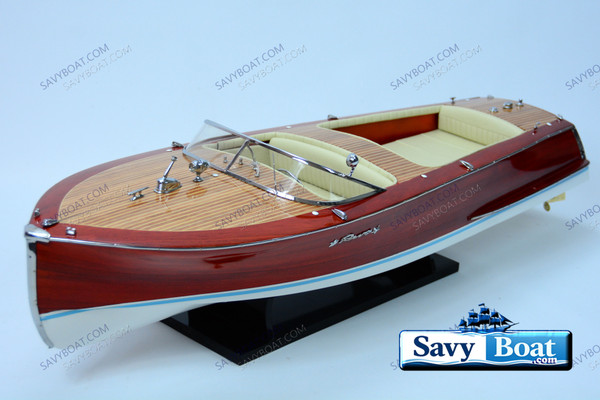
SAVY DIRECT PRICE $729.96MSRP: $789.99RIVA FLORIDA Classic Speedboat Dimension Approx.: 34.25″ L x 10″ W x 9″ H This is a fully built model. it is NOT a kit When the -

Alpha Z CB011 SAVY LOGO
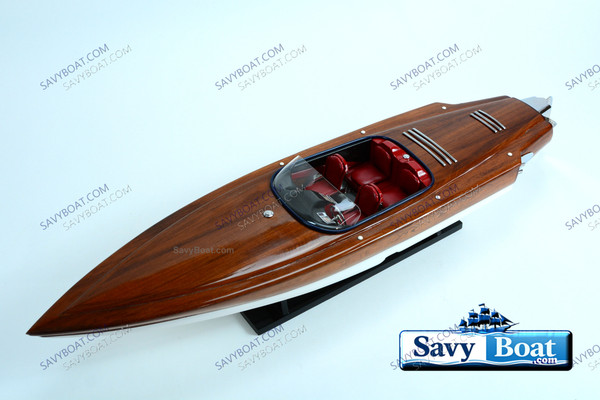
SAVY DIRECT PRICE $599.96MSRP: $649.99ALPHA Z SPEED BOAT FULLY BUILT AND READY TO DISPLAY MODEL Dimension approx.: 36″ (long) x 8.5″ (wide) x 6″ (high) The model is already built. THIS IS NOT A MODEL SHIP KIT When Alpha Z
Description

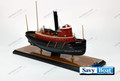
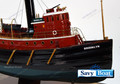
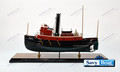
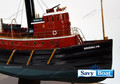
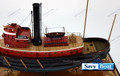
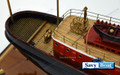
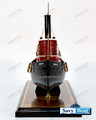
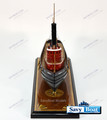
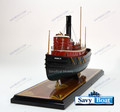
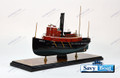
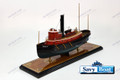
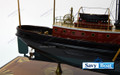
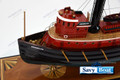
Brooklyn Tugboat
FULLY BUILT AND READY TO DISPLAY MUSEUM QUALITY SHIP MODEL
- Dimension approx.: 24″L x 6″W x 18″ H
- Base dimension: 30″L x 9″ W
- The model is already built. THIS IS NOT A MODEL SHIP KIT
In the mid‑20th century, New York Harbor was a world unto itself—an industrial labyrinth of piers, railheads, barges, and ferries, all stitched together by the tireless work of tugboats. Among them was the Brooklyn, launched in 1960 from the storied Jakobson Shipyard of Oyster Bay. Jakobson, founded in 1926, had become one of the premier builders of East Coast tugboats, known for rugged steel hulls and reliable machinery. The Brooklyn fit squarely into that tradition: 98 feet long, steel‑hulled, and built for the relentless push and pull of harbor service.
Commissioned by the New York Dock and Railroad Company, she was part of the essential but often overlooked infrastructure that kept the port moving. Railroad tugs like Brooklyn shifted car floats, moved barges, and threaded through the tight waterways of Red Hook, Brooklyn Heights, and the East River. Her 251 gross tons and stout lines made her a classic harbor tug—compact, powerful, and built to work in all weather.
In 1978, the Brooklyn’s life changed course when she was sold to Crescent Towing and Salvage Company of New Orleans. Renamed Marion Smith, and later Louise, she traded the cold chop of New York Harbor for the warmer, muddier waters of the Mississippi River and Gulf Coast. Crescent was known for modernizing its fleet, and in 2002 the old Brooklyn underwent a transformation that effectively gave her a second life.
The rebuild was extensive. Her original EMD 12‑567C diesel was removed, replaced with twin General Electric 228 eight‑cylinder engines, each paired with Reintjes reduction gears. She received twin 85‑inch stainless‑steel propellers set in Kort nozzles, boosting her maneuverability and giving her a combined 4,200 horsepower—a dramatic leap from her original configuration. Her wheelhouse was redesigned for better visibility, and her stacks were lowered to work more effectively under bridges and alongside larger ships. After the overhaul, she emerged with a new name: Florida.
This evolution mirrored the broader story of American tugboats in the late 20th century. Built for railroads, repurposed for towing companies, and modernized for contemporary port operations, vessels like Brooklyn adapted again and again as the maritime world changed around them.
The name Brooklyn, however, carries a longer legacy. An earlier tug of the same name—built around 1910–1911 by William Cramp & Sons for the Pennsylvania Railroad—served in New York Harbor’s “Irish Navy,” the colorful nickname for the railroad‑transfer tug fleets that once dominated the waterfront. A model of that earlier Brooklyn survives today in the Smithsonian’s National Museum of American History, a reminder of the era when steam‑powered tugs moved entire railroads across the harbor.
The 1960 Brooklyn, later Florida, stands as part of that lineage: a working boat built for a working harbor, shaped by the needs of railroads, towing companies, and the evolving demands of American maritime commerce. Her long service life—from New York to New Orleans, from single‑screw diesel to twin‑screw modern power—reflects the durability and adaptability of the tugboats that keep the nation’s ports alive.
She may not be famous, but she is emblematic: a steel workhorse whose story mirrors the history of the harbors she served.