











-
 img:low-2-bottom-with-special-offer.pngimg:low-2-bottom-with-special-offer.png
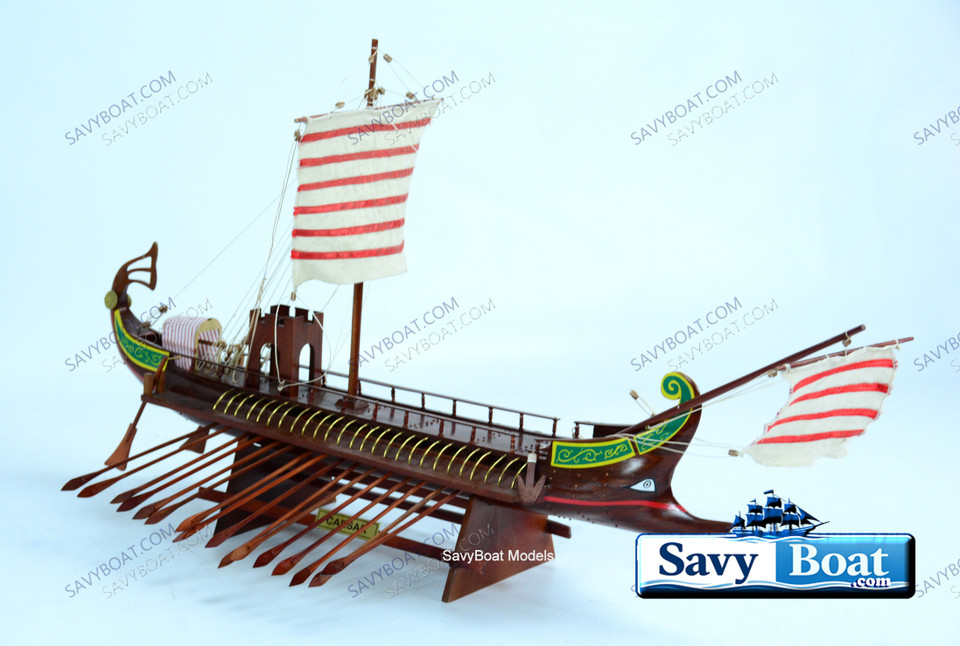
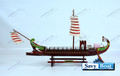
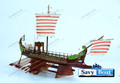
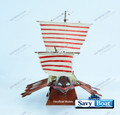
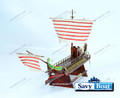
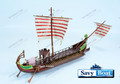
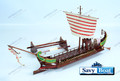
ANCIENT BIREME - ROMAN WARSHIP
SAVY DIRECT PRICE $100.00 - $449.96ANCIENT BIREME - ROMAN WARSHIP FULLY BUILT AND READY TO DISPLAY, QUALITY SHIP MODEL Dimension approx.: 31.5 L x 5.5 W x 17.5 H (inches) The model is already built. THIS IS NOT A MODEL...
Description

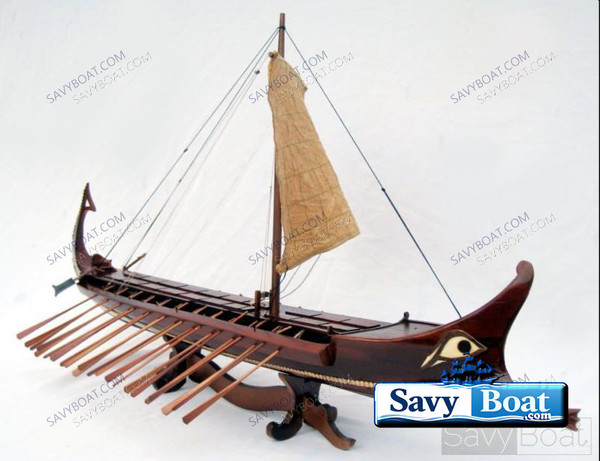
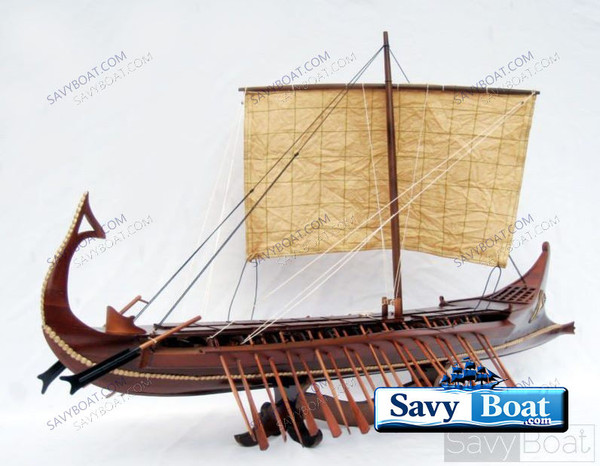
CAESAR ROMAN BIREME
FULLY BUILT AND READY TO DISPLAY SHIP MODEL
- Dimension approx.: 24″ (long) x 5.5″ (wide) x 16″ (high)
- The model is already built. THIS IS NOT A MODEL SHIP KIT
Long before Julius Caesar launched his campaigns across Gaul and Britain, the bireme already had a long and storied life on the Mediterranean. Born in the shipyards of the Phoenicians in the 8th century BC, the design was simple but revolutionary: two banks of oars, one above the other, doubling the power of earlier single‑banked galleys. The Greeks refined it, the Egyptians added their own artistic touches, and by the late Republic the Romans had adopted it as a fast, maneuverable warship ideal for coastal operations and rapid response.
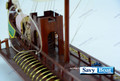
A typical Roman bireme measured around 24 meters long, with a narrow 3‑meter beam, built for speed rather than cargo. About 120 rowers powered the vessel, their oars striking the water in a tight, rhythmic cadence. A small square sail could be raised in fair winds, but the ship’s true strength lay in its oars—perfect for sudden bursts of acceleration, tight turns, and coordinated fleet maneuvers. At the bow, a bronze‑sheathed ram projected just below the waterline, the ancient equivalent of a guided missile.
By the time of Caesar’s second invasion of Britain in 54 BC, the bireme had become a key component of Roman naval operations. Caesar used them not only as escorts for his troop transports but also as fast‑moving scouts and coastal strike vessels. Their shallow draft allowed them to approach beaches and estuaries where larger ships could not safely maneuver. In these campaigns, the bireme served as Caesar’s eyes, ears, and—when needed—his striking fist.
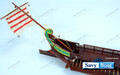
After the Battle of Actium in 31 BC, which ended the civil wars and ushered in the Roman Empire, the bireme became the standard warship of the early Imperial fleets, especially the Classis Misenensis and Classis Ravennas. These ships patrolled the Mediterranean, escorted merchant convoys, suppressed piracy, and projected Roman authority across the sea. Their design blended Greek naval engineering with Egyptian artistic influences, including the painted eyes on the bow meant to “see” the way forward.
In battle, the bireme was valued for its speed and agility. It could ram an enemy hull, close quickly for boarding actions, or outmaneuver heavier ships like triremes and quadriremes. Marines stationed on the deck—armed with javelins, shields, and short swords—could storm an enemy vessel once the ships locked together. In coastal raids, biremes could strike suddenly, land troops, and withdraw before defenders could respond.
Though the bireme was eventually overshadowed by the faster, more powerful trireme, it never disappeared entirely. Its simplicity, versatility, and low operating cost kept it in service for centuries in patrol, courier, and auxiliary roles. Even as naval warfare evolved, the bireme remained a symbol of the Mediterranean’s early naval traditions—lean, swift, and deadly in skilled hands.
The Caesarian bireme, then, was not just a ship but a bridge between ancient naval innovation and Roman military pragmatism. It carried the legacy of Phoenician shipwrights, Greek tacticians, and Roman commanders who understood that control of the sea was as vital as control of the land. In Caesar’s campaigns and the early Empire’s fleets, the bireme proved itself a vessel perfectly suited to an age of conquest, exploration, and maritime power.