






-


CAESAR ROMAN BIREME
SAVY DIRECT PRICE $449.96MSRP: $499.99CAESAR ROMAN BIREME FULLY BUILT AND READY TO DISPLAY SHIP MODEL Dimension approx.: 24″ (long) x 5.5″ (wide) x 16″ (high) The model is already built. THIS IS NOT A MODEL SHIP... -
 img:low-3-bottom-with-special-offer.pngimg:low-3-bottom-with-special-offer.png
ANCIENT TRIREME - GREEK WARSHIP
SAVY DIRECT PRICE $100.00 - $474.96ANCIENT TRIREME - GREEK WARSHIP FULLY BUILT AND READY TO DISPLAY, QUALITY SHIP MODEL Dimension approx.: 31.5 L x 5.5 W x 17.5 H (inches) The model is already built. THIS IS NOT A MODEL... -

ANCIENT ARMED LAUNCH W/SAIL
SAVY DIRECT PRICE $324.96MSRP: $359.99ANCIENT ARMED LAUNCH FULLY BUILT AND READY TO DISPLAY MUSEUM QUALITY SHIP MODEL Dimension approx.: 25.5L x 6W x 22.5H The model is already built. THIS IS NOT A MODEL SHIP KIT Long...
Description

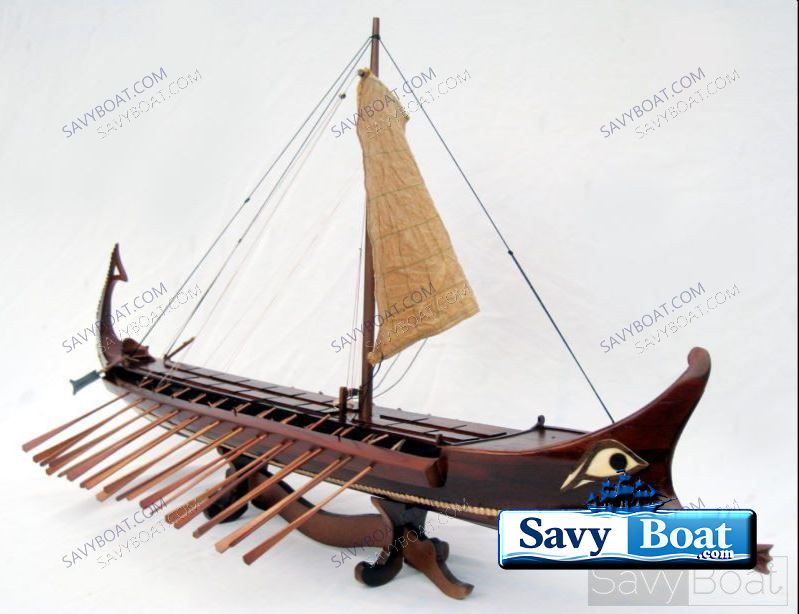
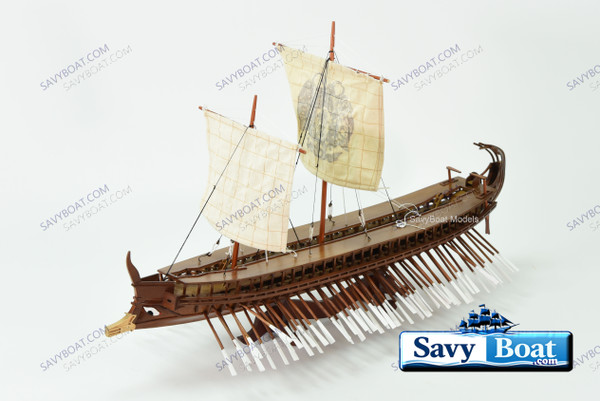
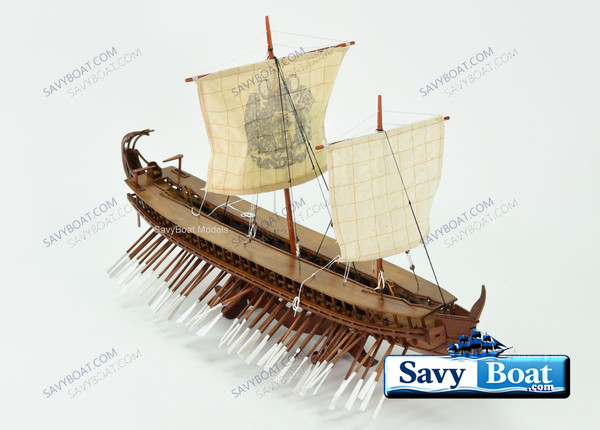
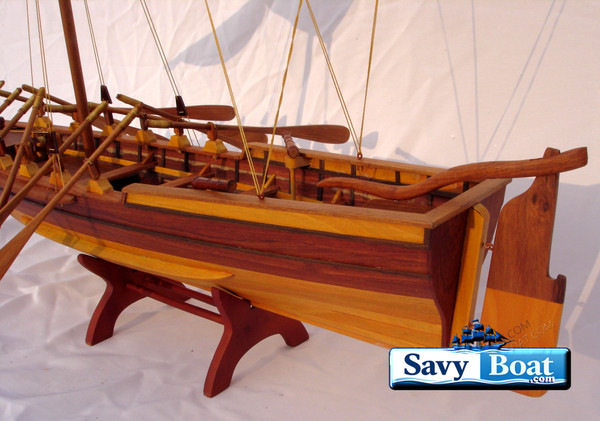
ANCIENT BIREME - ROMAN WARSHIP
FULLY BUILT AND READY TO DISPLAY, QUALITY SHIP MODEL
- Dimension approx.: 31.5 L x 5.5 W x 17.5 H (inches)
- The model is already built. THIS IS NOT A MODEL SHIP KIT
The Bireme — The Two‑Tiered Warship That Bridged an Age
Long before the trireme dominated the Mediterranean, an earlier innovation reshaped naval warfare: the bireme, a sleek, double‑banked galley whose speed and maneuverability made it the cutting‑edge warship of the 8th–6th centuries BCE. It was the crucial evolutionary step between the long, single‑oared penteconters of the early Iron Age and the three‑tiered triremes that would later rule the seas.
The bireme likely emerged among the Phoenicians, the master shipbuilders of the Levant. Their coastal cities — Tyre, Sidon, Byblos — depended on fast, agile ships to protect trade routes stretching from the Levant to Spain. Reliefs from Nineveh (c. 701 BCE) show Phoenician galleys with two staggered rows of oars, rams at the bow, and high sterns — unmistakable early biremes.
The design spread quickly. By the 8th century BCE, Greek city‑states had adopted the bireme, and Assyrian kings used them for amphibious assaults in the Persian Gulf. The ship’s combination of speed, power, and compact size made it ideal for the fragmented, island‑studded geography of the Mediterranean.
A typical bireme measured roughly 80 feet (24 m) long with a beam of about 10 feet (3 m). Built from cedar, pine, or fir and joined with mortise‑and‑tenon seams, the hull was light but strong. The two oar banks were carefully staggered so the upper oars could clear the lower ones without interference — a deceptively simple innovation that doubled propulsion without enlarging the ship.
Key features included:
-
100–120 rowers, one per oar
-
A large square sail for long-distance cruising
-
A stern rudder for steering
-
A bronze or iron ram for combat
-
A small deck for marines and archers
The bireme was fast, responsive, and capable of sharp turns — a perfect weapon for coastal warfare.
Crew and Combat
A bireme’s crew was a compact fighting unit:
-
Rowers provided the power
-
Sailors handled rigging and navigation
-
Marines fought in boarding actions
-
Archers harassed enemy decks
In battle, the bireme relied on two tactics:
-
Ramming — driving the bronze prow into an enemy hull
-
Boarding — marines leaping across to seize the opposing ship
Its speed made it ideal for anti‑piracy patrols, escort duty, and lightning coastal raids. For centuries, it was the backbone of Mediterranean naval forces.
One of the most distinctive biremes was the Samaina, built by Polycrates of Samos in the 6th century BCE. With a wider hull, a powerful ram, and space for cargo, it served both military and commercial roles — a rare hybrid in an age when warships and merchantmen were usually separate designs.
By the 6th century BCE, naval warfare demanded even greater speed and striking power. The bireme’s success inspired shipwrights to add a third tier of oars, creating the trireme — the warship that would dominate the Persian Wars, the Athenian Empire, and the Peloponnesian conflict.
Yet the bireme did not disappear. It remained in service for auxiliary roles, patrols, and escort missions well into the Classical era.
The bireme stands as a pivotal link in naval history. It was Faster and more agile than the penteconter, Simpler and lighter than the trireme, A warship that shaped early Mediterranean conflict, and a vessel that carried Phoenician trade, Greek ambition, and Assyrian power. It was the ship that taught ancient mariners how to fight with speed — and set the stage for the great naval empires that followed.