




-


HMS BOUNTY W/ SAILS
SAVY DIRECT PRICE $1,049.96MSRP: $1,149.99HMS BOUNTY (NATURAL) WITH SAILS FULLY BUILT AND READY TO DISPLAY, QUALITY SHIP MODEL Dimension approx.: 32L X 8W X 31H The model is already built. THIS IS NOT A MODEL SHIP KIT HMS... -
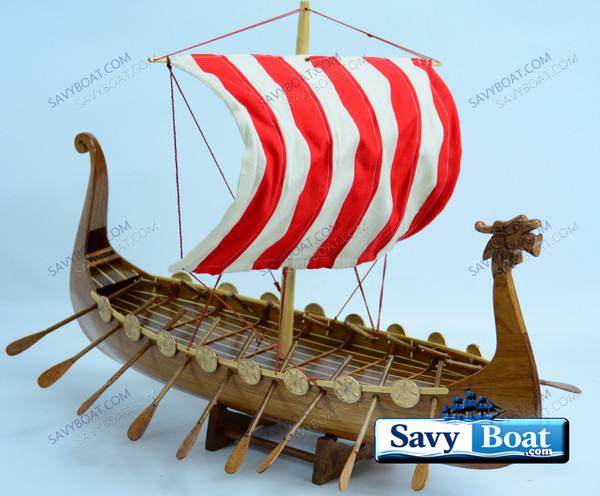
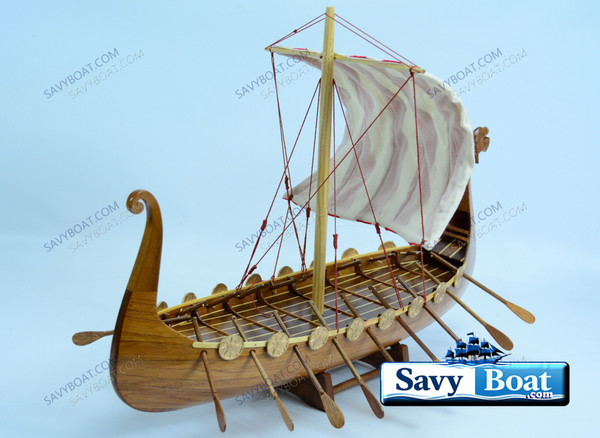
DRAKAR VIKING SHIP W/SAIL
SAVY DIRECT PRICE $289.96MSRP: $329.99DRAKAR VIKING SHIP WITH OARS FULLY BUILT AND READY TO DISPLAY, QUALITY SHIP MODEL Dimension approx.: 24″ (long) x 7″ (wide) x 17″ (high) The model is already built, NOT a model ship kit Long... -


HMS BOUNTY (PAINTED) W/ SAILS
SAVY DIRECT PRICE $1,049.96MSRP: $1,149.99HMS BOUNTY (PAINTED) W/ SAILS FULLY BUILT AND READY TO DISPLAY, QUALITY SHIP MODEL Dimension approx.: 32L X 8W X 31H The model is already built. THIS IS NOT A MODEL SHIP KIT HMS...
Description

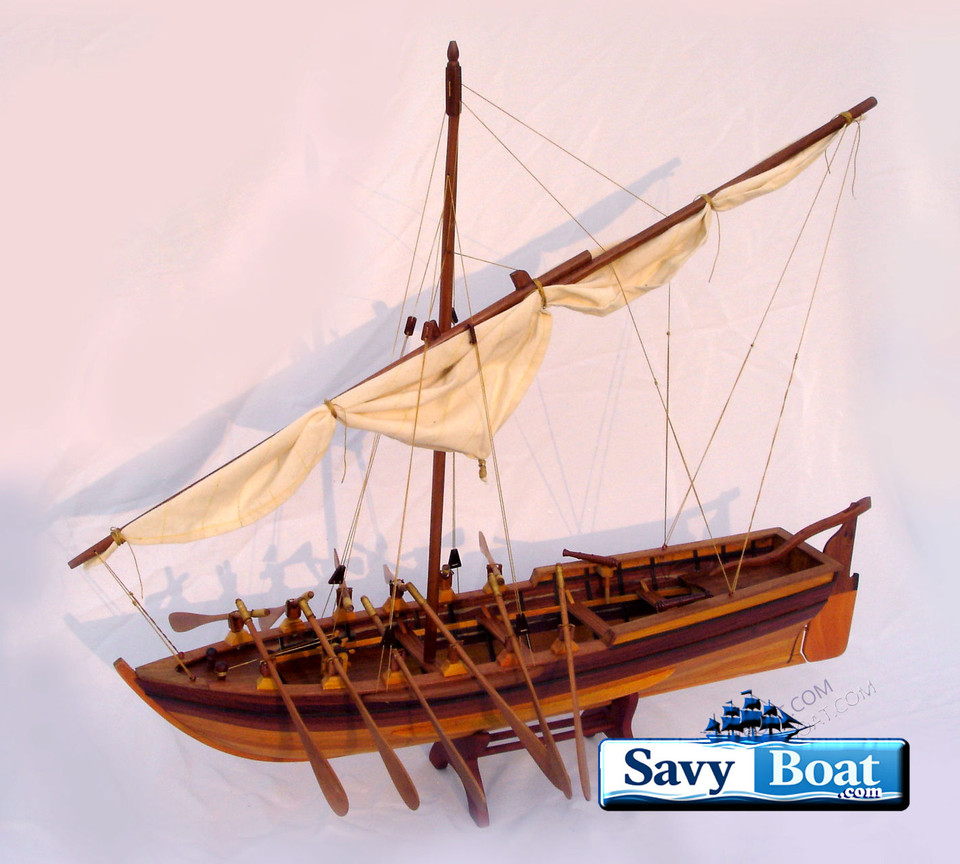
ANCIENT ARMED LAUNCH
FULLY BUILT AND READY TO DISPLAY MUSEUM QUALITY SHIP MODEL
- Dimension approx.: 25.5L x 6W x 22.5H
- The model is already built. THIS IS NOT A MODEL SHIP KIT
Long before navies formalized the term launch in the 17th century, humanity had already spent thousands of years perfecting the art of putting small, armed craft onto the water. These vessels — sometimes humble, sometimes fearsome — formed the backbone of early maritime warfare. They were the first to meet an enemy, the first to land warriors on a hostile shore, and often the last line of defense when a larger ship was threatened.
The earliest boats were simple dugouts like the Pesse canoe (c. 8040 BC), carved from single tree trunks and used for river travel and hunting. They were not armed, but they established the essential truth of early seafaring: a small craft could extend human reach far beyond the shoreline.
As civilizations grew, so did their ambitions. The Egyptians built long, narrow river craft capable of carrying archers and spearmen. The Phoenicians launched swift galleys that could defend merchant convoys. And in the Aegean, the Greeks perfected the idea of the armed oared vessel, culminating in the trireme — a war machine of wood, bronze, and muscle power.
These early craft were not “launches” in the later naval sense, but they embodied the same purpose: small, maneuverable, and capable of delivering force where it mattered.
By the late 17th century, the word launch entered English naval vocabulary, borrowed from the Spanish lancha. These were the largest boats carried aboard warships — broad‑beamed, sturdy, and capable of hauling anchors, water casks, and heavy equipment. Their size and stability made them natural platforms for armament.
In the 18th and 19th centuries, launches became indispensable tools of naval warfare. They could be rowed or sailed, deployed quickly, and operated independently of the mother ship. Their roles expanded:
-
Boarding actions against enemy vessels
-
Landing troops during amphibious assaults
-
Reconnaissance in shallow or contested waters
-
Towing, salvage, and utility work
-
Gunboat duties, often with a bow‑mounted cannon
A well‑handled launch could be a weapon in its own right — fast, quiet, and deadly at close range.
Naval launches of the Age of Sail were often fitted with:
-
Swivel guns for anti‑personnel fire
-
Small cannons (often 12‑ or 18‑pounders) mounted forward
-
Detachable bulwarks for protection during combat
-
Oars for maneuvering when wind failed
These armed launches were the ancestors of modern ship’s boats used for patrol, interdiction, and special operations.
Before slipways and drydocks, ancient shipwrights developed ingenious methods to move vessels into the water:
-
Earthen ramps coated with clay or animal fat
-
Log rollers placed beneath the hull
-
Inclined planes carved into bedrock
-
Ritualized launches, invoking sea gods for protection
These techniques were used not only for great warships but also for the smaller armed craft that accompanied them. The methods were simple, effective, and adaptable — the foundation of all later naval launching systems.
From Mesolithic dugouts to Mediterranean galleys to cannon‑armed ship’s boats, the story of ancient armed launches is the story of maritime ingenuity. These vessels Extended the reach of early navies, Enabled amphibious warfare, Protected merchant fleets, Served as scouts, raiders, and escorts, and Influenced the design of later gunboats and patrol craft.
Though overshadowed by the great triremes, galleons, and battleships of history, armed launches were the quiet workhorses of naval power — small enough to be overlooked, yet essential to victory.
They were the first boats ashore, the last boats off the beach, and the ever‑ready hands of the fleet.
If you’d like, I can also create culture‑specific narratives — Greek penteconters, Polynesian war canoes, Viking longship tenders, or Ming dynasty river gunboats — each with its own story of innovation and combat.