














-


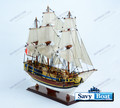
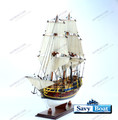
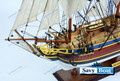
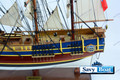
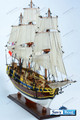
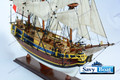
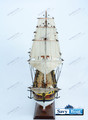
HMS BOUNTY W/ SAILS
SAVY DIRECT PRICE $1,049.96MSRP: $1,149.99HMS BOUNTY (NATURAL) WITH SAILS FULLY BUILT AND READY TO DISPLAY, QUALITY SHIP MODEL Dimension approx.: 32L X 8W X 31H The model is already built. THIS IS NOT A MODEL SHIP KIT HMS... -
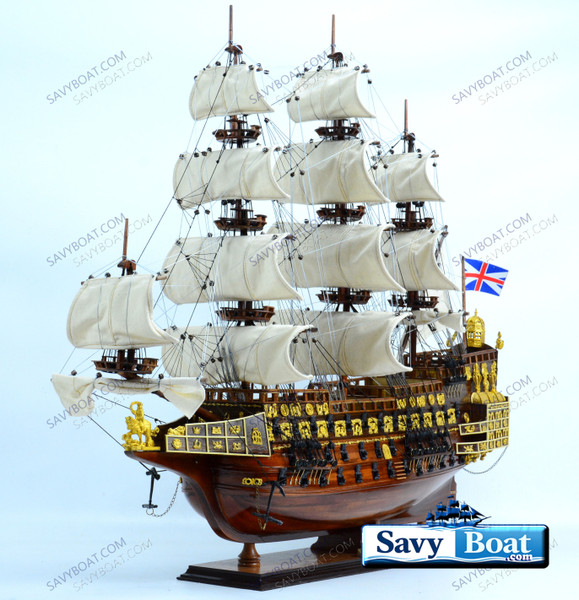

HMS SOVEREIGN OF THE SEAS 32" W/ SAILS
SAVY DIRECT PRICE $699.96MSRP: $749.99HMS SOVEREIGN OF THE SEAS TALL SHIP WITH SAILS ABSOLUTELY BEAUTIFUL, FULLY BUILT AND READY TO DISPLAY, MUSEUM QUALITY SHIP OF THE LINE MODEL Dimension approx.: 32″ L -
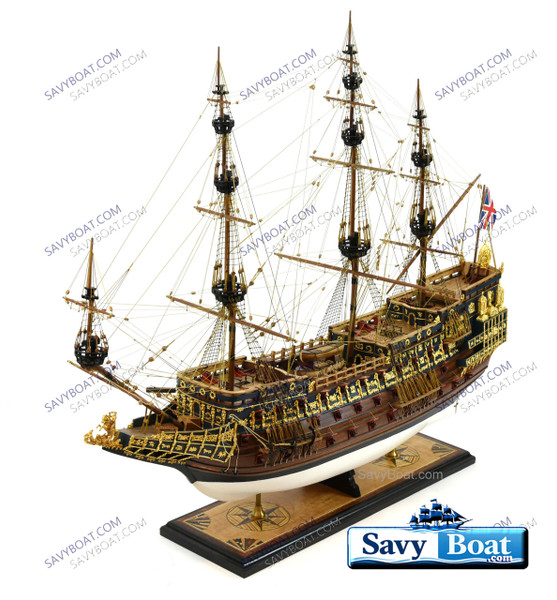
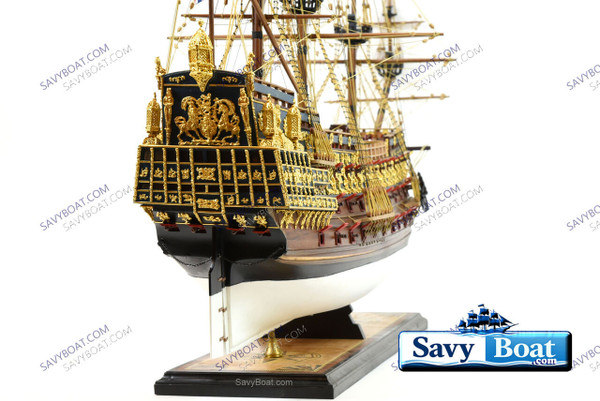
HMS SOVEREIGN OF THE SEAS MUSEUM W/24CT GOLD FITTINGS & SAILS
SAVY DIRECT PRICE $2,699.96MSRP: $2,899.99HMS SOVEREIGN OF THE SEAS TALL SHIP WITH GOLD PLATED FITTINGS AND WITH SAILS ABSOLUTELY BEAUTIFUL, FULLY BUILT AND READY TO DISPLAY, MUSEUM QUALITY SHIP OF THE LINE MODEL 24CT GO
Description

HMS BOUNTY (PAINTED) W/ SAILS
FULLY BUILT AND READY TO DISPLAY, QUALITY SHIP MODEL
- Dimension approx.: 32L X 8W X 31H
- The model is already built. THIS IS NOT A MODEL SHIP KIT
HMS Bounty began her life far from the legend she would become. Built in 1784 as the modest collier Bethia in Hull, she was purchased by the Royal Navy three years later and refitted for a scientific mission envisioned by Sir Joseph Banks. Renamed Bounty, the small 215‑ton, full‑rigged vessel was transformed into a floating greenhouse, her great cabin converted to house hundreds of potted breadfruit plants destined for the plantations of the West Indies.
Lieutenant William Bligh, a seasoned navigator who had sailed under Captain James Cook, was appointed to command the expedition. With a crew of 46 men and two civilian gardeners, Bounty sailed from Spithead in December 1787. Bligh’s first attempt to round Cape Horn failed under relentless storms, forcing him to take the long eastward route around Africa. After ten arduous months at sea, the ship finally reached Tahiti in October 1788.
For five months the crew lived ashore, tending 1,015 breadfruit plants and immersing themselves in Tahitian life. Friendships, romances, and a sense of freedom flourished. Fletcher Christian, Bligh’s acting lieutenant, married a Tahitian woman, and many sailors adopted local customs. When Bounty departed in April 1789, the easy life of Tahiti was left behind—but not forgotten.
Three weeks later, in the remote Pacific near Tonga, tensions that had simmered during the voyage erupted. On 28 April 1789, Christian led a mutiny that seized the ship without bloodshed. Bligh and 18 loyalists were cast adrift in the ship’s launch. In an extraordinary feat of seamanship, Bligh navigated more than 3,500 nautical miles to safety in the Dutch East Indies, losing only one man along the way.
Meanwhile, the mutineers searched for a refuge beyond the reach of the Royal Navy. After a failed attempt to settle on Tubuai, Christian and a small group—along with several Tahitian men and women—sailed Bounty to the isolated Pitcairn Island, misplaced on British charts. There, in January 1790, they stripped the ship of supplies and burned her in what is now Bounty Bay, ensuring no one could leave and no passing vessel could find them.
Life on Pitcairn soon descended into violence and tragedy. By 1800, only one mutineer, John Adams, remained alive, surrounded by the surviving Tahitian women and their children. Their hidden community remained unknown to the world until 1808, when the American ship Topaz stumbled upon the settlement.
Much of Bounty’s story survives thanks to Bligh’s meticulous logs, preserved today in Australia. His records, along with later accounts from visiting ships, have shaped the enduring legend of the Bounty—an unlikely vessel whose voyage became one of the most dramatic tales in maritime history.