






-
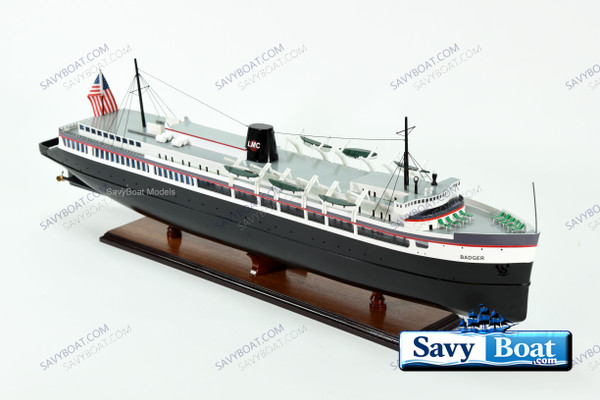
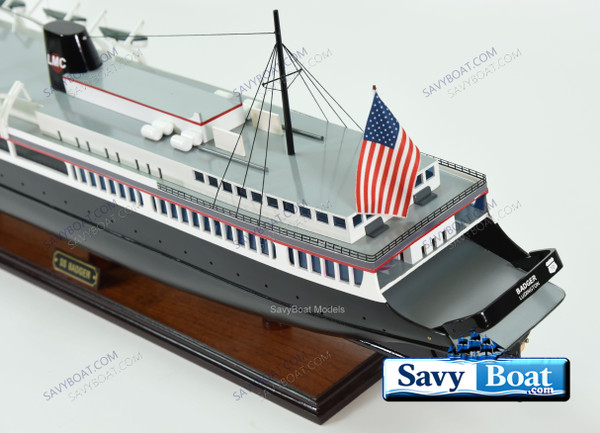
SS BADGER GREAT LAKE FERRY
SAVY DIRECT PRICE $699.96MSRP: $749.99SS BADGER GREAT LAKE FERRY FULLY BUILT AND READY TO DISPLAY SHIP MODEL Dimension approx.: 36″ L x 7″ W x 11″ H The model is already built. THIS IS NOT A MODEL SHIP KIT When the -

 img:low-bottom-with-special-offer.pngimg:low-bottom-with-special-offer.png
WASHINGTON STATE FERRY , TACOMA
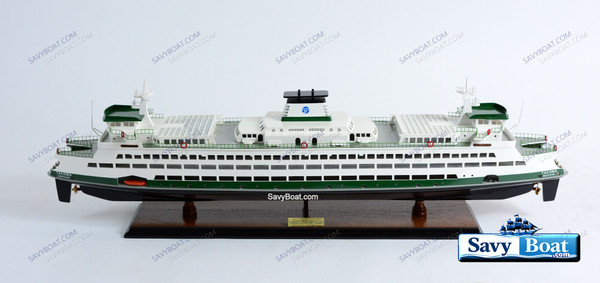
SAVY DIRECT PRICE $100.00 - $699.96WASHINGTON STATE SUPER FERRY, TACOMA LARGE SCALE HIGH QUALITY DISPLAY HULL MODEL Dimension Approx.: 35″ L x 6.5″ W x 10″ H The model is already built, NOT a model ship kit Handcrafted from... -


NYC STATEN ISLAND FERRY
SAVY DIRECT PRICE $649.96MSRP: $699.99THE STATEN ISLAND FERRY - WORLD'S BUSIEST PASSENGER FERRY FULLY BUILT AND READY TO DISPLAY, QUALITY SHIP MODEL Dimension approx.: 32″ (long) x 7″ (wide) x 11″ (high) The model is already built...
Description

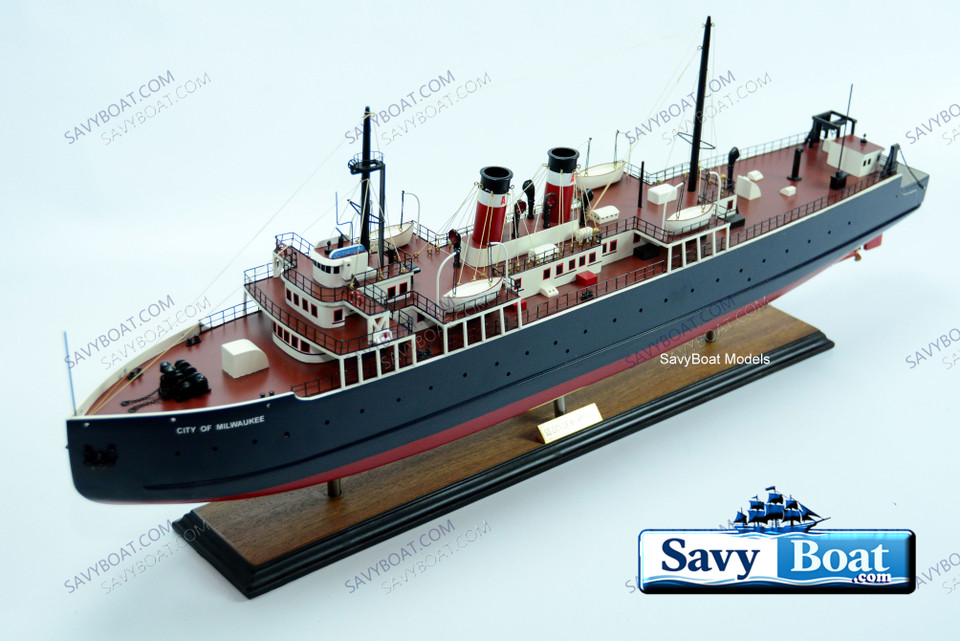
SS CITY OF MILWAUKEE GREAT LAKES FERRY
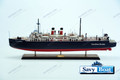
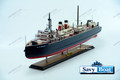
FULLY BUILT AND READY TO DISPLAY MUSEUM QUALITY SHIP MODEL
- BEAUTIFUL MUSEUM QUALITY MODEL
- Dimension approx.: 33″ L x 5″ W x 13″ H
- This beautiful model is already built, NOT a kit.
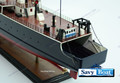
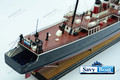
- Handcrafted from finest wood and metal fittings.
- Open die cut side hull windows, NOT painted like those built by most other companies.
- The model is 100% hand built by artisans from scratch
- Hand-painted to match the actual ship.
The SS City of Milwaukee was born in an era when the Great Lakes were the industrial arteries of the Midwest, and railroad car ferries were the iron giants that kept freight moving through winter ice and summer storms alike. Launched in 1931 at Manitowoc, Wisconsin, she was built with a purpose shaped by tragedy: to replace the earlier SS Milwaukee, lost with all hands in the brutal October gale of 1929. Her designers answered that loss with steel, power, and stubborn resilience. With a shallow draft and a broad, flat deck lined with four pairs of rails, she could swallow nearly thirty fully loaded rail cars and carry them straight across Lake Michigan, bypassing the long, weather‑choked rail routes around Chicago. Inside her hull, four Scotch boilers—first fed by coal, later by thick, tar‑black Bunker C oil—pushed steam into a pair of triple‑expansion engines that thundered with 2,700 horsepower. Each turn of her twin 12‑foot propellers was a reminder that she was built to work, to endure, to cross the lake when lesser vessels stayed in port.
Life aboard her was a world unto itself. Below, the hull was divided into eight purposeful compartments, from the chain locker in the bow to the steering engine room aft. Above the car deck, the ship rose like a small floating town: crew quarters tucked into the flicker, a galley that fed both sailors and passengers, a dining room that echoed with the clatter of dishes in rough weather, and staterooms where travelers slept as the ship groaned and hummed beneath them. Higher still stood the texas deck, where the captain and mates kept their charts and their solitude, and above that the pilot house—her true brain—where the ship’s course was set through fog, ice, and the long black nights of the lake.
For nearly half a century she worked these waters, first for the Grand Trunk Milwaukee Car Ferry Company and later, in her final years, for the Ann Arbor Railroad. She was the last of her fleet still running when she was finally retired in 1982, her engines tired but unaltered, her woodwork worn but original, her brass fittings still gleaming beneath decades of coal dust and lake spray. And yet retirement did not mean silence. Instead, she found a second life in Manistee, Michigan, where she was preserved as a National Historic Landmark—a rare survivor of a vanished industrial age. Today she rests on the calm waters of Manistee Lake, serving as a museum ship, a bed and breakfast, and each October transforming into the town’s legendary “Ghost Ship,” her passageways filled with theatrical fog and echoes of imagined hauntings.
But beneath the seasonal decorations and the modern visitors, the City of Milwaukee remains what she has always been: a remarkably intact time capsule of Great Lakes maritime history. Her original engines still sit in place, her brass still shines, and her decks still carry the memory of the thousands of rail cars, sailors, and passengers who crossed the lake aboard her. She is not just a ship preserved—she is a ship that remembers.