







-
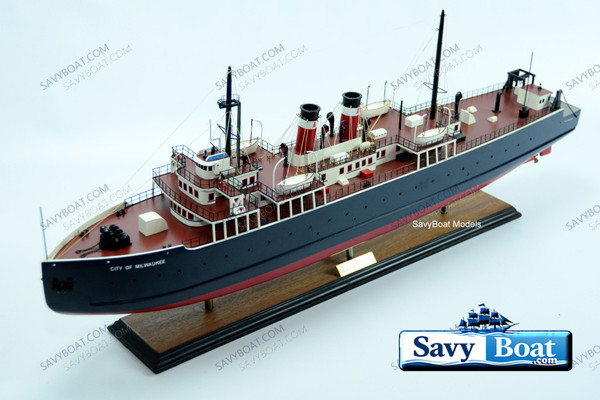

SS CITY of MILWAUKEE FERRY
SAVY DIRECT PRICE $749.96MSRP: $799.99SS CITY OF MILWAUKEE GREAT LAKES FERRY FULLY BUILT AND READY TO DISPLAY MUSEUM QUALITY SHIP MODEL BEAUTIFUL MUSEUM QUALITY MODEL Dimension approx.: 33″ L x 5″ W x 13″ H This beautiful model is... -

 img:low-bottom-with-special-offer.pngimg:low-bottom-with-special-offer.png
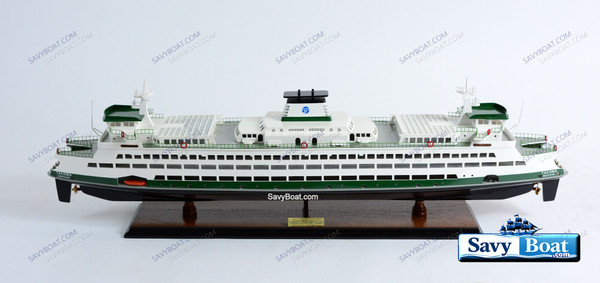
WASHINGTON STATE FERRY , TACOMA
SAVY DIRECT PRICE $100.00 - $699.96WASHINGTON STATE SUPER FERRY, TACOMA LARGE SCALE HIGH QUALITY DISPLAY HULL MODEL Dimension Approx.: 35″ L x 6.5″ W x 10″ H The model is already built, NOT a model ship kit Handcrafted from... -
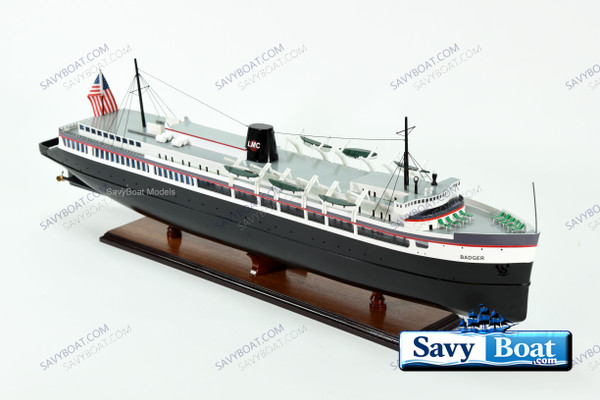
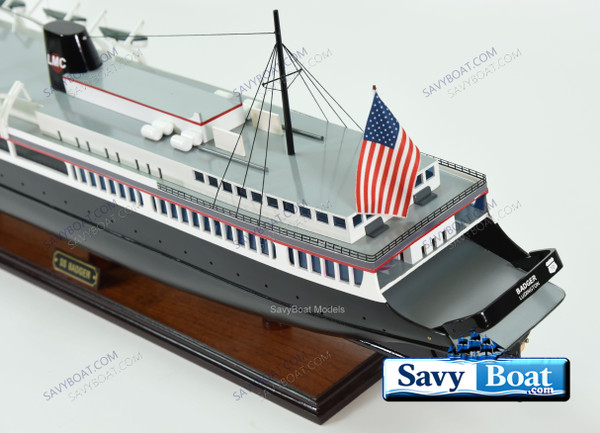
SS BADGER GREAT LAKE FERRY
SAVY DIRECT PRICE $699.96MSRP: $749.99SS BADGER GREAT LAKE FERRY FULLY BUILT AND READY TO DISPLAY SHIP MODEL Dimension approx.: 36″ L x 7″ W x 11″ H The model is already built. THIS IS NOT A MODEL SHIP KIT When the
Description

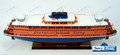
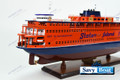
THE STATEN ISLAND FERRY - WORLD'S BUSIEST PASSENGER FERRY
FULLY BUILT AND READY TO DISPLAY, QUALITY SHIP MODEL
- Dimension approx.: 32″ (long) x 7″ (wide) x 11″ (high)
- The model is already built. THIS IS NOT A MODEL SHIP KIT
The Staten Island Ferry: Two Centuries Across the Harbor
For more than 200 years, the Staten Island Ferry has been the lifeline between New York’s least‑connected borough and the rest of the city. Today it is a fare‑free, 24‑hour artery carrying millions across New York Harbor, but its story begins long before skyscrapers, subways, or even the United States itself.
Long before Europeans arrived, the Lenape navigated the harbor’s waters in dugout canoes, crossing the same channels the ferry uses today. After Dutch and British colonization, small private boatmen ferried people between Manhattan and Staten Island in periaugers, shallow‑draft sailboats that were the workhorses of the 18th‑century harbor.
Everything changed in 1810, when a 16‑year‑old Staten Islander named Cornelius Vanderbilt bought a small boat called Swiftsure and began carrying passengers to Manhattan. His skill and ambition earned him the nickname “Commodore”, and his early ferry service laid the foundation for a transportation empire.
Meanwhile, Vice President Daniel D. Tompkins founded the Richmond Turnpike Company, which in 1817 launched the first motorized steamboat ferry, Nautilus. Faster and more reliable than sailboats, it broke the Fulton Ferry monopoly and ushered in the era of steam travel across the harbor.
By the mid‑1800s, three competing ferry companies operated between Staten Island and Manhattan. In 1853, Vanderbilt convinced his rivals to merge, forming the Staten Island and New York Ferry Company. The fleet expanded with new double‑ended steam ferries, including Hunchback, Southfield, and Westfield.
The Civil War interrupted service when several boats were requisitioned by the Union Navy. After the war, the Staten Island Railway took over ferry operations, linking rail and water travel for the first time.
But tragedy struck in 1871, when the boiler of Westfield II exploded at South Ferry, killing dozens and shaking public confidence. Financial troubles followed, and the ferry and railway fell into receivership.
In the 1880s, entrepreneur Erastus Wiman envisioned a unified transit hub for Staten Island. His plan led to the creation of St. George Terminal in 1886, consolidating ferry landings into a single, efficient gateway.
Soon after, the Baltimore & Ohio Railroad (B&O) took control of the ferry, modernizing the fleet with steel‑hulled vessels like Erastus Wiman and Robert Garrett. But accidents continued — most notably the 1901 sinking of Northfield II after a collision in the harbor.
Public frustration grew, and Staten Islanders demanded safer, more reliable service.
In 1905, after years of debate, New York City purchased the ferry system. The city ordered five new “borough‑class” ferries — Manhattan, Brooklyn, Bronx, Queens, and Richmond — and built a new St. George Terminal.
For the first time, the Staten Island Ferry became a public service, operated for the benefit of commuters rather than private profit.
In the early 20th century, the city also ran ferries from Staten Island to 39th Street and 69th Street in Brooklyn. These routes served factories, warehouses, and workers long before the Verrazzano‑Narrows Bridge existed.
But as bridges and tunnels reshaped New York’s transportation network, the Brooklyn ferries faded. The 39th Street route ended after a devastating fire at St. George in 1946, and the 69th Street ferry shut down in 1964, just after the Verrazzano opened.
Only the Manhattan route survived — and it became the sole mass‑transit link between Staten Island and the rest of the city.
Through the 20th century, the fleet evolved with new classes of ferries — the Merrell, Dongan Hills, Mary Murray, and later the iconic John F. Kennedy and Barberi classes.
In 1997, the city eliminated the fare entirely, making the ferry free for all riders. This decision cemented its role as both a commuter necessity and a beloved attraction for tourists seeking views of the Statue of Liberty and the Manhattan skyline.
By 2025, the Staten Island Ferry carried over 16.6 million riders annually — more than any other passenger‑only ferry system on Earth. Boats depart every 15–30 minutes, 24 hours a day, in all weather, making the 5.2‑mile crossing in about 25 minutes.
Its bright orange ferries have appeared in films, novels, and postcards, becoming as iconic as the Brooklyn Bridge or the yellow taxi.
From Vanderbilt’s periauger to today’s modern fleet, the Staten Island Ferry has endured wars, fires, accidents, and political battles. It has outlasted competing ferries, survived the rise of bridges and subways, and remained a constant presence in the lives of New Yorkers.
It is more than a boat ride — it is a moving landmark, a symbol of the city’s resilience, and a reminder that even in a metropolis defined by speed, some traditions endure across centuries.