







-
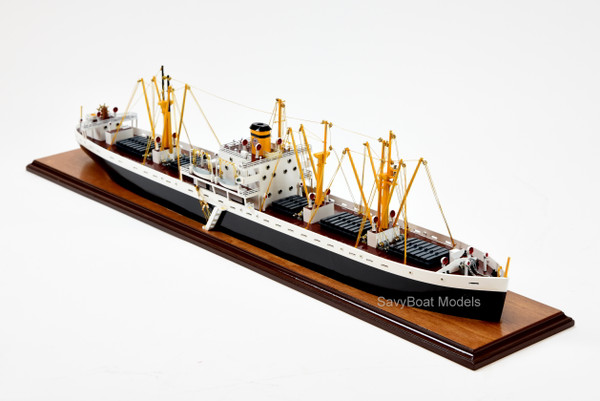
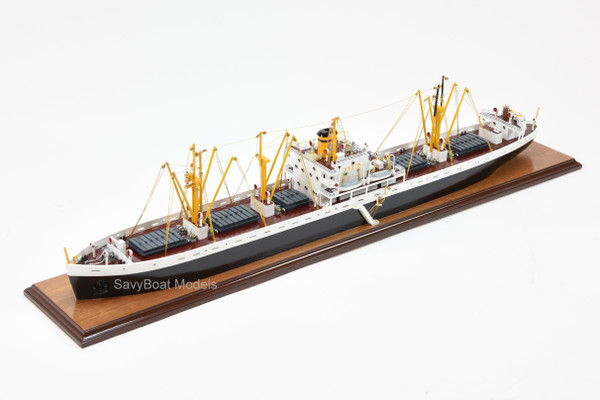
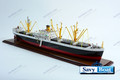
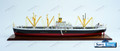
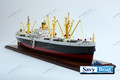
COMMERCIAL LIBERTY CARGO SHIP (WATERLINE) (loaded)
SAVY DIRECT PRICE $799.96MSRP: $849.99COMMERCIAL LIBERTY CARGO SHIP (loaded) FULLY BUILT AND READY TO DISPLAY HIGH QUALITY SHIP MODEL Dimension approx.: 34″ (long) x 5″ (wide) x 8.5″ (high) The model is already built. THIS... -


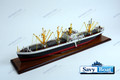
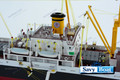
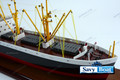
COMMERCIAL LIBERTY CARGO SHIP
SAVY DIRECT PRICE $799.96MSRP: $899.99COMMERCIAL LIBERTY CARGO SHIP FULLY BUILT AND READY TO DISPLAY MUSEUM QUALITY SHIP MODEL Dimension approx.: 34″ (long) x 5″ (wide) x 10.5″ (high) The model is already built. THIS IS NOT... -
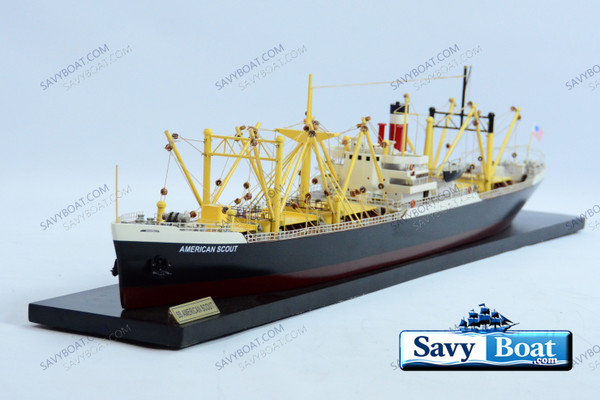

SS AMERICAN SCOUT CARGO SHIP WATERLINE MODEL
SAVY DIRECT PRICE $659.96MSRP: $699.99SS AMERICAN SCOUT CARGO SHIP WATERLINE MODEL FULLY BUILT AND READY TO DISPLAY, QUALITY SHIP MODEL Dimension approx.: 35″ L x 5″ W x 11″ H The model is already built. THIS IS NOT A...
Description

COMMERCIAL LIBERTY CARGO SHIP (empty)
FULLY BUILT AND READY TO DISPLAY HIGH QUALITY SHIP MODEL
- Dimension approx.: 34″ (long) x 5″ (wide) x 8.5″ (high)
- The model is already built. THIS IS NOT A MODEL SHIP KIT
When the world plunged into war in 1939, the Allies faced a crisis that threatened the entire war effort: merchant ships were being sunk faster than they could be replaced. The Atlantic was a graveyard of twisted steel, and without cargo vessels to carry food, fuel, ammunition, and troops, no army could fight for long. Into this desperate moment stepped a new kind of ship — simple, sturdy, and built in astonishing numbers. They were called Liberty ships, and they became the backbone of Allied logistics.
The idea began with a British design, the Ocean‑class freighter, but the U.S. Maritime Commission transformed it into something far more ambitious: a cargo ship that could be mass‑produced like an automobile. The first of the class, SS Patrick Henry, launched in September 1941, symbolized the program’s spirit with the famous line: “Give me liberty or give me death.” Over the next four years, American shipyards would build 2,710 Liberty ships, the largest production run of any ship design in history.
Their construction was a marvel of wartime industry. Instead of traditional riveting, the ships were welded from prefabricated sections — nearly 250,000 parts per vessel — allowing workers to assemble them in as little as 70 days, with a few record‑breakers completed in under five days. Women and men, many of whom had never worked in shipyards before, became the workforce behind this industrial miracle, giving rise to the iconic figure of “Rosie the Riveter.”
A Liberty ship was not elegant, but it was dependable. At 441 feet long, with a single triple‑expansion steam engine pushing her to 11 knots, she could carry more than 10,000 tons of cargo across 20,000 miles of ocean. Tanks, aircraft, ammunition, food, fuel — everything an army needed to fight — traveled in her five cavernous holds. Some were converted into troop transports, carrying up to 450 soldiers at a time.
During the war, Liberty ships sailed everywhere: the icy North Atlantic, the Mediterranean, the Indian Ocean, and the vast Pacific. They delivered supplies to Britain during the Blitz, supported the invasions of North Africa and Italy, and carried men and materiel to the beaches of Normandy. They were slow, noisy, and sometimes called “ugly ducklings,” but they were also indispensable. Without them, the Allied armies could not have advanced.
Their names reflected the nation they served. Liberty ships were christened after prominent Americans — presidents, inventors, writers, civil rights leaders, and hometown heroes. Communities that raised $2 million in war bonds could choose a name, linking towns and cities across the country to the global fight for freedom.
The cost of war was high: around 200 Liberty ships were lost to torpedoes, mines, storms, and kamikaze attacks. But the fleet endured, and after 1945 many ships continued in commercial service for decades, carrying cargo long after the guns fell silent.
Today, only two Liberty ships remain operational: SS Jeremiah O’Brien in San Francisco and the SS John W. Brown in Baltimore. Both serve as museum ships, living memorials to the merchant mariners who braved enemy waters and unforgiving seas to keep the Allies supplied.
The Liberty ships were never meant to be beautiful or long‑lived. They were built for necessity, for speed, and for victory. Yet their legacy endures — a testament to American industrial power, the courage of civilian sailors, and the simple truth that wars are won not only by soldiers, but by the ships that carry their lifelines across the sea.