











-


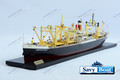
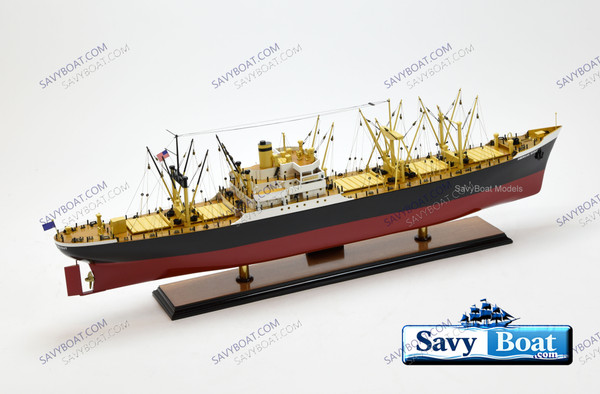
SS AMERICAN SCOUT RC WWII CARGO SHIP
SAVY DIRECT PRICE $1,299.96MSRP: $1,399.99SS AMERICAN SCOUT RC READY WWII C2-S -AJ5 CLASS CARGO SHIP FULLY BUILT AND READY TO DISPLAY MUSEUM QUALITY SHIP MODEL Dimension approx.: 35″ L x 5″ W x 11″ H LIGHTED - LED LIG -

SS AMERICAN SCOUT , WWII C2-S -AJ5 CLASS CARGO SHIP
SAVY DIRECT PRICE $659.96MSRP: $699.99SS AMERICAN SCOUT , WWII C2-S -AJ5 CLASS CARGO SHIP FULLY BUILT AND READY TO DISPLAY MUSEUM QUALITY SHIP MODEL Dimension approx.: 35″ L x 5″ W x 11″ H The model is already built. ... -


COMMERCIAL LIBERTY CARGO SHIP (WATERLINE) (EMPTY)
SAVY DIRECT PRICE $799.96MSRP: $849.99COMMERCIAL LIBERTY CARGO SHIP (empty) FULLY BUILT AND READY TO DISPLAY HIGH QUALITY SHIP MODEL Dimension approx.: 34″ (long) x 5″ (wide) x 8.5″ (high) The model is already built. THIS IS...
Description

SS AMERICAN SCOUT CARGO SHIP WATERLINE MODEL
FULLY BUILT AND READY TO DISPLAY, QUALITY SHIP MODEL
- Dimension approx.: 35″ L x 5″ W x 11″ H
- The model is already built. THIS IS NOT A MODEL SHIP KIT
SS American Scout: A Workhorse of the Wartime Seas
She was not built to be glamorous, nor to carry admirals or diplomats, nor to fire the great guns that thundered across the Pacific. The SS American Scout belonged to a different class of ship — the quiet, essential backbone of a global war effort. When she entered service as a Type C2 cargo ship, she represented one of the United States Maritime Commission’s earliest attempts to standardize merchant ship design: vessels that were fast, versatile, and rugged enough to serve in any ocean, under any conditions.
At roughly 460 feet long, with a beam of 63 feet, American Scout was compact compared to the great liners and troopships of her era, but she was built with purpose. Her five cavernous cargo holds could swallow half a million cubic feet of supplies — ammunition, rations, vehicles, spare parts, and the countless other items that kept armies moving. In an age when logistics often determined victory, she was exactly the kind of ship the world needed.
Powered by a steam turbine engine, she could make 15.5 knots, a speed that set her apart from the slower, coal‑burning freighters of World War I. That speed mattered. It meant she could outrun submarines, keep pace with convoys, and deliver her cargo on time. It meant she could be trusted with missions where delay was not an option.
Life aboard American Scout was better than on many earlier merchant ships. Her crew lived amidships, protected from the worst of the weather, with access to hot and cold running water — a small luxury in a world where sailors often slept in cramped, damp quarters. She was one of ten ships built to the C2‑S‑AJ5 variant, some equipped with refrigerated holds for perishable cargo. These enhancements made her a flexible tool in the vast machinery of wartime supply.
During World War II, American Scout served wherever she was needed. She carried the materials of war across submarine‑haunted waters, helping sustain the Allied advance. She was not a ship that made headlines, but she was one that made victory possible — one voyage, one cargo load at a time.
After the war, she continued to serve in the merchant fleet, part of the immense logistical network that rebuilt shattered nations and fed a recovering world. Her design — efficient, sturdy, and forward‑looking — influenced postwar cargo vessels and helped shape the evolution of American maritime commerce.
Today, the SS American Scout stands as a representative of the unsung ships of World War II: not the fastest, nor the largest, nor the most famous, but indispensable. She and her sister ships proved that wars are not won by battleships alone — they are won by the steady, relentless movement of supplies across the world’s oceans.
She was a workhorse, a lifeline, and a quiet triumph of engineering. And in the long story of the war at sea, she earned her place as one of the ships that kept the world turning.