









-
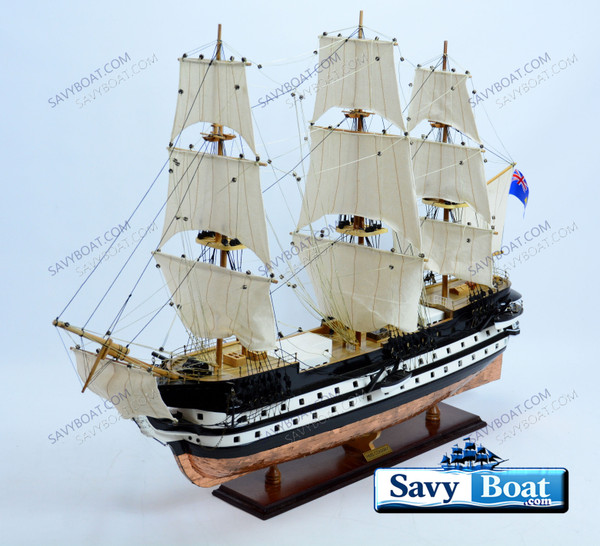

HMS CONWAY TALL TRAINING SHIP
SAVY DIRECT PRICE $1,249.96MSRP: $1,349.99HMS CONWAY TALL TRAINING SHIP FULLY BUILT AND READY TO DISPLAY MUSEUM QUALITY SHIP MODEL Dimension approx.: 39″ (long) x 10″ (wide) x 31″ (high) The model is already built. THIS IS NOT A... -

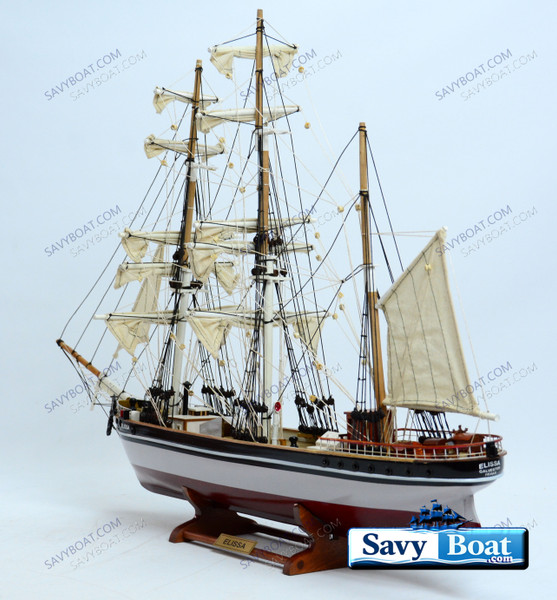
ELISSA TALL SHIP
SAVY DIRECT PRICE $739.96MSRP: $789.99ELISSA TALL SHIP FULLY BUILT AND READY TO DISPLAY QUALITY SHIP MODEL Dimension approx.: 31″ (long) x 9″ (wide) x 19″ (high) The model is already built. THIS IS NOT A MODEL SHIP... -
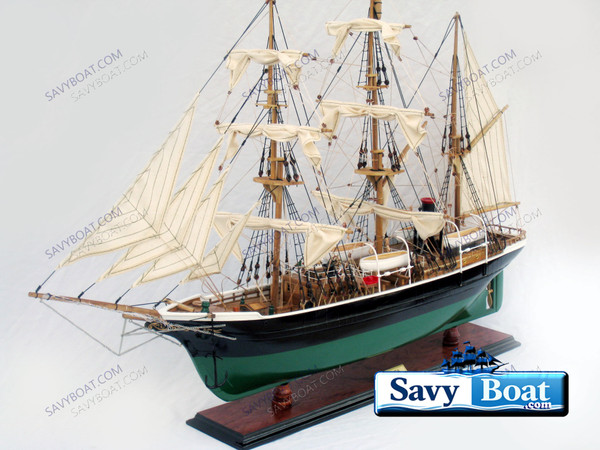
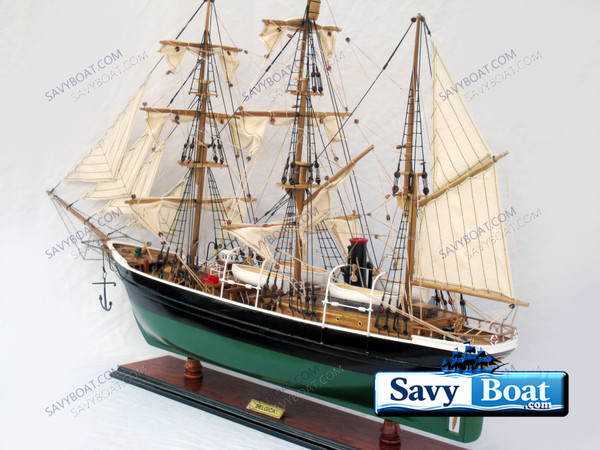
BELGICA TALL SHIP
SAVY DIRECT PRICE $799.96MSRP: $849.99BELGICA TALL SHIP FULLY BUILT AND READY TO DISPLAY, QUALITY SHIP MODEL Dimension approx.: 28.74L x 5.51W x 25.59H (inches) The model is already built. THIS IS NOT A MODEL SHIP KIT When...
Description

DANMARK TRAINING TALL SHIP
FULLY BUILT AND READY TO DISPLAY MUSEUM QUALITY SHIP MODEL
- Dimension Approx.: 34″L x 10″W x 25″H
- The model is already built, NOT a model ship kit
When the Danmark was launched from the Nakskov Shipyard in 1932, she was already something of a throwback. The world’s merchant fleets were turning to diesel engines and steel freighters, yet Denmark chose to build a three‑masted, full‑rigged sailing ship—a deliberate decision to preserve the seamanship traditions that had shaped the nation’s maritime identity for centuries. At 252 feet overall, with 26 sails and a steel hull, she was designed not for commerce but for education: a floating academy for the Danish merchant marine.
Commissioned in 1933, Danmark quickly became the pride of Denmark’s maritime service. Her cadets learned the old skills—hand‑reefing sails, steering by compass and stars, hauling lines by capstan—while also preparing for modern merchant careers. She carried a complement of 120 trainees, later reduced to 80 after a 1959 refit, but her mission remained unchanged: to shape disciplined, capable seafarers through the rigors of life under sail.
In 1939, Danmark crossed the Atlantic to represent Denmark at the New York World’s Fair. She became an instant sensation. Crowds toured her decks, newspapers praised her elegance, and her crew even played a baseball game arranged in their honor. But as Europe descended into war, the voyage took on a new significance. When Germany invaded Denmark in April 1940, the ship received urgent orders: remain in U.S. waters to avoid capture.
Stranded abroad but not idle, Danmark found a new purpose. After the United States entered the war, her captain, Knud L. Hansen, offered the ship to the U.S. government as a training vessel. The offer was accepted, and Danmark became USCGC Danmark (WIX‑283), sailing to New London to train cadets at the U.S. Coast Guard Academy. Over the next several years, she trained roughly 5,000 American cadets, instilling in them the same discipline and seamanship she had long taught Danish youth. It was a quiet but profound contribution to the Allied war effort.
When the war ended in 1945, Danmark returned home to a liberated Denmark. Her service to the United States was never forgotten. In 1964, she was invited to lead the parade of ships at the New York World’s Fair—a symbolic gesture honoring her wartime role and the friendship between the two nations.
In the decades that followed, Danmark resumed her original mission. She sailed annually with new generations of cadets, participating in Tall Ships Races, international regattas, and goodwill voyages. Her visits to the U.S. East Coast—often in partnership with maritime museums—became cherished events for sailors and historians alike.
Today, more than 90 years after her launch, Danmark remains in active service, one of the world’s great sail‑training ships. With a professional crew of 16 and space for 48 trainees, she continues to teach navigation, teamwork, and the traditions of square‑rig seamanship. She is a living link between past and present—a ship that has survived war, crossed oceans, and shaped thousands of maritime careers.
More than a vessel, Danmark is a symbol: of Denmark’s maritime heritage, of transatlantic friendship, and of the enduring value of learning to sail a tall ship by hand, canvas, and wind.