






-
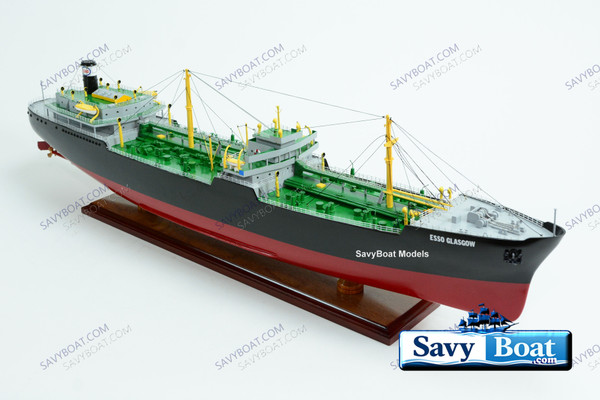

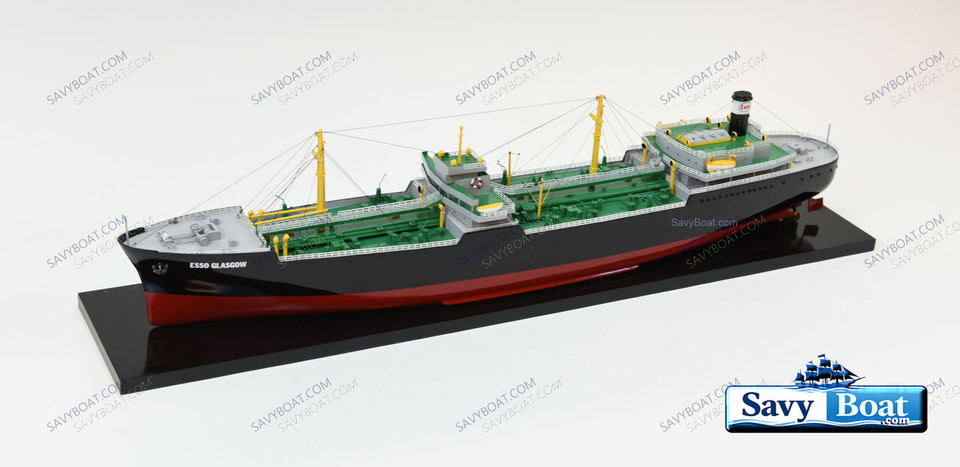
ESSO GLASGOW OIL TANKER
SAVY DIRECT PRICE $739.96MSRP: $779.99ESSO GLASGOW OIL TANKER FULLY BUILT AND READY TO DISPLAY MUSEUM QUALITY SHIP MODEL Dimension approx.: 37.5″ L x 6″ W x 10″ H. The model is already built. THIS IS NOT A MODEL SHIP... -
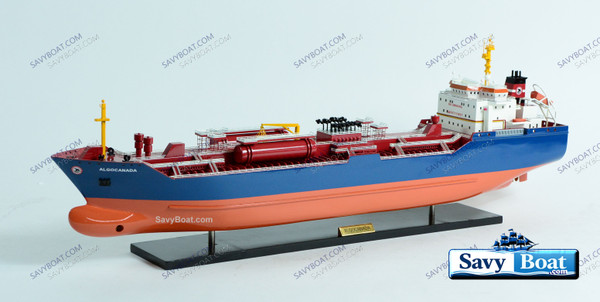
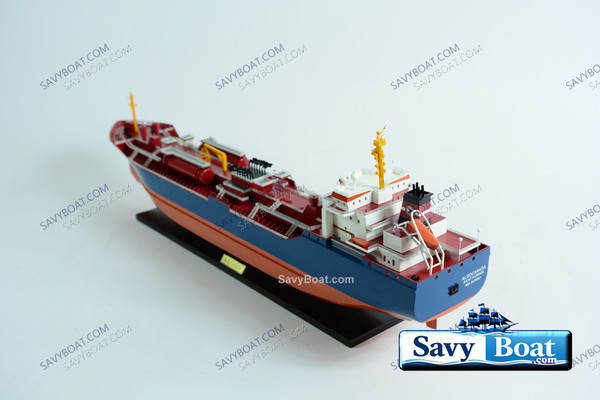
ALGOCANADA OIL TANKER
SAVY DIRECT PRICE $649.96MSRP: $749.99ALGOCANADA OIL TANKER FULLY BUILT AND READY TO DISPLAY MUSEUM QUALITY SHIP MODEL Dimension approx.: 34″ L x 5.5″ W x 12″ H The model is already built. THIS IS NOT A MODEL SHIP... -
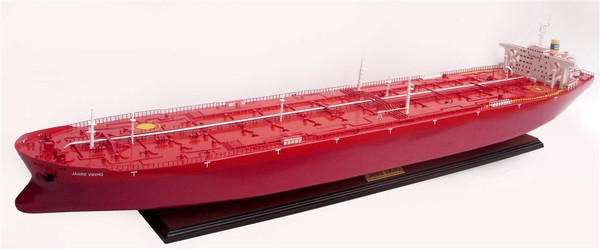

JAHRE VIKING OIL TANKER
SAVY DIRECT PRICE $699.96MSRP: $749.99JAHRE VIKING OIL TANKER FULLY BUILT AND READY TO DISPLAY MUSEUM QUALITY SHIP MODEL Dimension approx.: 45″ L x 7.5″ W x 10″ H The model is already built. THIS IS NOT A MODEL SHIP KIT In...
Description

ESSO GLASGOW OIL TANKER - WATERLINE EDITION
FULLY BUILT AND READY TO DISPLAY MUSEUM QUALITY SHIP MODEL
- Dimension approx.: 37.5″ L x 6″ W x 10″ H.
- The model is already built. THIS IS NOT A MODEL SHIP KIT
The Esso Glasgow began life in the final year of World War II, one of the many T2‑SE‑A1 tankers built to keep Allied fuel supplies moving across the globe. Launched on 14 November 1944 at Sun Shipbuilding & Drydock Co. in Chester, Pennsylvania, she entered the world as Wauhatchie, hull number 1785, constructed for Socony Vacuum under the U.S. Maritime Commission program. Like all T2s, she was built for speed, capacity, and reliability: 523 feet long, 68 feet in beam, and capable of carrying more than 5.9 million gallons of petroleum products. Her turbo‑electric propulsion plant — 7,420 shp driving a single screw — pushed her to nearly 14 knots, a respectable speed for a wartime tanker.
With the war over and the U.S. government divesting its emergency fleet, Wauhatchie was sold in 1946 to Esso Petroleum Co., Ltd. of London. Renamed Esso Glasgow, she shifted from transoceanic wartime logistics to the steady, essential work of commercial petroleum transport. Registered first in Philadelphia and later in the United Kingdom, she became part of Esso’s expanding postwar fleet, supplying fuel to ports throughout the British Isles.
By the mid‑1950s, Esso sought to modernize the vessel for more efficient coastwise service. In 1956, the company undertook a remarkable engineering project: the ship’s original midship cargo section — roughly 310 feet long — was removed and scrapped. Harland & Wolff’s Musgrave Yard in Belfast constructed a completely new center section of the same length, launched on 14 March 1957 and installed the following month. This extensive rebuild effectively renewed the ship’s working life and earned her a new yard number, 1569.
The modernization reflected the postwar tanker industry’s shift toward safer, more efficient cargo handling and updated structural standards. Few T2s received such a comprehensive mid‑life reconstruction, making Esso Glasgow a notable example of the class’s adaptability.
After her rebuild, Esso Glasgow settled into a long career as a UK coastwise tanker, transporting refined petroleum products between British ports. She earned a reputation for durability, a testament to both her wartime construction and her Belfast renewal.
Her most serious incident occurred on 3 January 1967, when explosions and a fire broke out while she was at Fawley, one of Britain’s major oil terminals. The damage required significant repairs, which were carried out in Rotterdam before she returned to service.
By the early 1970s, the aging T2 fleet was rapidly being replaced by larger, more efficient tankers. After more than 25 years of service — including wartime duty, commercial operations, and a major rebuild — Esso Glasgow was retired. She was sold for scrap in 1971 and broken up at Bilbao, arriving there on 18 July 1971.
The Esso Glasgow stands as a representative of the versatile and hardworking T2 tanker class. Built in wartime urgency, transformed in peacetime industry, and kept in service for over two decades, she embodied the resilience and adaptability of one of the most important tanker designs of the 20th century. Her long career — punctuated by a rare mid‑life reconstruction — makes her a distinctive chapter in the history of postwar petroleum shipping.