








-
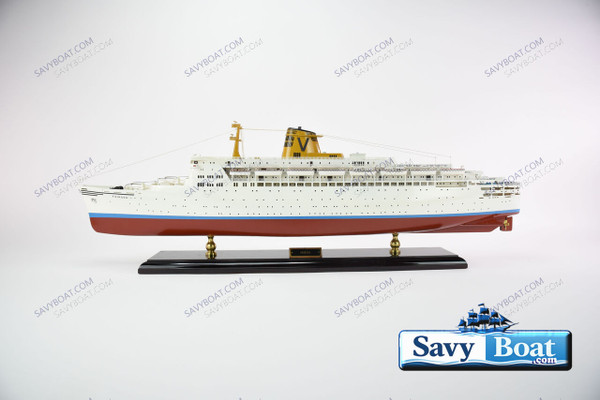
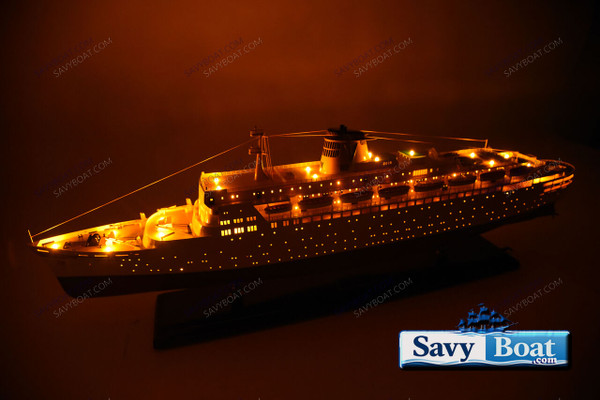
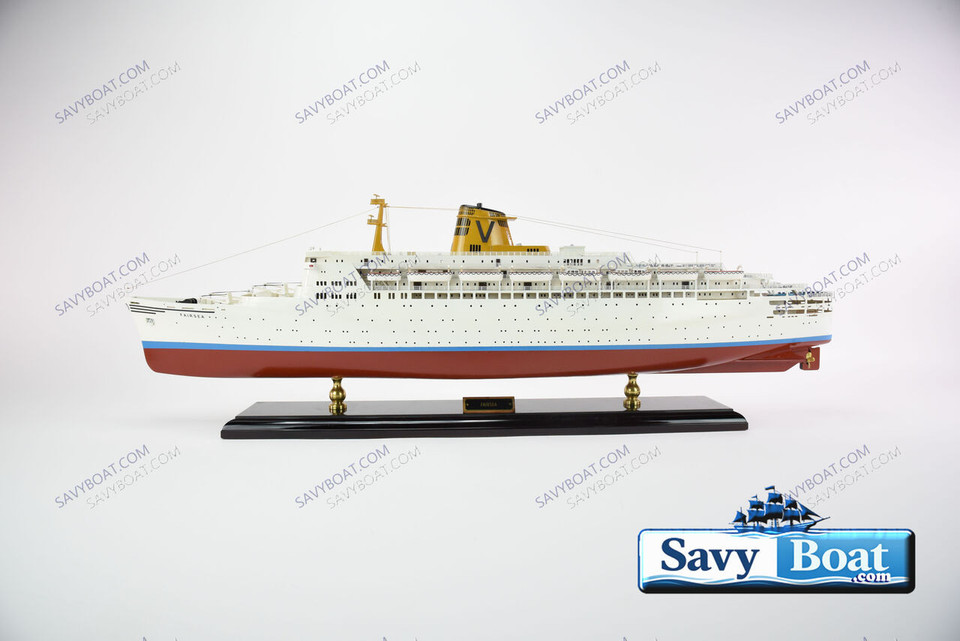
FAIRSEA LIGHTED PASSENGER CARGO SHIP
SAVY DIRECT PRICE $1,099.96MSRP: $1,199.99FAIRSEA LIGHTED PASSENGER CARGO SHIP FULLY BUILT AND READY TO DISPLAY, QUALITY SHIP MODEL Dimension approx.: 35″ L x 5″ W x 11″ H LED LIGHTING INSTALLED (power supply not included) The... -
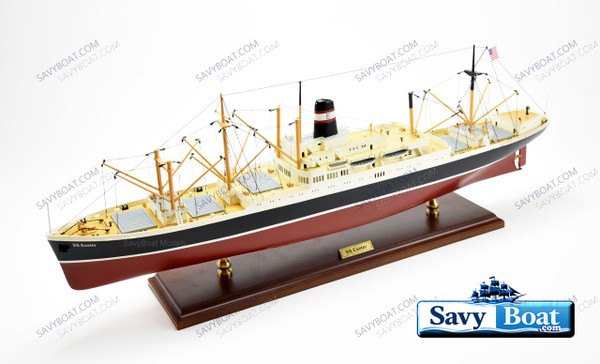
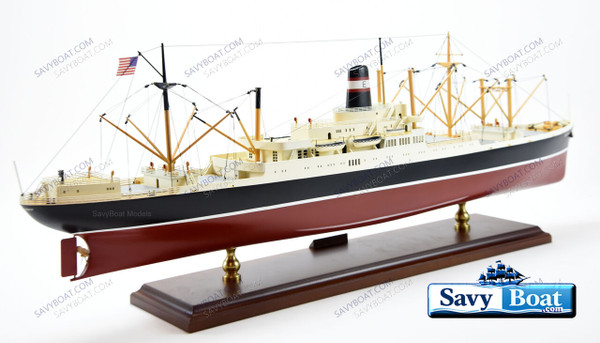
SS EXETER PASSENGER CARGO SHIP
SAVY DIRECT PRICE $1,449.96MSRP: $1,599.99SS EXETER PASSENGER/CARGO SHIP FULLY BUILT AND READY TO DISPLAY, QUALITY SHIP MODEL Dimension Approx.: 35″L x 5.5″W x 12.5″H SCALE 1:300 The model is already built, NOT a model ship kit -


MS STOCKHOLM PASSENGER SHIP
SAVY DIRECT PRICE $999.96MSRP: $1,199.99MS STOCKHOLM PASSENGER SHIP FULLY BUILT AND READY TO DISPLAY MUSEUM QUALITY SHIP MODEL Open die cut side hull windows, NOT painted like those built by most other companies. Dimension...
Description

FAIRSEA LIGHTED PASSENGER CARGO SHIP
FULLY BUILT AND READY TO DISPLAY, QUALITY SHIP MODEL
- Dimension approx.: 35″ L x 5″ W x 11″ H
- The model is already built, NOT a model ship kit
- Open die cut side hull windows, NOT painted like those built by most other companies.
The Fairsea was a former American passenger-cargo ship launched in 1941, converted into an escort carrier during World War II, and later became a prominent migrant ship to Australia from 1949 to 1969.
The ship that would one day be known as Fairsea began her life far from the migrant routes of the Southern Hemisphere. Launched on 1 March 1941 at the Sun Shipbuilding & Drydock Company in Chester, Pennsylvania, she was christened Rio de la Plata, one of Moore‑McCormack Line’s new diesel‑powered passenger‑cargo ships intended for service between New York and South America. With her twin Doxford 6‑cylinder diesel engines, she was among the first large American liners built with modern diesel propulsion — efficient, powerful, and designed for long‑distance trade.
But the world was at war, and Rio de la Plata never entered commercial service. Before completion, she was requisitioned by the U.S. government and transformed into an escort aircraft carrier. Under Lend‑Lease, she joined the Royal Navy as HMS Charger in March 1942, patrolling the North Atlantic in the dangerous years of the Battle of the Atlantic. Later returned to American control, she served four more years in the Pacific as USS Charger, training pilots and supporting wartime operations. When peace came, she briefly carried troops home before being laid up — a veteran ship with no clear future.
That future arrived in 1949, when the vessel was purchased by the Sitmar Line, owned by the Russian‑Italian entrepreneur Alexandre Vlasov. Sent to Genoa, she underwent a dramatic transformation. Her wartime carrier decks and machinery spaces were stripped away and replaced with austere dormitory‑style accommodations for nearly 1,800 migrants, segregated by gender in the style of post‑war transport ships. Renamed Fairsea, she embarked on a new mission: carrying displaced persons and assisted migrants to Australia.
Her first voyage under Sitmar departed Naples on 11 May 1949, carrying 1,896 refugees bound for Melbourne under the International Refugee Organisation. For many, Fairsea was their first glimpse of hope after the devastation of World War II. Over the next two decades, she became one of the most familiar migrant ships in Australian waters. Between 1949 and 1969, she completed 81 voyages, transporting tens of thousands of migrants from Britain, Europe, and New Zealand under various government schemes.
Life aboard Fairsea was remembered with a mixture of hardship and excitement. Her accommodations were basic, her diesel engines increasingly temperamental as spare parts grew scarce, and her voyages long. Yet for countless families, she represented a new beginning — the ship that carried them toward a different life on the far side of the world.
By the late 1960s, Fairsea was aging. Her tonnage had grown from 11,678 to 13,432 gross tons through successive modifications, placing additional strain on her already overworked engines. On 24 January 1969, disaster struck: a fire broke out in the engine room while she was sailing about 900 miles west of Panama. Disabled and unable to continue, she was towed to safety. The damage was too severe to justify repair. Fairsea was sent to La Spezia, Italy, arriving on 6 August 1969, where she was broken up.
Though her end was quiet, Fairsea’s legacy is profound. She was the first non‑British ship to carry assisted migrants from Britain and one of the most important vessels in Australia’s post‑war immigration story. For the thousands who sailed aboard her, she remains a symbol of courage, uncertainty, and the promise of a new life.
From American cargo liner to wartime carrier to migrant ship, Fairsea lived three distinct lives — each reflecting the changing needs of a world in upheaval and recovery.