










-

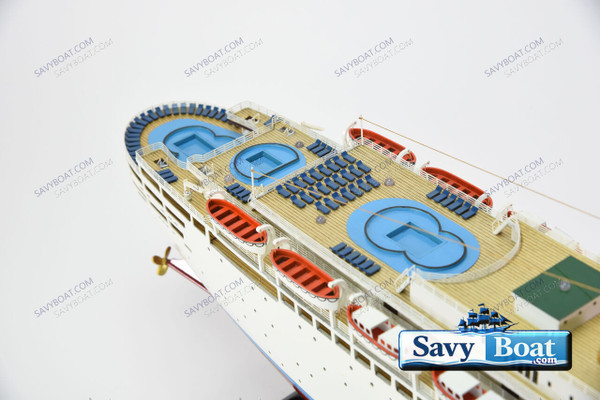
FAIRSEA PASSENGER CARGO SHIP
SAVY DIRECT PRICE $999.96MSRP: $1,099.99FAIRSEA LIGHTED PASSENGER CARGO SHIP FULLY BUILT AND READY TO DISPLAY, QUALITY SHIP MODEL Dimension approx.: 35″ L x 5″ W x 11″ H The model is already built, NOT a model ship kit Open... -
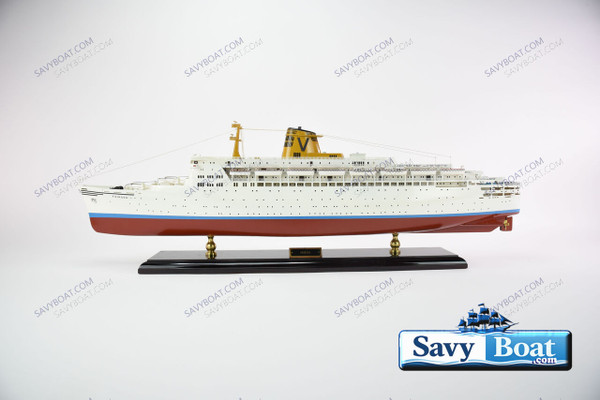
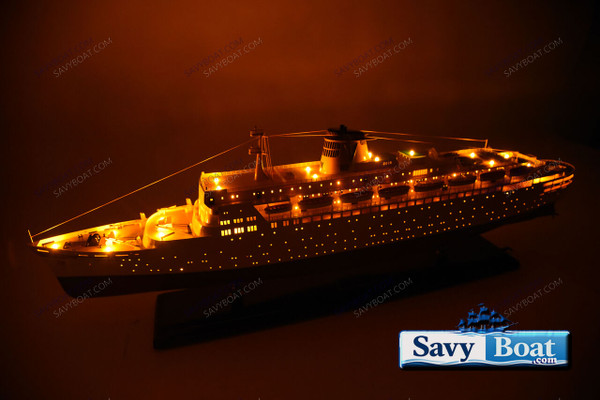
FAIRSEA LIGHTED PASSENGER CARGO SHIP
SAVY DIRECT PRICE $1,099.96MSRP: $1,199.99FAIRSEA LIGHTED PASSENGER CARGO SHIP FULLY BUILT AND READY TO DISPLAY, QUALITY SHIP MODEL Dimension approx.: 35″ L x 5″ W x 11″ H LED LIGHTING INSTALLED (power supply not included) The... -


JAMES LYKES CARGO SHIP
SAVY DIRECT PRICE $899.96MSRP: $999.99JAMES LYKES CARGO SHIP FULLY BUILT AND READY TO DISPLAY MUSEUM QUALITY SHIP MODEL Dimension approx.: 30 inch L x 4 inch W x 11 inch H The model is already built. THIS IS NOT A...
Description

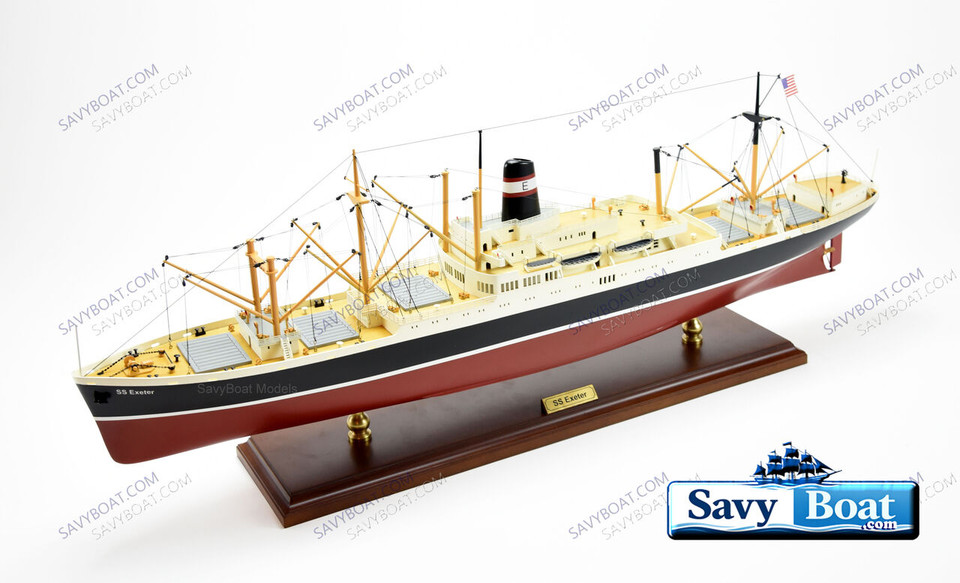
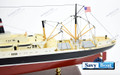
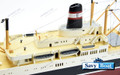
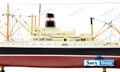
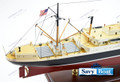
SS EXETER PASSENGER/CARGO SHIP
FULLY BUILT AND READY TO DISPLAY, QUALITY SHIP MODEL
- Dimension Approx.: 35″L x 5.5″W x 12.5″H
- SCALE 1:300
- The model is already built, NOT a model ship kit
The story begins in 1931, when the first SS Exeter emerged from the New York Shipbuilding Corporation in Camden, New Jersey. She was one of American Export Lines’ original “Four Aces” — Excalibur, Excambion, Exochorda, and Exeter — a quartet of passenger‑cargo liners designed to bring American travelers to the great ports of the Mediterranean.
At 9,360 tons and 450 feet long, the first Exeter was compact but refined. She carried only first‑class passengers, offering private baths, outside staterooms, air‑conditioning, and the kind of understated luxury that defined American Export Lines in the 1930s. Her single‑screw turbine pushed her along at 16 knots, steady and reliable, as she sailed from New York to Marseilles, Naples, Alexandria, Jaffa, Haifa, and Beirut.
For a decade, she was a symbol of peaceful transatlantic travel — a ship built for comfort, culture, and commerce.
But the world she served was changing fast.
In April 1942, as the United States mobilized for World War II, the Navy acquired the Exeter and converted her into the USS Edward Rutledge (AP‑52), a troop transport. Her elegant interiors were stripped away, replaced with bunks and military equipment. Her white hull turned gray.
She joined the Allied fleet for Operation Torch, the invasion of North Africa in November 1942. But on 12 November, while anchored off Fedala near Casablanca, she was torpedoed by German submarine U‑130. The former Exeter sank quickly — one of several transports lost in the chaotic early days of the campaign.
Her career as a passenger liner had lasted ten years. Her career as a troopship lasted only months.
Yet the name Exeter would not disappear.
The Second Exeter (1945): A Postwar Rebirth
As the war ended, American Export Lines rebuilt its fleet. The original “Four Aces” were gone, but the Navy had constructed new C3‑class attack transports based on their design. One of these, the USS Shelby (APA‑105), was purchased by AEL and transformed into the postwar SS Exeter.
Launched in 1945 by Bethlehem Shipbuilding in Sparrows Point, Maryland, the new Exeter was larger and more modern than her predecessor — 451 feet long, 9,644 tons, and capable of 18 knots. She was fully air‑conditioned, with outside staterooms, family suites, veranda decks, and even a tiled swimming pool. She represented the optimistic, forward‑looking spirit of postwar American travel.
Like the first Exeter, she sailed from New York to the Mediterranean, calling at Marseilles, Naples, Alexandria, Jaffa, Haifa, Beirut, and Piraeus. Every other Tuesday, she departed New York, carrying tourists, diplomats, students, and cargo to a region rebuilding from war.
She remained in service through the 1950s and into the 1960s, until changing economics and the rise of jet travel made ships like her increasingly obsolete. In 1965, she was sold to Turkish Maritime Lines and renamed Tarsus, marking the end of her American career.
Taken together, the two ships named Exeter reflect the full arc of American merchant shipping in the mid‑20th century:
-
The 1931 Exeter — a glamorous prewar passenger‑cargo liner, lost in the violence of World War II.
-
The 1945 Exeter — a modernized postwar successor, carrying the name into the jet age before being sold abroad.
Both served the same routes. Both carried the same blend of passengers and cargo. And both symbolized American Export Lines’ commitment to connecting the United States with the Mediterranean world.
The name Exeter became a legacy — one ship lost to war, another born from it — together telling a story of elegance, conflict, renewal, and the changing tides of maritime history.