





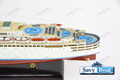

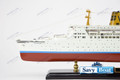


-


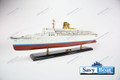
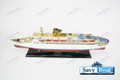
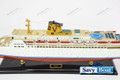
SS FAIRWIND LIGHTED OCEAN LINER
SAVY DIRECT PRICE $1,099.96MSRP: $1,199.99SS FAIRWIND LIGHTED CRUISE SHIP FULLY BUILT AND READY TO DISPLAY MUSEUM QUALITY SHIP MODEL Dimension approx.: 40″ (long) x 4.75″ (wide) x 12″ (high) Lighted with LED lighting (power supply not... -
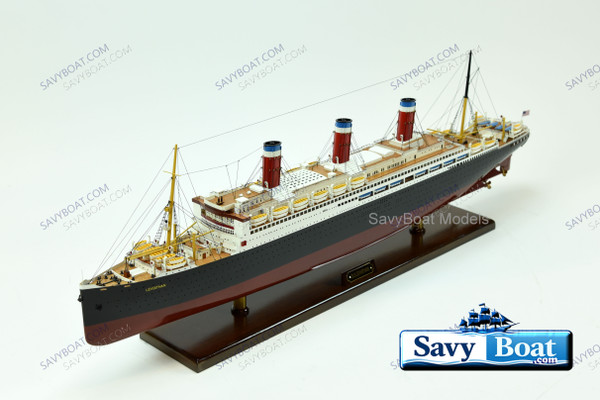
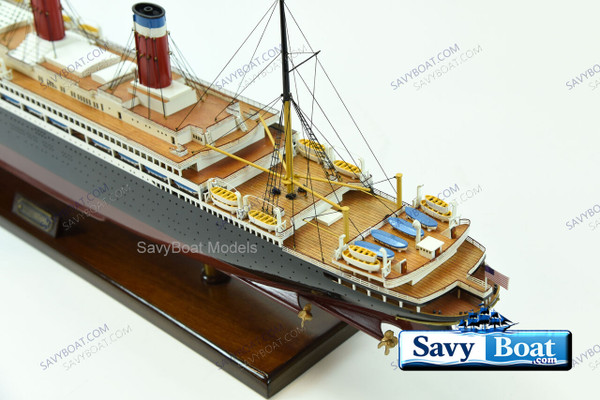
SS LEVIATHAN OCEAN LINER
SAVY DIRECT PRICE $999.96MSRP: $1,049.99SS LEVIATHAN OCEAN LINER FULLY BUILT AND READY TO DISPLAY BOAT MODEL Dimension approx.: 38″ L x 4.5″ W x 12″ H Approx Scale 1/300 The model is already built. THIS IS NOT A MODEL -
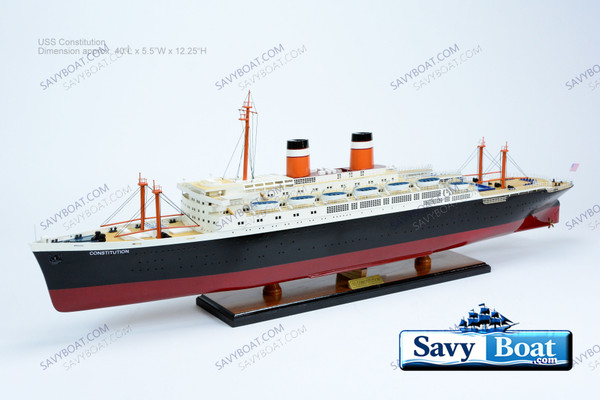

SS CONSTITUTION OCEAN LINER
SAVY DIRECT PRICE $799.96MSRP: $849.99SS CONSTITUTION OCEAN LINER FULLY BUILT AND READY TO DISPLAY BOAT MODEL Dimension approx.: 40"L x 6.5"W x 13.5"H The model is already built. THIS IS NOT A MODEL SHIP KIT The SS...
Description

SS FAIRWIND CRUISE SHIP
FULLY BUILT AND READY TO DISPLAY MUSEUM QUALITY SHIP MODEL
- Dimension approx.: 40″ (long) x 4.75″ (wide) x 12″ (high)
- The model is already built, NOT a model ship kit
When she slid down the ways at John Brown & Company in Glasgow on 22 November 1956, the ship that would one day be known as SS Fairwind represented the final chapter of a great era. Built as RMS Sylvania for Cunard, she was one of the last true ocean liners constructed for the transatlantic and Canadian services — a sturdy, handsome member of the Saxonia class, designed to bridge the postwar world with the traditions of the golden age of steam.
At 185 meters long and capable of 21 knots, Sylvania was built for versatility. She carried 878 passengers in first and tourist classes and was designed to navigate the Saint Lawrence Seaway, allowing her to serve both the Southampton–New York run and the Liverpool–Montreal route. When she entered service on 5 June 1957, she embodied Cunard’s postwar optimism: modern, efficient, and ready to carry emigrants, tourists, and business travelers across the North Atlantic.
But the world was changing. By the late 1960s, jet travel had eroded the market for traditional liners. After a decade of service, Sylvania was laid up — a ship built for an era that was rapidly disappearing.
Her salvation came from Sitmar Line, which purchased her in 1968 and envisioned a new life far from the cold Atlantic. Between 1971 and 1972, Sitmar transformed her completely. The refit was dramatic — one of the most extensive cruise‑ship conversions of its time. Her interiors were rebuilt, her passenger capacity expanded to around 925, and her atmosphere reimagined as a warm, luxurious floating resort.
Renamed SS Fairwind, she emerged as a glamorous five‑star cruise ship, sailing pleasure voyages along the coasts of the Americas. Sitmar had originally planned ambitious Sydney–Los Angeles cruises, but instead she became a familiar sight in North and South American waters, offering relaxed, elegant holidays that contrasted sharply with her hardworking Cunard years.
She also proved resilient. In 1969, her sister ship Fairsea was lost to a catastrophic engine‑room fire — a fate Fairwind narrowly avoided. Her survival only deepened her reputation as a lucky ship.
For nearly two decades, Fairwind was one of Sitmar’s most beloved vessels, known for her warm service, comfortable accommodations, and loyal repeat passengers. When Sitmar was absorbed by P&O in 1988, she continued sailing — first as Sitmar Fairwind, then as Dawn Princess for Princess Cruises, and later as Albatros under V‑Ships.
By the early 2000s, the aging liner‑turned‑cruise‑ship was nearing the end of her long career. Renamed Genoa for her final voyage, she sailed to Alang, India, where she was scrapped in 2004 — nearly half a century after her launch.
Her passing marked more than the end of a single ship. She was the last Cunard‑built passenger liner designed for transatlantic service, a vessel that bridged the age of steamships and the rise of modern cruising. Her Sitmar refit in the early 1970s became a template for how older liners could be reborn as luxury cruise ships, influencing an entire generation of conversions.
As RMS Sylvania, she was a hardworking postwar liner. As SS Fairwind, she became a glamorous Sitmar cruise ship. As Dawn Princess and Albatros, she extended her life into the modern era.
Few ships traveled so far — or changed so completely — while remaining beloved in every identity.