








-
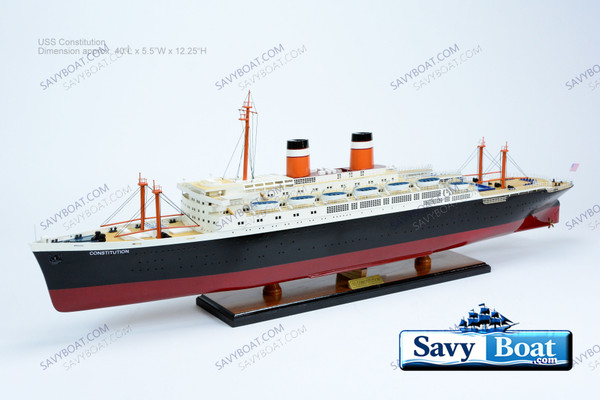

SS CONSTITUTION OCEAN LINER
SAVY DIRECT PRICE $799.96MSRP: $849.99SS CONSTITUTION OCEAN LINER FULLY BUILT AND READY TO DISPLAY BOAT MODEL Dimension approx.: 40"L x 6.5"W x 13.5"H The model is already built. THIS IS NOT A MODEL SHIP KIT The SS... -
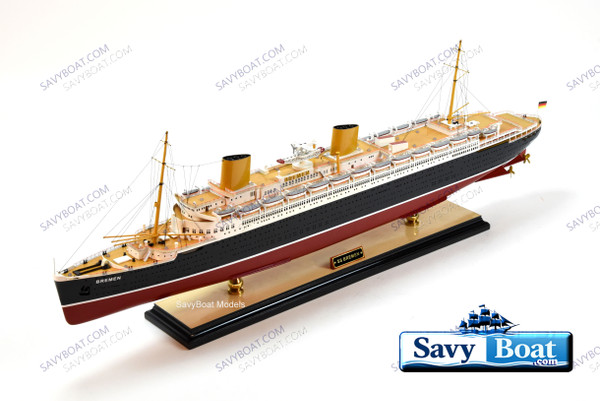

SS BREMEN OCEAN LINER
SAVY DIRECT PRICE $999.96MSRP: $1,099.99SS BREMEN OCEAN LINER FULLY BUILT AND READY TO DISPLAY, QUALITY SHIP MODEL Dimension Approx.: 37.5″ L x 4.5″ W x 15″ H approx Scale 1:300 The model is already built, NOT a model ship kit -
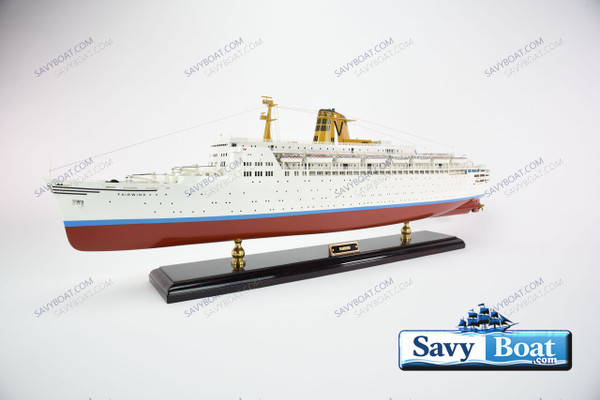

SS FAIRWIND OCEAN LINER
SAVY DIRECT PRICE $999.96MSRP: $1,099.99SS FAIRWIND CRUISE SHIP FULLY BUILT AND READY TO DISPLAY MUSEUM QUALITY SHIP MODEL Dimension approx.: 40″ (long) x 4.75″ (wide) x 12″ (high) The model is already built, NOT a model ship...
Description

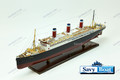
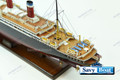
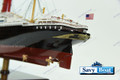
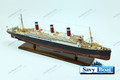
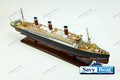
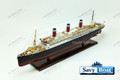
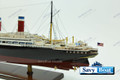
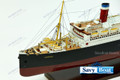
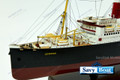
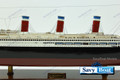
SS LEVIATHAN OCEAN LINER
FULLY BUILT AND READY TO DISPLAY BOAT MODEL
- Dimension approx.: 38″ L x 4.5″ W x 12″ H
- Approx Scale 1/300
- The model is already built. THIS IS NOT A MODEL SHIP KIT
The ship that would one day become the SS Leviathan began her life as SS Vaterland, launched on 3 April 1913 for Germany’s Hamburg America Line. She was the second of the great Imperator‑class liners — vast, ornate vessels built to challenge British dominance on the North Atlantic. At 54,282 gross tons, Vaterland was the largest passenger ship in the world, a floating city of luxury whose public rooms included a replica of the New York Ritz‑Carlton dining room. Her powerful engines drove her at speeds up to 26 knots, making her not only immense but impressively swift.
Vaterland entered service in May 1914, completing only seven crossings before the outbreak of World War I. Caught in New York when hostilities began, she was interned at Hoboken along with other German ships, watched over by U.S. authorities to prevent sabotage or escape. For nearly three years she lay idle — a giant in forced slumber — while the world around her descended into conflict.
Everything changed on 6 April 1917, when the United States entered the war. Vaterland was seized the same day, and President Woodrow Wilson proposed a new name: Leviathan, after the biblical sea monster, fitting for a ship of such extraordinary size. Commissioned in July 1917, Leviathan became one of the most important American troopships of the war. Armed with eight 6‑inch guns, she carried more than 94,000 U.S. soldiers to France — roughly one‑sixth of the entire American Expeditionary Force. Her speed allowed her to sail without escort, and her vast capacity made her indispensable to the Allied war effort.
After the Armistice, Leviathan returned to New York and was laid up from 1919 to 1922, awaiting a new purpose. A massive reconditioning at Newport News transformed her from troopship to luxury liner, and in 1923 she reentered service as the flagship of United States Lines. In her peacetime career she carried up to 3,900 passengers, attended by a crew of more than 1,000, and became one of the most recognizable ships on the Atlantic. Her route — New York to Southampton via Cherbourg — placed her among the elite liners of the 1920s, admired for her size, speed, and grand public spaces.
Yet Leviathan’s greatness came with challenges. Her enormous operating costs, combined with the economic pressures of the Great Depression, made her increasingly difficult to sustain. In 1934, she was withdrawn from service and laid up once again in New York, her glory fading as newer, more efficient ships entered the trade.
Her final voyage came in January 1938, when she sailed to Rosyth, Scotland, to be scrapped. The largest ship in the world at her birth, Leviathan ended her life quietly, dismantled piece by piece — a giant reduced to memory.
Today, the SS Leviathan is remembered as a ship of extraordinary scale and symbolism. She embodied German ambition before World War I, American power during the conflict, and the glamour of transatlantic travel in the roaring 1920s. Her story spans continents, wars, and eras, making her one of the most compelling ocean liners of the early 20th century.