












-

JOLLY ROGER PIRATE SHIP
SAVY DIRECT PRICE $2,499.99JOLLY ROGER PIRATE SHIP FULLY BUILT AND READY TO DISPLAY MUSEUM QUALITY SHIP MODEL Dimension approx.: 30″ (long) x 12″ (wide) x 32″ (high) The model is already built. THIS IS NOT A MODEL... -

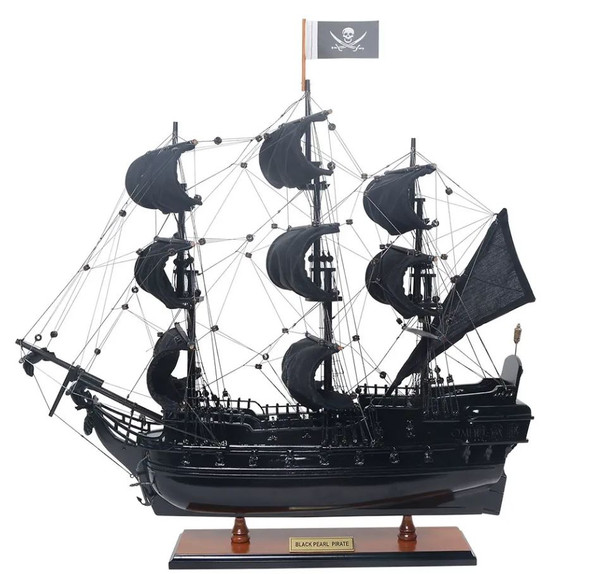
BLACK PEARL PIRATE SHIP 20"
SAVY DIRECT PRICE $389.96MSRP: $429.99BLACK PEARL PIRATE SHIP 20" FULLY BUILT AND READY TO DISPLAY MUSEUM QUALITY SHIP MODEL Dimension approx.: 20L x 6.5W x 19H (inches) The model is already built. THIS IS NOT A MODEL SHIP... -


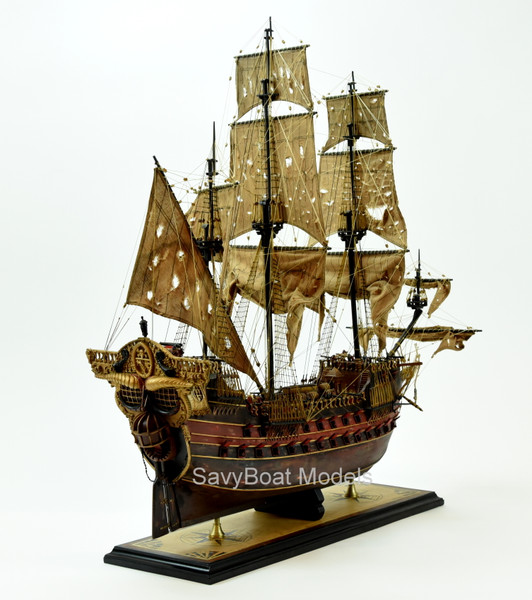
1715 WHYDAH GALLY PIRATE SHIP
SAVY DIRECT PRICE $699.96MSRP: $799.991715 WHYDAH GALLY PIRATE SHIP FULLY BUILT AND READY TO DISPLAY QUALITY SHIP MODEL Dimension Approx.: 36″ (long) x 11″ (wide) x 27″ (high) The
Description

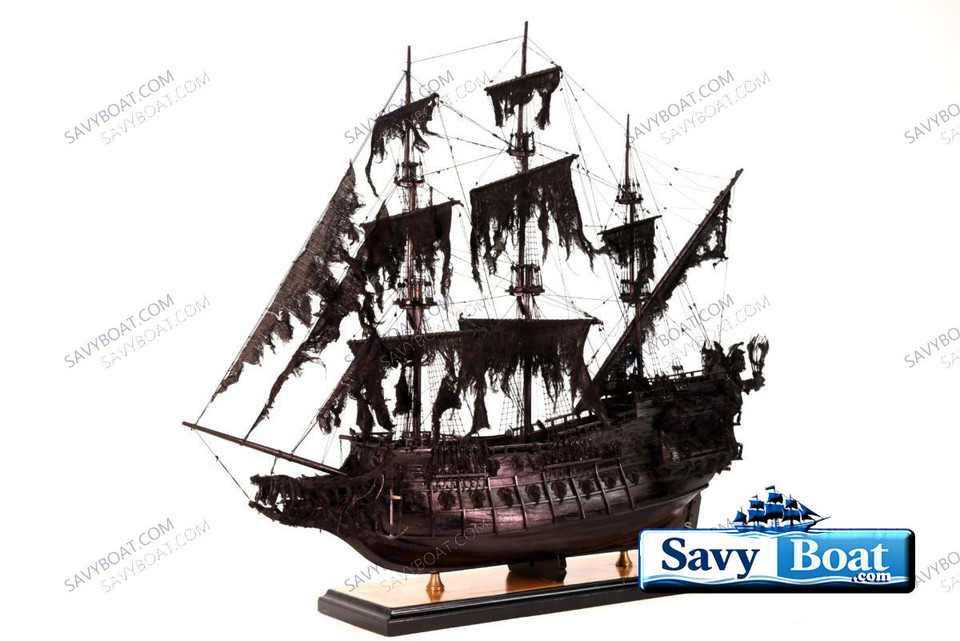
FLYING DUTCHMAN PIRATE SHIP
FULLY BUILT AND READY TO DISPLAY MUSEUM QUALITY SHIP MODEL
- Dimension Approx.: 35″L x 14.5″W x 31″H
- The model is already built, NOT a model ship kit
- Top quality with wood inlay marquetry base
Long before radar, radio, or reliable charts, sailors relied on instinct, superstition, and the shifting moods of the sea. In that world of uncertainty, few legends struck deeper fear than the Flying Dutchman — the ghost ship doomed to roam the oceans forever, never making port, never finding rest. Born from the storm‑lashed waters of the Cape of Good Hope during the 17th‑century height of the Dutch East India Company, the tale blended real maritime peril with the imagination of sailors who lived at the edge of the known world.
The earliest written reference appears in 1790, describing a Dutch ship unable to secure a harbor pilot in foul weather and lost off the Cape. From then on, sailors claimed that in the worst storms they saw her — a phantom vessel glowing with an eerie light, her crew desperately trying to hail passing ships with letters addressed to people long dead. By the late 18th century, the story had spread across the world’s oceans, carried by merchantmen, naval vessels, and whalers alike.
As the legend evolved, writers added darker elements. Some said the ship was cursed for a terrible crime; others claimed her crew had been struck by pestilence and condemned to sail until the end of time. In 1803, poet John Leyden described the Dutchman as a specter‑ship whose crew “are ordained still to traverse the ocean on which they perished.” By the early 19th century, the captain had a name — Hendrick van der Decken — and a fate sealed by his own defiance. In one popular version, he swore he would round the Cape “though it should take until the day of judgment,” and the Devil took him at his word.
Sightings continued well into the 19th and 20th centuries. The most famous occurred in 1881, when the young Prince George of Wales (later King George V) recorded in his log that a “strange red light” revealed a fully rigged brig crossing their bow in calm seas — only to vanish moments later. Thirteen crewmen saw it. Hours later, the sailor who first reported the apparition fell from the mast and died, reinforcing the belief that the Flying Dutchman was a harbinger of doom.
Modern explanations point to superior mirages and Fata Morgana effects — atmospheric distortions that can lift distant ships into the air or make them glow unnaturally. Sailors who once feared the phantom now understand that light bending across layers of warm and cold air can create ghostly illusions. But for centuries, such visions were taken as omens, warnings that the sea itself was watching.
A Legend That Endures
Whether born from optical illusion, fear, or the loneliness of long voyages, the Flying Dutchman became one of the most enduring myths in maritime history. It captured the imagination of poets, novelists, and sailors alike — a symbol of hubris, punishment, and the unforgiving nature of the sea.
Even today, the image persists: a lone ship, sails full though no wind blows, glowing faintly against a storm‑dark horizon. A reminder that the ocean keeps its secrets, and that some stories refuse to die.