





-
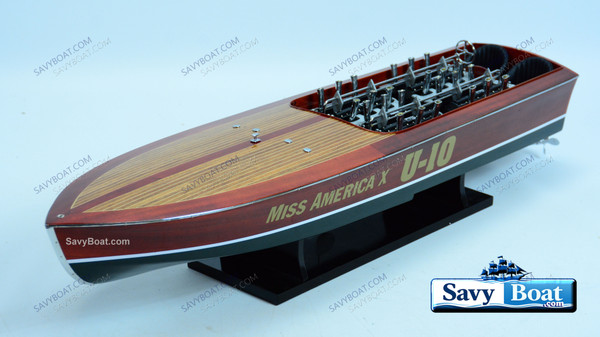

GAR WOOD'S MISS AMERICA X RACE BOAT
SAVY DIRECT PRICE $689.96MSRP: $699.99GAR WOOD'S MISS AMERICA X RACE BOAT FULLY BUILT AND READY TO DISPLAY HIGH QUALITY SHIP MODEL Dimension Approx.: 32″ (long) x 8.5″ (wide) x 7″ (high) -


GAR WOOD'S MISS AMERICA IX RACE BOAT
SAVY DIRECT PRICE $699.96MSRP: $699.99GAR WOOD'S MISS AMERICA IX RACE BOAT FULLY BUILT AND READY TO DISPLAY HIGH QUALITY SHIP MODEL Dimension Approx.: 32″ L x 8.5″ W x 7″ H</ -
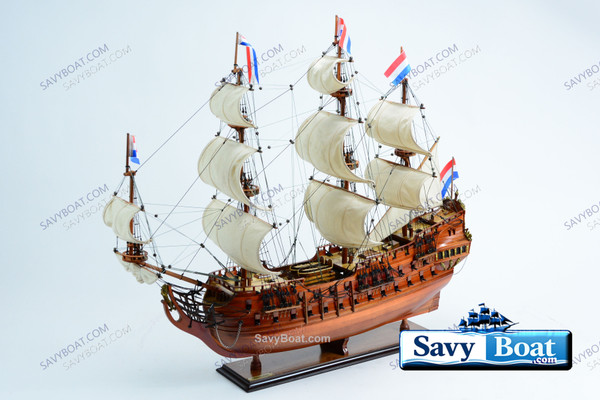

FRIESLAND WOOD DUTCH 80 GUN SHIP (WOOD HULL)
SAVY DIRECT PRICE $1,299.96MSRP: $1,399.991663 FRIESLAND - DUTCH 80 GUN SHIP FULLY BUILT AND READY TO DISPLAY MUSEUM QUALITY SHIP MODEL Dimension approx.: 30″ L x13.5″ W x 32″ H Cloth sails Unpanted white hull <
Description

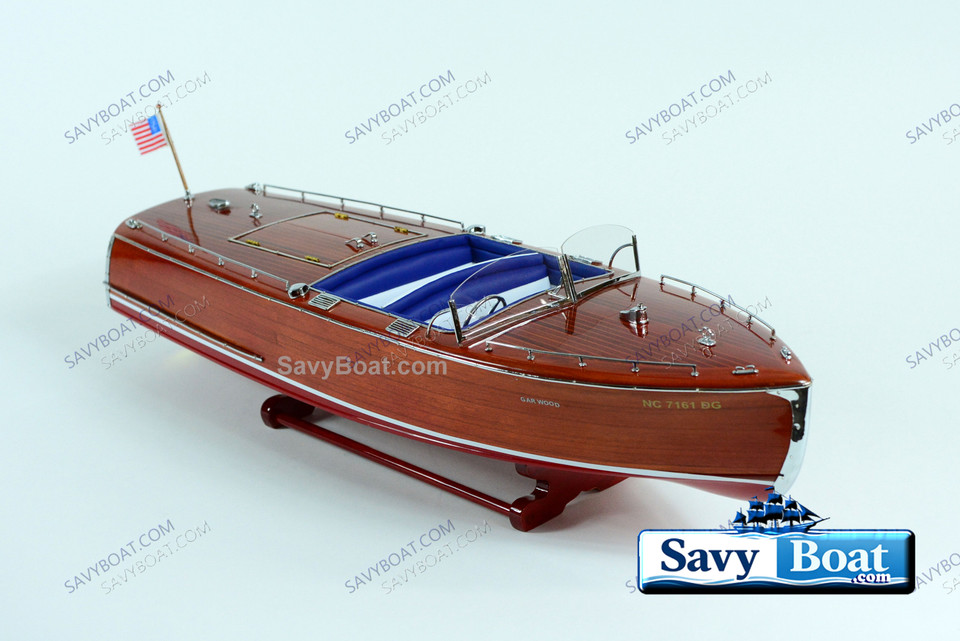
GAR WOOD COMMODORE SPEED BOAT
FULLY BUILT AND READY TO DISPLAY MUSEUM QUALITY SHIP MODEL
- Dimension approx.: 28″ L x 8.5″ W x 8″ H
- The model is already built. THIS IS NOT A MODEL SHIP KIT
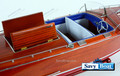
- Hand stitched individual leather seats
- Flags and solid wood base included
Garfield Arthur “Gar” Wood grew up with the smell of lake water and engine grease in his lungs. Long before he became the most feared name in powerboat racing, he was a boy on Lake Osakis watching his father’s ferries churn across the water. Those boats were slow, stubborn things, but to young Gar they were alive—machines with potential. He learned early that a hull could be coaxed, an engine persuaded, and that speed was not a luxury but a puzzle waiting to be solved.
By the time he reached adulthood, Wood’s mechanical instincts had sharpened into something uncanny. His invention of the hydraulic lift—simple, powerful, and perfectly timed for America’s industrial boom—made him wealthy before he ever set foot in a racing cockpit. But money was never the point. What he wanted was mastery. What he wanted was speed.
In the 1920s, the quiet man from Iowa stepped onto the national stage and became the “Grey Fox of Algonac.” His Miss America hydroplanes were not boats so much as declarations. Each one was sleeker, louder, and more ambitious than the last, built with the confidence of a man who believed that engineering could always go further. Wood didn’t just race—he dominated. Five consecutive Gold Cups. Nine Harmsworth Trophies. A string of world water‑speed records that pushed past 100 mph and then past 120, each run a thunderous challenge to anyone who thought they understood the limits of water and machinery.
Yet Wood was more than a racer. He was a builder, a craftsman, and eventually the head of Gar Wood Industries, a company that translated his racing genius into boats the public could own. These weren’t stripped‑down speedsters; they were mahogany sculptures, polished to a mirror shine and fitted with engines that hummed with restrained power. Among them, the Commodore models stood out—sleek, luxurious, and unmistakably influenced by the lines of the Miss America dynasty. They were the gentleman’s version of a racing dream, built for those who wanted elegance without surrendering performance.
When World War II arrived, Wood’s expertise found a new purpose. His understanding of lightweight hulls and high‑power engines helped shape the Navy’s PT boats, vessels that would become legends in their own right. It was a quieter contribution than his record runs, but no less meaningful.
Gar Wood lived long enough to watch the sport he helped create evolve into something bigger, faster, and louder than even he had imagined. But his imprint never faded. Every hydroplane that lifts onto a plane, every collector who runs a hand along the varnished deck of a Gar Wood runabout, is touching a piece of his legacy.
He began as a ferry operator’s son, racing across a Minnesota lake. He ended as the man who taught the world how fast water could be conquered. And somewhere between those two shores, Gar Wood built not just boats, but an era.