










-

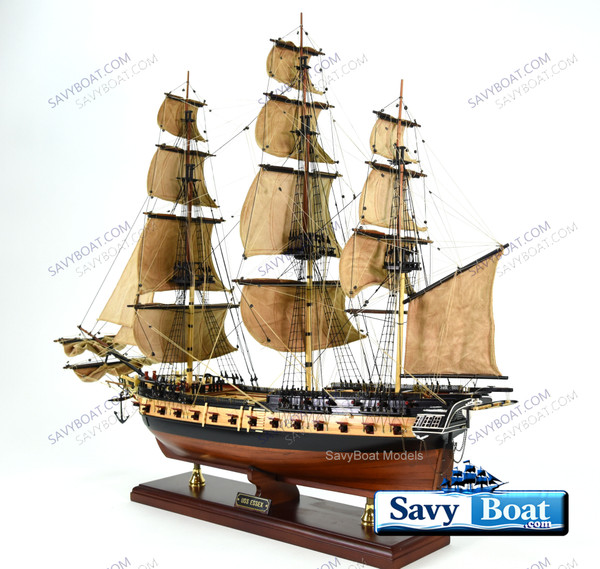
1799 USS ESSEX FRIGATE
SAVY DIRECT PRICE $999.96MSRP: $1,099.991799 USS ESSEX FRIGATE FULLY BUILT AND READY TO DISPLAY MUSEUM QUALITY SHIP MODEL Dimension Approx.: 32″ L x 10.5″ W x 28″ H APPROX SCALE 1:72 The model is al -


1799 USS ESSEX FRIGATE NO MAST
SAVY DIRECT PRICE $899.96MSRP: $999.991799 USS ESSEX FRIGATE FULLY BUILT AND READY TO DISPLAY MUSEUM QUALITY SHIP MODEL Dimension Approx.: 32″ L x 10.5″ W x 28″ H APPROX SCALE 1:72 The model is al -
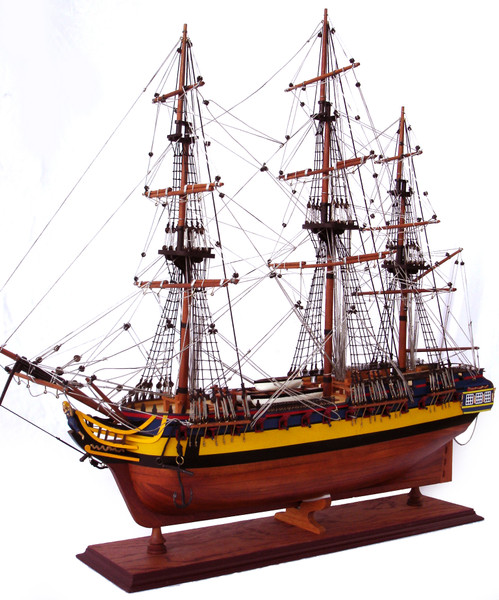
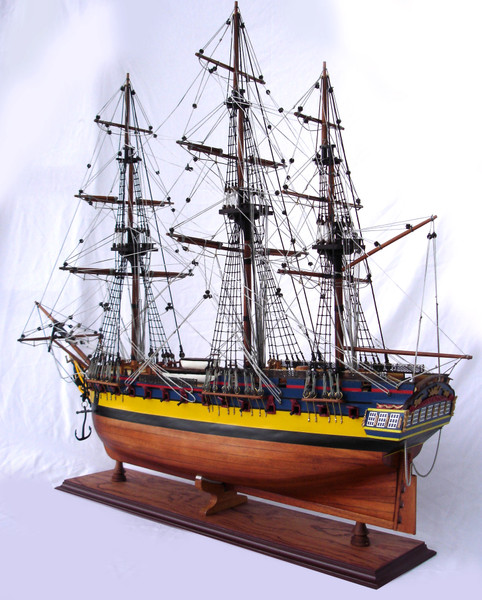
1757 HMS DIANA FRIGATE TALL SHIP
SAVY DIRECT PRICE $749.96MSRP: $799.991757 HMS DIANA FRIGATE TALL SHIP FULLY BUILT AND READY TO DISPLAY QUALITY SHIP MODEL Dimension Approx.: 32″ (long) x 8″ (wide) x 30″ (high) The model is already
Description

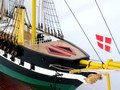
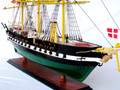
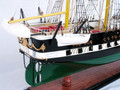
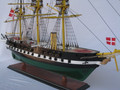
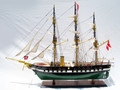
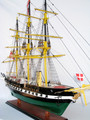
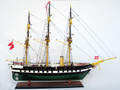
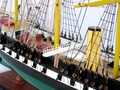
HDMS JYLLAND (FREGATTEN JYLLAND) FRIGATE
FULLY BUILT AND READY TO DISPLAY MUSEUM QUALITY SHIP MODEL
- Dimension approx.: 39L x 11W x 26.5H
- The model is already built. THIS IS NOT A MODEL SHIP KIT
When the Danish frigate HDMS Jylland slid into the water on 20 November 1860, she represented the final flowering of an era. Built at a time when steam power was transforming navies but sail still ruled the oceans, she embodied both traditions: a long, graceful wooden hull rigged for full sail, and a screw‑driven steam engine hidden below decks. Designed by Dock Master O. F. Suenson, she stretched 102 meters, carried more than 400 officers and men, and was one of the largest wooden warships ever built for the Royal Danish Navy.
Commissioned in 1862, Jylland entered service during a period of rising tension between Denmark and the German states. Her moment came in the Second Schleswig War, when she joined the frigates Niels Juel and Heimdall in the Battle of Heligoland on 9 May 1864. In a fierce engagement against two Austrian frigates and several Prussian gunboats, Jylland fought hard, exchanging broadsides at close range. She sustained heavy damage, but her crew held their ground, helping drive the enemy ships back toward neutral waters. Though the battle was tactically indecisive and failed to break the blockade, it became a proud moment in Danish naval history — the last major clash of wooden warships in Europe.
After the war, Jylland’s role shifted. By 1874, she was serving as a training ship for naval cadets, her days of combat behind her. As the 19th century progressed and ironclads replaced wooden frigates, she was gradually reduced to stationary duties. Between 1892 and 1908, she served as a barracks and training hulk, her once‑powerful engines silent, her rigging removed. By 1908, she was nearly scrapped — a fate that claimed most ships of her generation.
But Jylland was too significant to lose. Preservation efforts began, and in 1960, she was towed to Ebeltoft, on the Djursland peninsula, where a long and painstaking restoration began. When she was finally placed in dry dock in 1984, the scale of the work became clear: more than 60% of her timber had to be replaced, along with her rigging, armament, engines, and fittings. It was one of the most ambitious wooden‑ship restorations ever attempted. After a decade of labor, the project was completed in 1994, and Jylland emerged reborn — not as a relic, but as a national treasure.
Today, HDMS Jylland stands in permanent dry dock at the Fregatten Jylland Maritime Museum in Ebeltoft, where visitors can walk her decks, explore her gun batteries, and experience life aboard a 19th‑century warship. She is the last surviving screw frigate of her type and one of the largest wooden warships in the world, honored even with a commemorative coin issued by the National Bank of Denmark.
A Survivor of Two Eras
Jylland bridges the age of sail and the dawn of steam, the era of wooden navies and the rise of ironclads. She fought in Denmark’s last great naval battle, trained generations of sailors, and survived more than a century of neglect to become one of Europe’s most impressive maritime monuments. Her survival is a testament to craftsmanship, national pride, and the enduring power of history preserved.