











-
HMS SURPRISE
SAVY DIRECT PRICE $999.95MSRP: $1,199.99HMS SURPRISE FULLY BUILT AND READY TO DISPLAY MUSEUM QUALITY SHIP MODEL Dimension approx.: 29″ (long) x 7″ (wide) x 26″ (high) The model is already built. THIS IS NOT A MODEL SHIP... -


HMS PRINCE 1788
SAVY DIRECT PRICE $1,499.99HMS PRINCE (1788) FULLY BUILT AND READY TO DISPLAY MUSEUM QUALITY SHIP MODEL Dimension approx.: 31″ (long) x 7″ (wide) x 6″ (high) The model is already built. THIS IS NOT A MODEL... -
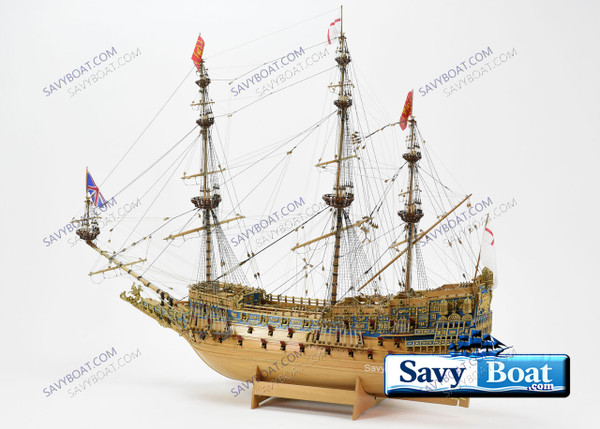

HMS SOVEREIGN OF THE SEAS MUSEUM
SAVY DIRECT PRICE $4,799.96MSRP: $4,999.99HMS SOVEREIGN OF THE SEAS TALL SHIP ABSOLUTELY BEAUTIFUL, FULLY BUILT AND READY TO DISPLAY, MUSEUM QUALITY SHIP OF THE LINE MODEL Dimension approx.: 42″ L x 14″
Description

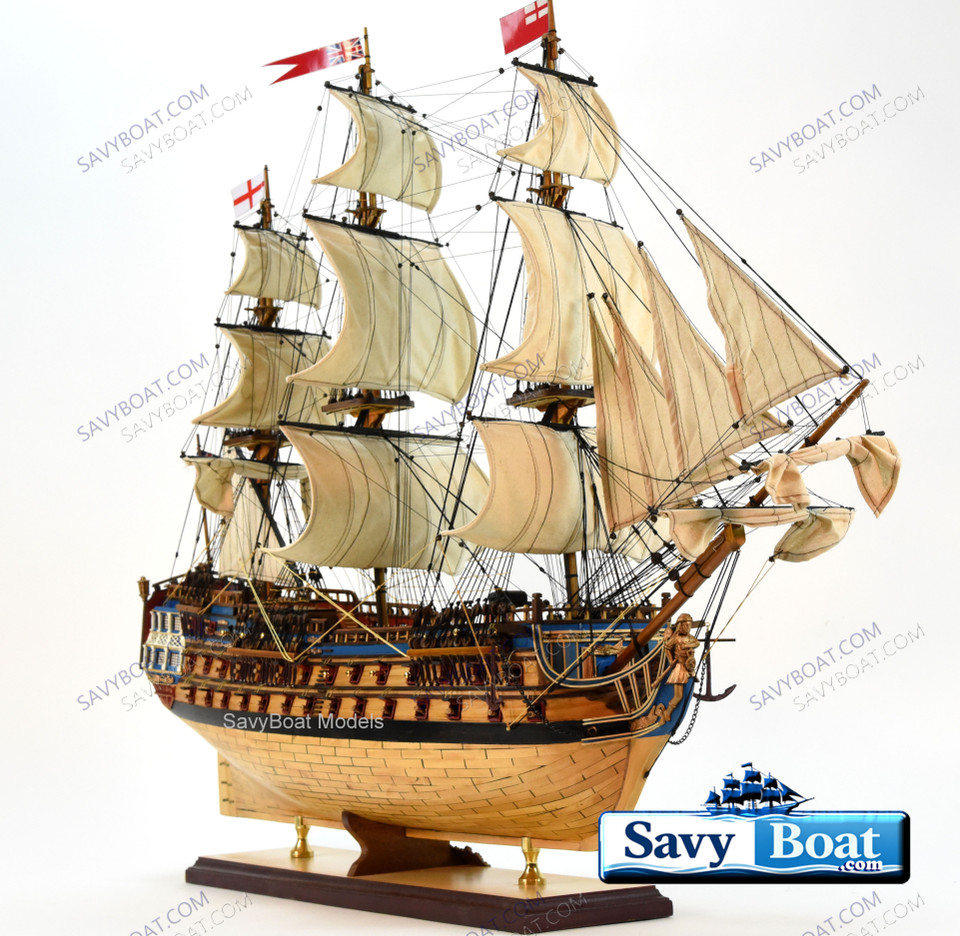
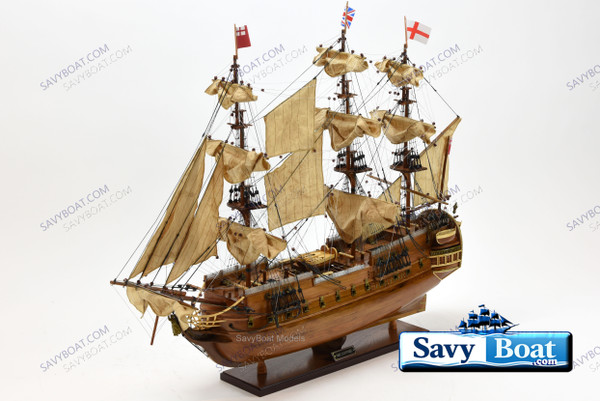
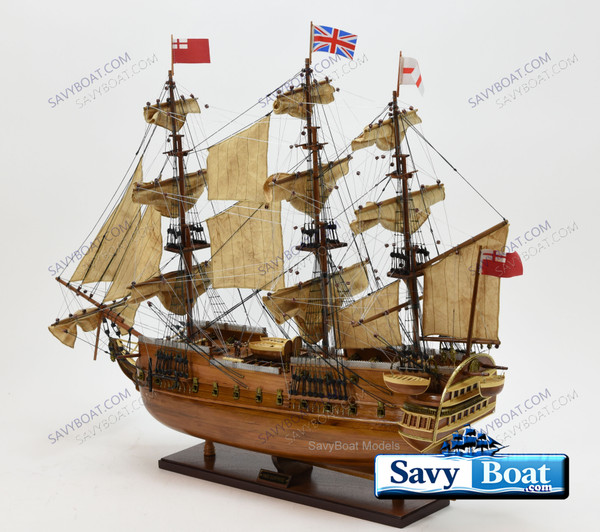
HMS BELLONA TALL SAILING SHIP
FULLY BUILT AND READY TO DISPLAY MUSEUM QUALITY SHIP MODEL
- LARGE MUSEUM QUALITY MODEL
- Dimension Approx.: 42″L x 12"W x 31″H
- The model is already built, NOT a model ship kit
HMS Bellona — Prototype of the Great 74s
When HMS Bellona slid down the ways at Chatham Dockyard in February 1760, she represented something new in British naval power. Designed by Sir Thomas Slade, the same mind behind Victory, Bellona was the first of a class that would define the Royal Navy for more than half a century. She carried the name of the Roman goddess of war, and the title suited her. With 74 guns, a long, clean run aft, and a hull built for both strength and speed, she became the model for more than forty near‑sister ships that followed.
Her dimensions were purposeful: 168 feet on the gundeck, nearly 47 feet of beam, and a burthen of 1,615 tons. She mounted the classic 74‑gun battery — 32‑pounders on the lower deck, 18‑pounders above, and lighter 9‑pounders on her quarterdeck and forecastle. This balance of firepower and maneuverability made the 74 the perfect line‑of‑battle ship, and Bellona was the prototype.
Commissioned during the final years of the Seven Years’ War, she joined the blockade of Brest before being sent south to patrol off Portugal. There, on 13 August 1761, she fought the action that would define her early career. Alongside the frigate Brilliant, Bellona engaged the French 74‑gun Courageux and two escorts off Cape Finisterre. After a hard‑fought duel, Courageux struck her colours — a major prize and a clear demonstration of the new 74’s power.
After the war, Bellona spent years laid up, but she returned to service transformed. In 1778 she received a major refit, including some of the Navy’s first carronades. Two years later she became one of the earliest ships fully copper‑sheathed, a revolutionary improvement that kept her hull clean and dramatically increased her speed. She would be re‑coppered seven times over her long life.
Through the American War of Independence and the French Revolutionary Wars, Bellona ranged widely — the North Sea, the West Indies, the Mediterranean. She captured privateers, escorted convoys, and took part in major fleet operations. In 1799 she helped force the surrender of the French frigates Junon and Alceste, and in 1797 she famously destroyed two French privateers after a relentless chase.
Her battle honours reflect a career that spanned three major conflicts: Cape Finisterre (1761), Copenhagen (1801), and Basque Roads (1809). Each placed her in the thick of the Royal Navy’s defining actions of the age.
After more than fifty years of service — an extraordinary lifespan for a wooden warship — HMS Bellona was broken up at Chatham in 1814. Yet her legacy endured. The Bellona‑class became the blueprint for the Royal Navy’s most important warship type, and her lines influenced generations of 74‑gun ships that followed. In many ways, Bellona was the ship that shaped an era.