

















-


HMS BELLONA
SAVY DIRECT PRICE $1,699.96MSRP: $1,849.99HMS BELLONA TALL SAILING SHIP FULLY BUILT AND READY TO DISPLAY MUSEUM QUALITY SHIP MODEL LARGE MUSEUM QUALITY MODEL Dimension Approx.: 42″L x 12"W x 31″H The model is already built, NOT a... -
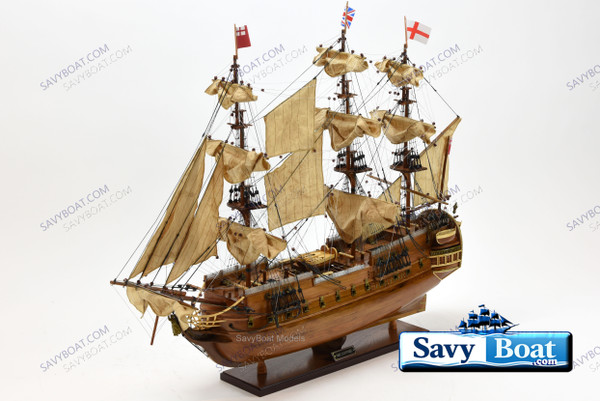
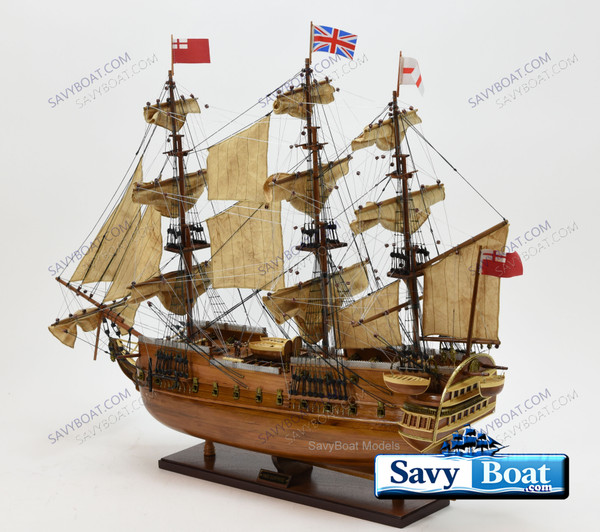
HMS SURPRISE
SAVY DIRECT PRICE $999.95MSRP: $1,199.99HMS SURPRISE FULLY BUILT AND READY TO DISPLAY MUSEUM QUALITY SHIP MODEL Dimension approx.: 29″ (long) x 7″ (wide) x 26″ (high) The model is already built. THIS IS NOT A MODEL SHIP... -
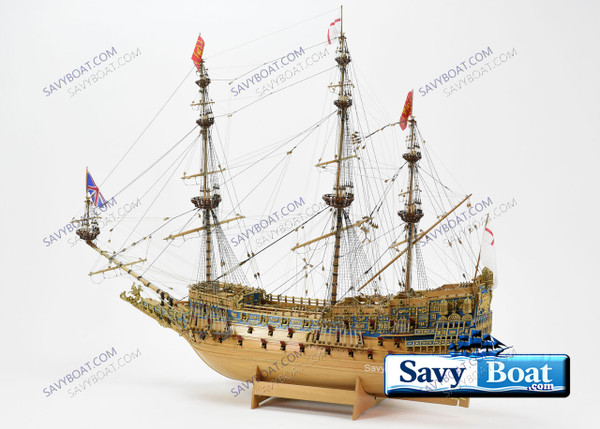

HMS SOVEREIGN OF THE SEAS MUSEUM
SAVY DIRECT PRICE $4,799.96MSRP: $4,999.99HMS SOVEREIGN OF THE SEAS TALL SHIP ABSOLUTELY BEAUTIFUL, FULLY BUILT AND READY TO DISPLAY, MUSEUM QUALITY SHIP OF THE LINE MODEL Dimension approx.: 42″ L x 14″
Description

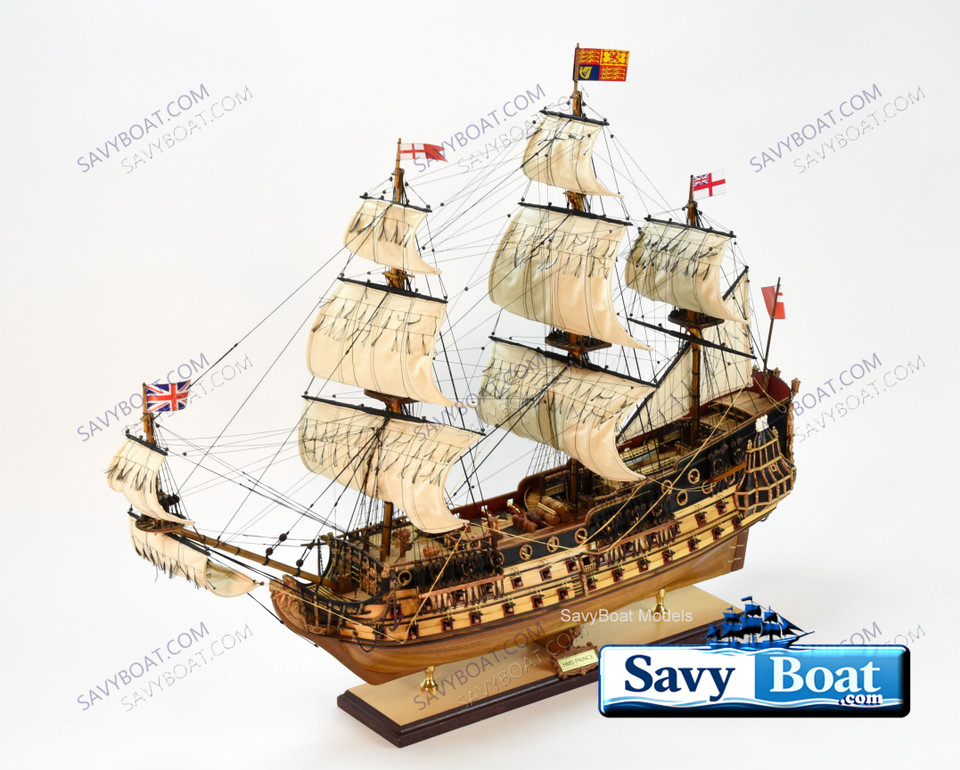
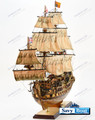
HMS PRINCE (1788)
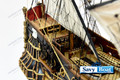
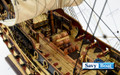
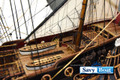
FULLY BUILT AND READY TO DISPLAY MUSEUM QUALITY SHIP MODEL
- Dimension approx.: 31″ (long) x 7″ (wide) x 6″ (high)
- The model is already built. THIS IS NOT A MODEL SHIP KIT
When HMS Prince slid down the ways at Woolwich Dockyard on 4 July 1788, she embodied the Royal Navy’s preference for power over grace. A 98‑gun second‑rate of the London class, she was built to anchor the line of battle — a broad‑beamed, heavily armed giant designed to stand in the thickest fighting. At 177 feet on the gundeck and carrying 28‑pounders, 18‑pounders, and 12‑pounders across three decks, she was formidable on paper. But from the beginning, Prince had a reputation she could never quite shake: she was slow. Very slow.
Sailors joked that she “sailed like a haystack,” and early in her career she spent long stretches laid up at Portsmouth, her poor handling making her an afterthought in fleet deployments. In 1796, the Admiralty even lengthened her hull in an attempt to improve her performance — a rare and costly modification. It helped, but only a little. Prince remained a plodding but dependable heavyweight, more valued for her firepower and durability than for speed.
Despite her limitations, she served steadily through the French Revolutionary Wars. She cruised with the Channel Fleet, took part in the Isle de Groix action in 1795, and later operated off Ireland and in the Mediterranean, including a deployment to Minorca in 1799. She was never a glamorous ship, but she was reliable — a floating fortress that could absorb punishment and deliver crushing broadsides when she finally arrived on station.
By October 1805, Prince was part of the Channel Fleet under Captain Richard Grindall, assigned to reinforce Nelson off Cape Trafalgar. When the combined Franco‑Spanish fleet was sighted, Grindall steered his ship toward the battle — but her notorious sluggishness betrayed her. While the rest of the British line surged ahead, Prince fell farther and farther behind, arriving two hours late, long after the decisive fighting had ended.
Yet her moment still came.
As she lumbered onto the scene, she found the Spanish flagship Príncipe de Asturias and the French Achille still engaged. Prince unleashed her heavy broadsides, and in the chaos Achille’s foretop caught fire. A later broadside brought down her mainmast, and flames raced across the French ship. Grindall ordered his boats lowered to rescue survivors, but at 5:45 p.m., Achille exploded in a massive fireball, killing most of her crew. Prince’s boats pulled hundreds from the water — French, Spanish, and British alike.
In the brutal week that followed Trafalgar, Prince proved her worth more than she ever had in battle. The storm that ravaged the shattered fleets turned the aftermath into a desperate struggle for survival. Grindall’s ship, undamaged and immensely strong, became a lifeline. She towed crippled ships, distributed stores, and rescued hundreds more sailors, including 350 survivors from the giant Santísima Trinidad, whom she carried safely to Gibraltar.
In many ways, Prince’s greatest contribution to Trafalgar was not in combat, but in salvation.
After the Napoleonic Wars, Prince’s active service dwindled. She spent years laid up at Portsmouth, her age and slow sailing making her increasingly obsolete in a navy transitioning toward new designs and new technologies. After nearly half a century afloat, she was broken up in 1837.
HMS Prince was never the fastest, nor the most celebrated ship of the line. But she was a survivor — a massive, steady presence whose greatest heroism came not in the clash of broadsides, but in the rescue of the wounded, the stranded, and the dying after Trafalgar. Her story is a reminder that in naval warfare, glory is not always found in speed or brilliance, but in strength, endurance, and service when it matters most.