









-


RUSSAIN CRUISER AURORA
SAVY DIRECT PRICE $949.96MSRP: $999.99RUSSIAN CRUISER AURORA FULLY BUILT AND READY TO DISPLAY MUSEUM QUALITY SHIP MODEL Dimension approx.: 40.5L x 7W x18.5H The model is already built. THIS IS NOT A MODEL SHIP KIT When the... -
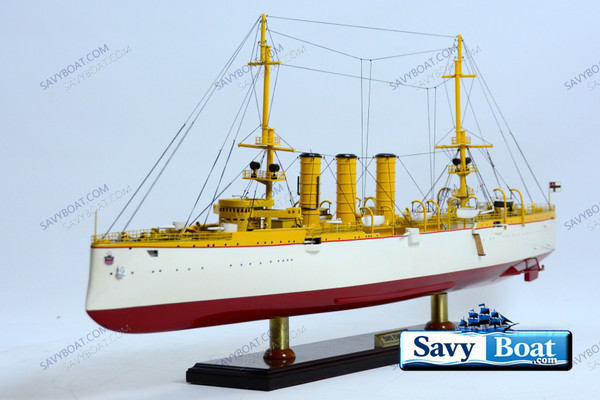

SMS EMDEN BATTLESHIP CRUISER
SAVY DIRECT PRICE $669.96MSRP: $699.99SMS EDMEN BATTLE CRUISER FULLY BUILT AND READY TO DISPLAY MUSEUM QUALITY SHIP MODEL Dimension Approx.: 35.5″L x 7"W x 15.5″H The model is 100% hand built by artisans from scratch Base and name plate... -

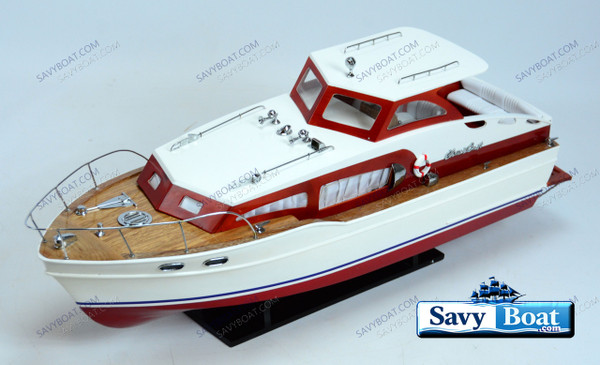
1956 CHRIS CRAFT CABIN CRUISER
SAVY DIRECT PRICE $829.96MSRP: $899.99CHRIS CRAFT CABIN CRUISER FULLY BUILT AND READY TO DISPLAY BOAT MODEL Dimension approx.: 34″ (long) x 11″ (beam) The model is already built. THIS IS NOT A MODEL SHIP KIT In...
Description

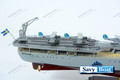
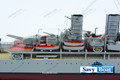
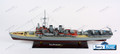
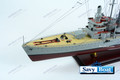
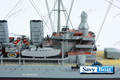
HSwMS GOTLAND (1933) SWEDISH AIRCRAFT CRUISER
FULLY BUILT AND READY TO DISPLAY, QUALITY SHIP MODEL
- Dimension approx.: 39″ L x 4.5″ W x 6.5 H
- The model is already built. THIS IS NOT A MODEL SHIP KIT
When HSwMS Gotland was commissioned on 5 December 1934, she was unlike any other warship afloat. Conceived in the late 1920s as part of Sweden’s effort to modernize its navy, she emerged as a bold hybrid: part cruiser, part seaplane carrier, part minelayer, and fully tailored to the unique demands of Baltic defense. With her sleek 134‑meter hull, twin 152 mm turrets, casemate guns, torpedo tubes, and a full aviation deck for Hawker Osprey floatplanes, Gotland embodied a distinctly Swedish approach to naval innovation — compact, flexible, and clever.
Her design was the product of compromise and ingenuity. Budget constraints forced the removal of a planned forward turret, leading to the unusual casemate-mounted guns flanking her superstructure. Yet she remained fast and agile, reaching 27.5 knots on trials, and carried enough fuel to roam 4,000 nautical miles. She was built not only to scout and strike but also to lay mines, direct aircraft, and operate independently in the confined, island‑studded waters of the Baltic Sea.
From the moment she entered service, Gotland became a centerpiece of Sweden’s Coastal Fleet. She spent summers with the fleet and winters as a cadet training ship, making long foreign cruises to Germany, Spain, Portugal, the Caribbean, South America, and West Africa. These voyages gave generations of Swedish naval officers their first taste of blue‑water sailing.
When World War II erupted in 1939, Sweden remained neutral, and Gotland’s role shifted to neutrality patrols and continued cadet training. She was in drydock during Germany’s invasion of Norway and Denmark in April 1940, but soon returned to service.
Her most famous moment came in May 1941. While conducting gunnery exercises in the Kattegat, Gotland sighted two large German warships — the battleship Bismarck and the heavy cruiser Prinz Eugen — slipping northward toward the Atlantic. Swedish reconnaissance aircraft had already spotted them, but Gotland’s confirmation and tracking report, passed quietly through diplomatic channels to the British naval attaché, helped trigger the Royal Navy’s pursuit. Days later, Bismarck was sunk in one of the most dramatic naval hunts in history.
Though Sweden was neutral, Gotland had inadvertently played a small but pivotal role in the war at sea.
By 1943, her floatplanes were obsolete and replacements impossible to obtain. Aircraft performance had advanced so rapidly that land‑based planes could now cover the entire Baltic. Gotland’s aviation facilities were removed, and she was rebuilt as an anti‑aircraft cruiser, receiving modern Bofors 40 mm and 20 mm guns and an expanded AA deck. She emerged in 1944 as a very different ship — no longer a hybrid scout carrier, but a compact, heavily armed escort.
After the war, she returned to her peacetime identity as Sweden’s premier training cruiser. From the late 1940s through the mid‑1950s, she carried cadets to ports across Europe, Africa, the Mediterranean, and North America. Her white‑painted hull and tidy lines made her a familiar sight in foreign harbors, often accompanied by Swedish destroyers.
In 1953–1954, Gotland underwent her final major transformation. Fitted with British Type 293 radar, Type 262 gunnery radars, and Type 144 ASDIC, she became a fighter‑direction ship — essentially a mobile radar and command center for guiding aircraft. Her older guns were removed or replaced, and her casemate 152 mm guns were deleted to reduce weight. She made one last long training cruise in 1955–1956, visiting Spain, West Africa, Angola, France, and Britain.
After more than two decades of service, Gotland was placed in reserve in 1956, stricken in 1960, and scrapped in 1963 at Ystad. Though never involved in combat, she served Sweden faithfully through peace, neutrality, and the early Cold War.
Her legacy is one of adaptability. Few ships changed roles so dramatically — from aircraft cruiser to AA escort to radar command ship — yet remained useful and relevant throughout. For Sweden, Gotland was more than a warship: she was a floating classroom, a diplomatic envoy, and a symbol of a navy that prized innovation and flexibility in equal measure.