









-
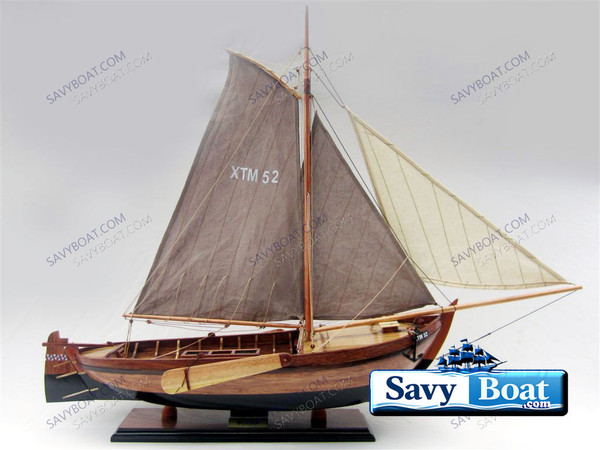
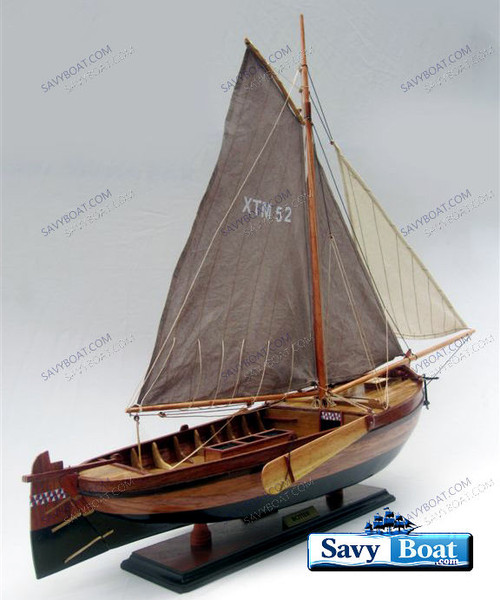
BOTTER SAIL BOAT
SAVY DIRECT PRICE $699.96MSRP: $749.99BOTTER SAIL BOAT FULLY BUILT AND READY TO DISPLAY MUSEUM QUALITY SHIP MODEL Dimension approx.: 31″ (long) x 7″ (wide) x 6″ (high) The model is already built. THIS IS NOT A MODEL SHIP... -


SHAMROCK SAIL BOAT
SAVY DIRECT PRICE $429.96MSRP: $449.99SHAMROCK SAIL BOAT FULLY BUILT AND READY TO DISPLAY BOAT MODEL Dimension approx.: 23.5"L x 4.5"W x 30"H The model is already built. THIS IS NOT A MODEL SHIP KIT The story... -


ENDEAVOUR SAIL BOAT 24"
SAVY DIRECT PRICE $289.96MSRP: $339.99ENDEAVOUR SAIL BOAT 24" FULLY BUILT AND READY TO DISPLAY MODEL Dimension approx.: 24″ L x 4″ W x 33″ H The model is already built. THIS IS NOT A MODEL SHIP KIT The story of...
Description

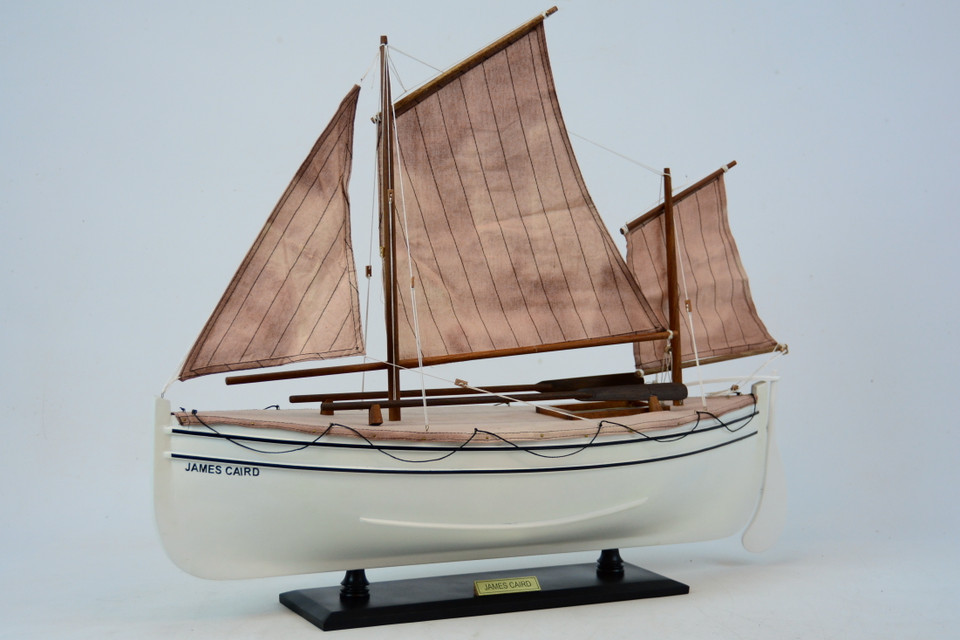
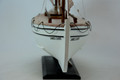
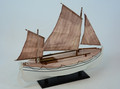
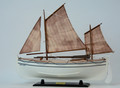
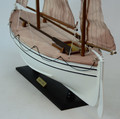
JAMES CAIRD SAIL BOAT
FULLY BUILT AND READY TO DISPLAY MUSEUM QUALITY SHIP MODEL
- Dimension approx.: 31″ (long) x 7″ (wide) x 6″ (high)
- The model is already built. THIS IS NOT A MODEL SHIP KIT
Among the great vessels of exploration, none is smaller than the James Caird, and few are more legendary. Barely 22½ feet long, she began life as an ordinary whaleboat — sturdy, practical, and unremarkable. Yet in 1916, she would carry Sir Ernest Shackleton and five companions across one of the most violent stretches of ocean on Earth, transforming from a ship’s lifeboat into one of the most celebrated craft in maritime history.
Her story begins with disaster. Shackleton’s expedition ship, Endurance, was trapped and crushed by pack ice in the Weddell Sea in October 1915, leaving 28 men stranded on drifting floes for months. When the ice finally broke beneath them in April 1916, the crew made a desperate dash to Elephant Island, a desolate outpost far from any shipping routes. Rescue from the outside world was impossible — unless someone went for help.
The nearest inhabited land was South Georgia, more than 800 miles away across the storm‑lashed Southern Ocean. Shackleton chose the James Caird for the attempt, not because she was ideal, but because she was the strongest of the three lifeboats. Under the hands of the expedition’s brilliant carpenter, Harry McNish, she was transformed. McNish reinforced her hull with extra planking, raised her sides, decked her over with canvas, and sealed every seam with lamp wick, oil paint, and even seal blood. What emerged was a tiny, makeshift ocean‑going vessel — part lifeboat, part survival capsule.
On 24 April 1916, Shackleton, Frank Worsley, Tom Crean, and three others pushed the James Caird into the surf and began one of the greatest small‑boat voyages ever attempted. For 17 days, they battled the “Furious Fifties,” enduring 10‑meter waves, freezing spray, constant gales, and the ever‑present threat of capsizing. Worsley navigated by sextant whenever the clouds parted long enough to glimpse the sun — sometimes only for seconds. Their clothes froze stiff, their sleeping bags were soaked, and their food dwindled. Yet they pressed on.
Against all odds, on 10 May 1916, the James Caird reached the uninhabited southern coast of South Georgia. Shackleton, Crean, and Worsley then undertook a final ordeal: a 36‑hour trek across the island’s unmapped mountains and glaciers to reach the whaling station at Stromness. From there, Shackleton organized the rescue of the 22 men still waiting on Elephant Island. Every member of the Endurance expedition survived.
After the First World War, the James Caird was brought back to England aboard the whaler Woodville. In 1922, Shackleton’s friend and sponsor John Quiller Rowett presented the boat to Dulwich College, Shackleton’s alma mater. She spent decades on display, later moved to the National Maritime Museum, and finally returned to Dulwich in 1986. Since 2015, she has been housed in a dedicated James Caird Hall, preserved as one of the most important artifacts of Antarctic exploration.
The James Caird is often called the greatest small‑boat in history, not because of her construction, but because of what she endured — and what she made possible. She represents ingenuity, courage, and the unbreakable will of Shackleton and his men. Today, she stands not just as a relic, but as a symbol of survival against impossible odds, a reminder that even the humblest vessel can carry the weight of extraordinary human achievement.