






-


DELTA QUEEN LARGE RC READY RIVER BOAT
SAVY DIRECT PRICE $2,699.96MSRP: $2,899.99DELTA QUEEN LARGE, RC READY, RIVER BOAT FULLY BUILT R/C READY/COMPATIBLE AND READY TO DISPLAY LIGHTED MUSEUM QUALITY DISPLAY MODEL LARGE M -


HOHENTWIEL PADDLE STEAMSHIP
SAVY DIRECT PRICE $699.95MSRP: $749.99HOHENTWIEL PADDLE STEAMSHIP FULLY BUILT AND READY TO DISPLAY HIGH QUALITY SHIP MODEL Dimension approx.: 30″ (long) x 7″ (wide) x 13″ (high) The model is already built. THIS IS NOT A... -
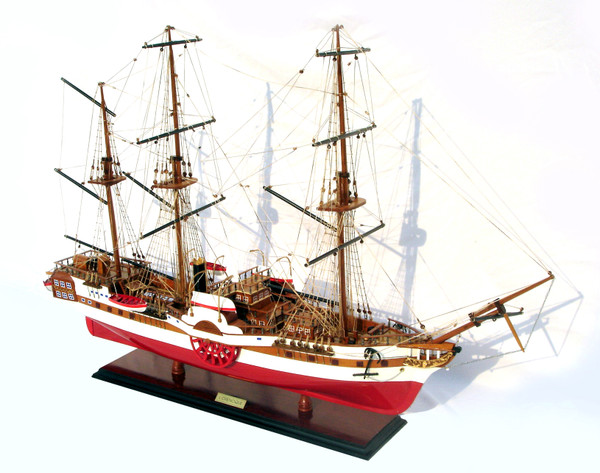
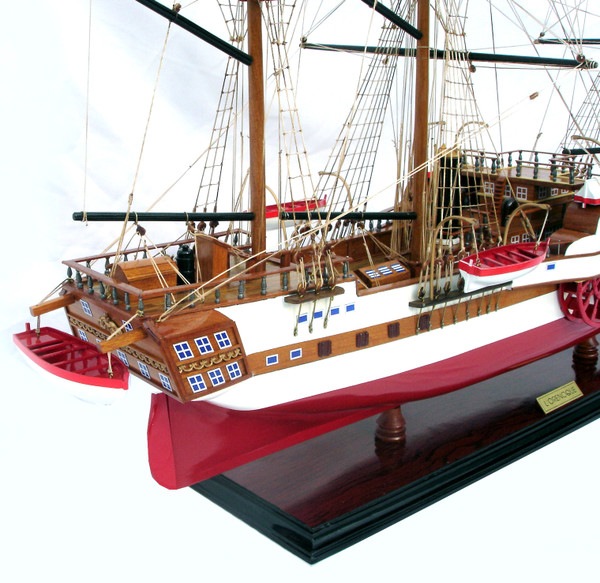
L'ORENOQUE TALL PADDLE SHIP
SAVY DIRECT PRICE $949.96MSRP: $999.99L'ORENOQUE TALL PADDLE SHIP FULLY BUILT AND READY TO DISPLAY MUSEUM QUALITY SHIP MODEL Dimension approx.: 32L x 10W x 28 (inch) The model is already built. THIS IS NOT A MODEL SHIP...
Description

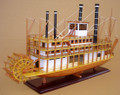
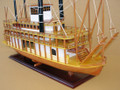
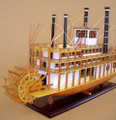
KING OF THE MISSISSIPPI RIVER PADDLE BOAT
FULLY BUILT AND READY TO DISPLAY MUSEUM QUALITY SHIP MODEL
- Dimension approx.: 32″ (long) x 8″ (wide) x 17″ (high)
- The model is already built. THIS IS NOT A MODEL SHIP KIT
In the 19th century, when the Mississippi River was the great commercial artery of the American interior, one steamboat rose above all others in reputation and grandeur. Known simply as the Mississippi, she became celebrated as the “King of the Mississippi River Boat” — a title that captured not only her size and elegance but the spirit of an era when steam power transformed the continent.
Before steamboats, the Mississippi was a difficult, often unpredictable highway. Keelboats and flatboats drifted south with the current, but the return journey was slow, dangerous, and sometimes impossible. The arrival of the steam engine changed everything. Early pioneers like Robert Fulton, Oliver Evans, and Daniel French introduced vessels capable of pushing upriver against the current, opening the Mississippi to year‑round commerce and travel.
By the mid‑1800s, steamboats had become floating palaces — long, graceful vessels with tall stacks, broad paddlewheels, and ornate decks. Among them, the Mississippi stood out. Operating between St. Louis and New Orleans, she was admired for her beauty, reliability, and sheer presence. Contemporary accounts described her as “one of the most perfect and beautiful of these ships,” a vessel that seemed to embody the prosperity and optimism of the river towns she served.
The Mississippi was more than a mode of transportation. She was a symbol — of engineering ambition, of the booming cotton and sugar trade, and of the bustling river culture that defined the American South and Midwest. Her decks carried everything the region produced: cotton bales, livestock, timber, manufactured goods, and thousands of passengers seeking opportunity, entertainment, or simply a faster way to travel.
Steamboats like the Mississippi reshaped the river’s economy. They connected isolated settlements to major markets, encouraged migration into the interior, and turned river towns into thriving commercial hubs. Onboard, passengers found dining rooms, music, gambling, and news from distant cities — a floating social world that brought refinement and excitement to communities along the riverbanks.
But the golden age of steamboats was not to last. By the late 19th century, railroads began to eclipse river travel, offering faster, more reliable routes across the expanding nation. Freight shifted to railcars, and the great paddlewheelers gradually disappeared from the Mississippi. Yet the legend of the “King” endured.
Today, the Mississippi remains a cultural icon — preserved in historical accounts, model kits, artwork, and the collective memory of the river’s storied past. She represents the moment when steam power unlocked the heart of America, turning the Mississippi from a seasonal waterway into a thriving commercial superhighway.
The “King of the Mississippi River Boat” was more than a single vessel. It was the embodiment of a technological revolution, a cultural touchstone, and a defining feature of 19th‑century American life. The Mississippi and her sister steamboats carried a nation forward — one paddle stroke at a time — and their legacy still ripples through the history of the river that made them famous.